
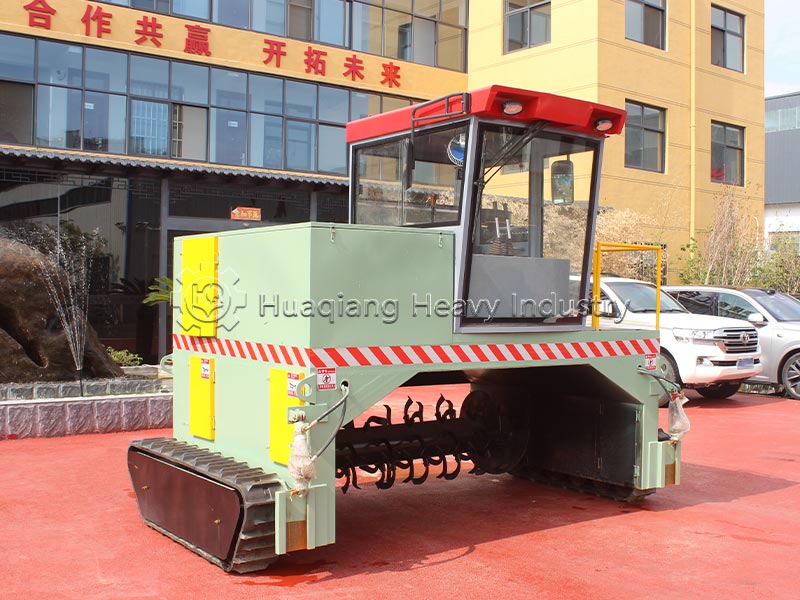
Self-propelled fertilizer compost turners are classic and versatile equipment for small and medium-sized organic fertilizer fermentation. They are wheeled, compact, affordable, and easy to operate. No fermentation tank is needed; composting can be done on ordinary flat ground, making them popular with individual farmers, family farms, and small cooperatives.
The self-propelled fertilizer compost turner straddles the strip-shaped material pile and moves on its own. Its rotary tiller-type harrows rotate at high speed, completing the entire process of turning, aerating, cooling, and deodorizing the material, effectively accelerating the composting process. Harmless fermentation can be completed in 10-15 days. The machine is compact and flexible, adaptable to standard windrow widths of 1.8-2.5 meters, easy to maneuver, and requires little space and has low initial investment.
 When selecting a self-propelled fertilizer compost turner, choose the appropriate working width and matching motor power based on the output. Prioritize models with wear-resistant harrows and thickened frames. Maintain the material moisture content within a reasonable range to avoid excessive moisture causing material sticking and clogging. For daily use, always start under no-load conditions and strictly prohibit overloading. Regularly check the wear of the rake teeth, the tightness of bolts, and the lubrication of the oil circuit.
After each operation, clean the machine body of any residual material to prevent clumping and corrosion. With its advantages of low investment, quick results, simple operation and maintenance, and strong adaptability, the self-propelled fertilizer compost turner has become the preferred entry-level equipment for small-scale manure resource utilization and farmyard manure self-processing.
When selecting a self-propelled fertilizer compost turner, choose the appropriate working width and matching motor power based on the output. Prioritize models with wear-resistant harrows and thickened frames. Maintain the material moisture content within a reasonable range to avoid excessive moisture causing material sticking and clogging. For daily use, always start under no-load conditions and strictly prohibit overloading. Regularly check the wear of the rake teeth, the tightness of bolts, and the lubrication of the oil circuit.
After each operation, clean the machine body of any residual material to prevent clumping and corrosion. With its advantages of low investment, quick results, simple operation and maintenance, and strong adaptability, the self-propelled fertilizer compost turner has become the preferred entry-level equipment for small-scale manure resource utilization and farmyard manure self-processing.
 When selecting a self-propelled fertilizer compost turner, choose the appropriate working width and matching motor power based on the output. Prioritize models with wear-resistant harrows and thickened frames. Maintain the material moisture content within a reasonable range to avoid excessive moisture causing material sticking and clogging. For daily use, always start under no-load conditions and strictly prohibit overloading. Regularly check the wear of the rake teeth, the tightness of bolts, and the lubrication of the oil circuit.
After each operation, clean the machine body of any residual material to prevent clumping and corrosion. With its advantages of low investment, quick results, simple operation and maintenance, and strong adaptability, the self-propelled fertilizer compost turner has become the preferred entry-level equipment for small-scale manure resource utilization and farmyard manure self-processing.
When selecting a self-propelled fertilizer compost turner, choose the appropriate working width and matching motor power based on the output. Prioritize models with wear-resistant harrows and thickened frames. Maintain the material moisture content within a reasonable range to avoid excessive moisture causing material sticking and clogging. For daily use, always start under no-load conditions and strictly prohibit overloading. Regularly check the wear of the rake teeth, the tightness of bolts, and the lubrication of the oil circuit.
After each operation, clean the machine body of any residual material to prevent clumping and corrosion. With its advantages of low investment, quick results, simple operation and maintenance, and strong adaptability, the self-propelled fertilizer compost turner has become the preferred entry-level equipment for small-scale manure resource utilization and farmyard manure self-processing. 