Organic fertilizer production equipment selection directly impacts return on investment, yet many practitioners fall into the traps of prioritizing sheer scale or the lowest price. A scientific approach to selection should be based on material characteristics, target production capacity, and long-term operation and maintenance costs.
Clarify raw material types. High-fiber straw requires heavy-duty crushers, where blade hardness and rotational speed directly determine crushing efficiency; conversely, fresh manure with a moisture content exceeding 70% requires pre-treatment solid-liquid separation equipment to prevent fermentation failure. Processing capacity should include a 10%–20% margin to accommodate seasonal fluctuations in raw material moisture and volume, thereby avoiding the risk of breakdowns associated with running at full load.
Consider the material and durability of core components. Fermentation compost turning machines operate in high-temperature, high-humidity, and mildly acidic environments, making the corrosion and wear resistance of chains and bearings crucial; for granulators, the focus should be on the die's compression ratio and replacement costs. When selecting equipment, request a list of wear parts, replacement intervals, and price quotes, as these often-overlooked expenses can become major costs after two years of operation.
 Automation levels determine long-term labor costs. Intelligent control systems monitor pile temperature, oxygen levels, and humidity in real-time, automatically adjusting ventilation and turning frequency; this not only reduces manual intervention but also ensures consistent product quality across batches. For small-to-medium-scale operations, modular designs are preferable, allowing for flexible expansion based on future production needs and avoiding excessive upfront investment.
Address energy consumption and environmental compliance. Crushing and granulation are the most energy-intensive stages, so prioritize high-efficiency motors; additionally, dust removal and biological deodorization systems are essential to meet increasingly strict emission standards. The most reliable decision-making method is to visit operational sites with similar working conditions and listen to frontline operators' honest feedback regarding equipment failure rates and after-sales response times.
Equipment selection is not merely a one-time purchase but a comprehensive simulation of the production process. By focusing on these key parameters and balancing initial investment against lifecycle costs, you can pave the way for a stable and efficient organic fertilizer production line.
Automation levels determine long-term labor costs. Intelligent control systems monitor pile temperature, oxygen levels, and humidity in real-time, automatically adjusting ventilation and turning frequency; this not only reduces manual intervention but also ensures consistent product quality across batches. For small-to-medium-scale operations, modular designs are preferable, allowing for flexible expansion based on future production needs and avoiding excessive upfront investment.
Address energy consumption and environmental compliance. Crushing and granulation are the most energy-intensive stages, so prioritize high-efficiency motors; additionally, dust removal and biological deodorization systems are essential to meet increasingly strict emission standards. The most reliable decision-making method is to visit operational sites with similar working conditions and listen to frontline operators' honest feedback regarding equipment failure rates and after-sales response times.
Equipment selection is not merely a one-time purchase but a comprehensive simulation of the production process. By focusing on these key parameters and balancing initial investment against lifecycle costs, you can pave the way for a stable and efficient organic fertilizer production line.
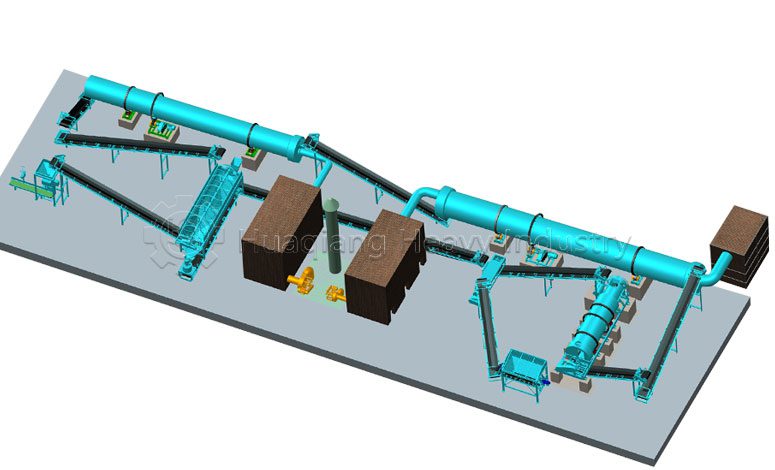 Automation levels determine long-term labor costs. Intelligent control systems monitor pile temperature, oxygen levels, and humidity in real-time, automatically adjusting ventilation and turning frequency; this not only reduces manual intervention but also ensures consistent product quality across batches. For small-to-medium-scale operations, modular designs are preferable, allowing for flexible expansion based on future production needs and avoiding excessive upfront investment.
Address energy consumption and environmental compliance. Crushing and granulation are the most energy-intensive stages, so prioritize high-efficiency motors; additionally, dust removal and biological deodorization systems are essential to meet increasingly strict emission standards. The most reliable decision-making method is to visit operational sites with similar working conditions and listen to frontline operators' honest feedback regarding equipment failure rates and after-sales response times.
Equipment selection is not merely a one-time purchase but a comprehensive simulation of the production process. By focusing on these key parameters and balancing initial investment against lifecycle costs, you can pave the way for a stable and efficient organic fertilizer production line.
Automation levels determine long-term labor costs. Intelligent control systems monitor pile temperature, oxygen levels, and humidity in real-time, automatically adjusting ventilation and turning frequency; this not only reduces manual intervention but also ensures consistent product quality across batches. For small-to-medium-scale operations, modular designs are preferable, allowing for flexible expansion based on future production needs and avoiding excessive upfront investment.
Address energy consumption and environmental compliance. Crushing and granulation are the most energy-intensive stages, so prioritize high-efficiency motors; additionally, dust removal and biological deodorization systems are essential to meet increasingly strict emission standards. The most reliable decision-making method is to visit operational sites with similar working conditions and listen to frontline operators' honest feedback regarding equipment failure rates and after-sales response times.
Equipment selection is not merely a one-time purchase but a comprehensive simulation of the production process. By focusing on these key parameters and balancing initial investment against lifecycle costs, you can pave the way for a stable and efficient organic fertilizer production line. 