
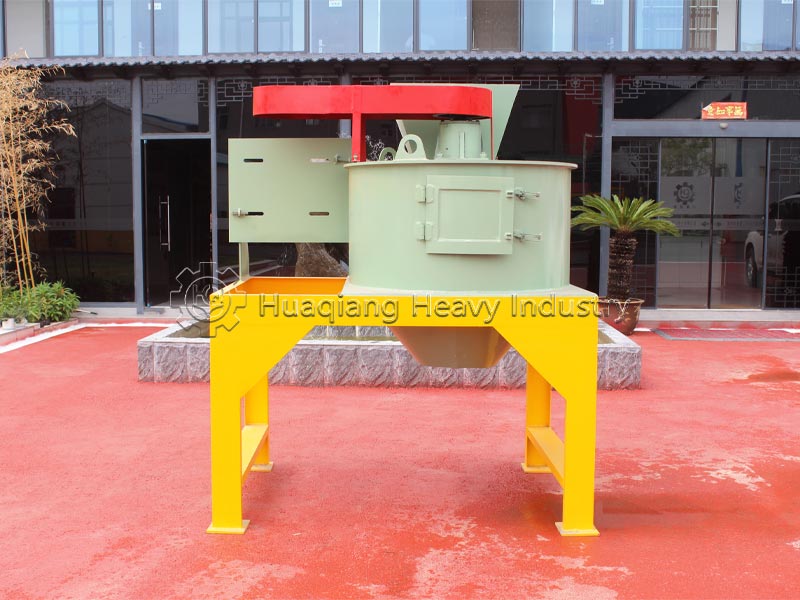
The first key to high efficiency is the balance between speed and uniformity. The starting point for high efficiency lies in raw material pretreatment. Raw materials with different carbon-to-nitrogen ratios are mixed in proportion, and large pieces are crushed to a particle size of 1-3 cm using an organic fertilizer crusher. This step increases the surface area for microbial adhesion, shortening fermentation start-up time by more than 30%.
Fermentation management is the watershed for efficiency. The long-term static placement model must be abandoned, and a strategy combining forced ventilation and regular turning should be adopted. Turn the pile twice a week to ensure sufficient oxygen inside. When the temperature rises above 65℃, maintain this high temperature period for 5-7 days to kill insect eggs and weed seeds. Then, by adjusting the frequency of the organic fertilizer compost turning machine, control the temperature to around 50℃ to enter the maturation stage. The entire cycle can be controlled within 20-25 days, twice as fast as natural composting.
 Quality control determines the value of the processing. In the later stages of fermentation, when the pile temperature stabilizes and drops, turns dark brown, and there is no ammonia odor, aging and drying should be carried out promptly. Adjusting the moisture content to below 30% prevents nutrient loss and facilitates subsequent granulation and storage. If conditions permit, adding functional microorganisms to create bio-organic fertilizer can increase the product's added value.
Beware of excessively wet materials. Moisture content exceeding 65% will clog pores, leading to anaerobic fermentation and the production of harmful gases. The ideal moisture content is when the material clumps together when squeezed but crumbles easily upon impact; a simple moisture meter can be used to monitor this.
Efficient organic fertilizer processing essentially involves precise control of the microbial working environment. Moving from passive waiting to active management, mastering these technical details will enable the production of high-quality fertilizer that improves soil, reaping both time and cost benefits.
Quality control determines the value of the processing. In the later stages of fermentation, when the pile temperature stabilizes and drops, turns dark brown, and there is no ammonia odor, aging and drying should be carried out promptly. Adjusting the moisture content to below 30% prevents nutrient loss and facilitates subsequent granulation and storage. If conditions permit, adding functional microorganisms to create bio-organic fertilizer can increase the product's added value.
Beware of excessively wet materials. Moisture content exceeding 65% will clog pores, leading to anaerobic fermentation and the production of harmful gases. The ideal moisture content is when the material clumps together when squeezed but crumbles easily upon impact; a simple moisture meter can be used to monitor this.
Efficient organic fertilizer processing essentially involves precise control of the microbial working environment. Moving from passive waiting to active management, mastering these technical details will enable the production of high-quality fertilizer that improves soil, reaping both time and cost benefits.
 Quality control determines the value of the processing. In the later stages of fermentation, when the pile temperature stabilizes and drops, turns dark brown, and there is no ammonia odor, aging and drying should be carried out promptly. Adjusting the moisture content to below 30% prevents nutrient loss and facilitates subsequent granulation and storage. If conditions permit, adding functional microorganisms to create bio-organic fertilizer can increase the product's added value.
Beware of excessively wet materials. Moisture content exceeding 65% will clog pores, leading to anaerobic fermentation and the production of harmful gases. The ideal moisture content is when the material clumps together when squeezed but crumbles easily upon impact; a simple moisture meter can be used to monitor this.
Efficient organic fertilizer processing essentially involves precise control of the microbial working environment. Moving from passive waiting to active management, mastering these technical details will enable the production of high-quality fertilizer that improves soil, reaping both time and cost benefits.
Quality control determines the value of the processing. In the later stages of fermentation, when the pile temperature stabilizes and drops, turns dark brown, and there is no ammonia odor, aging and drying should be carried out promptly. Adjusting the moisture content to below 30% prevents nutrient loss and facilitates subsequent granulation and storage. If conditions permit, adding functional microorganisms to create bio-organic fertilizer can increase the product's added value.
Beware of excessively wet materials. Moisture content exceeding 65% will clog pores, leading to anaerobic fermentation and the production of harmful gases. The ideal moisture content is when the material clumps together when squeezed but crumbles easily upon impact; a simple moisture meter can be used to monitor this.
Efficient organic fertilizer processing essentially involves precise control of the microbial working environment. Moving from passive waiting to active management, mastering these technical details will enable the production of high-quality fertilizer that improves soil, reaping both time and cost benefits. 