
Double Screws Compost Turning Machine
Double Screws Compost Turning Machine
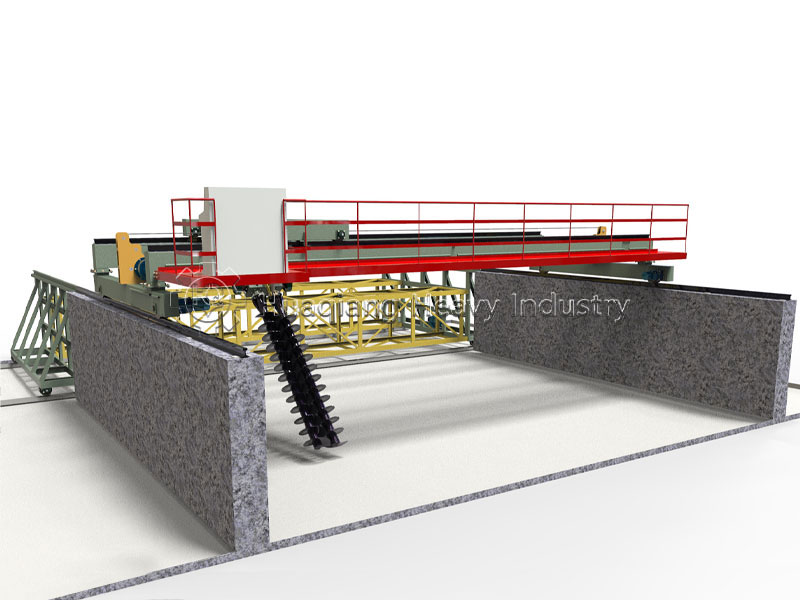
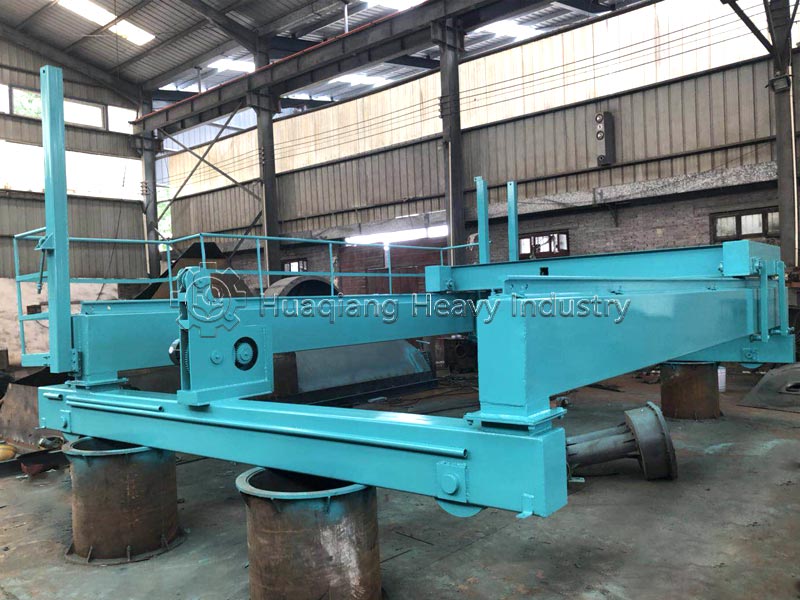
The double screws compost turning machine is a type of turning equipment used in trough-style aerobic fermentation processes, featuring two screw shafts as its core mechanism. It operates by rotating two shafts equipped with continuous helical blades within the fermentation trough; this action simultaneously lifts material from the bottom and conveys it toward the discharge end. The helical blades exert strong shearing and kneading forces, effectively breaking up difficult-to-process materials—such as clumped pig manure or sticky, wet sludge—and ensuring thorough mixing across the different layers of material in the trough. For composting projects that prioritize uniform fermentation quality and require precise control over material retention time, the double screws compost turning machine offers a solution characterized by refined turning, thorough mixing, and controllable material displacement.
What is the fermentation process involved with the double screws compost turning machine?
The process begins with raw material preparation. Livestock manure is mixed with bulking agents (such as straw or rice husks) according to a specific formula, and the moisture content is adjusted to a range of 55%–65%. The mixture is loaded into the fermentation trough from the feed end using a loader or conveyor system and piled to the designed height. Once loaded, the material remains stationary while internal aerobic microorganisms begin to proliferate naturally, raising the temperature inside the trough above 50°C within 24 to 48 hours.
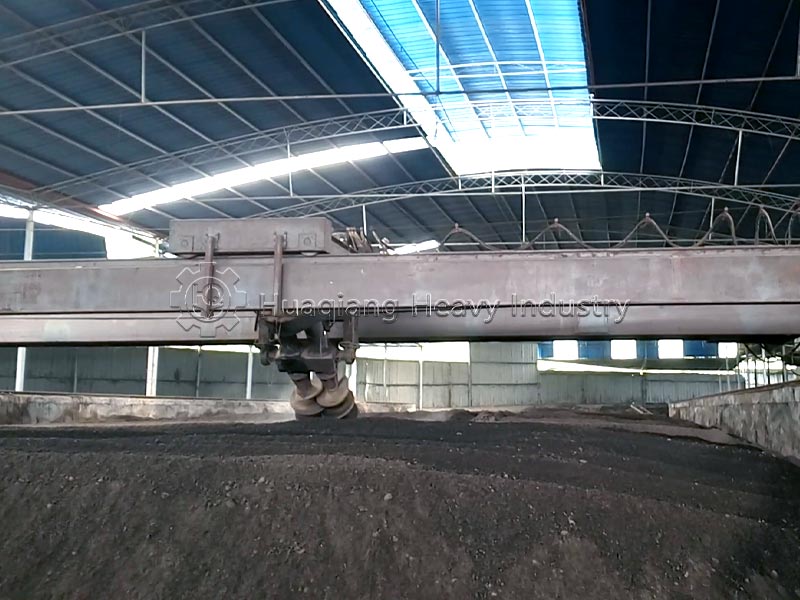
After the initial temperature rise, the double screws compost turning machine begins operation. The equipment travels along rails mounted on the trough walls, with its two screw shafts rotating deep within the material layer. The helical blades scoop up and turn the material from the bottom of the trough while generating axial thrust toward the discharge end. As the material is repeatedly sheared, kneaded, and mixed between the blades, layers are thoroughly interchanged, clumps are broken apart, and long fibers are torn into shorter lengths. Turning exposes the material to air, ensuring an ample oxygen supply that keeps aerobic microorganisms active.
The high-temperature phase lasts for 7 to 10 days; the turner traverses the entire length of the trough once or twice daily, maintaining the internal temperature between 50°C and 70°C. Following this high-temperature period, the material enters the maturation phase, during which the temperature naturally drops and the turning frequency is reduced to once every two to three days. During each turning cycle, the material moves a fixed distance toward the discharge end; over a period of 15 to 20 days, it gradually travels from the feed end to the discharge end, completing the composting process before being removed for subsequent processing.
What raw materials can be composted using the double screws compost turning machine?
Livestock and poultry manure are the primary materials processed. Pig manure has high moisture content and viscosity and tends to clump; the cutting action of the twin-screw blades effectively breaks these clumps apart. Chicken manure is rich in nitrogen and heats up rapidly, but its moisture content is too low for composting on its own, so it must be mixed with wetter materials like cattle manure. Cattle manure has high fiber content and a loose texture; the tearing action of the screw blades helps soften the fibers and accelerate decomposition. Sheep manure and duck manure are also suitable.
Crop stalks and agricultural processing by-products serve as important carbon-rich bulking agents. Corn, rice, and wheat stalks are shredded and mixed with manure in the composting channel, where the screw turner further breaks down the fibers. Harder bulking agents—such as rice husks, peanut shells, and spent mushroom substrate—mix more evenly with the manure thanks to the kneading action of the screw blades.
Regarding industrial organic waste, sugar mill filter mud has high moisture content and viscosity; the twin-screw turner thoroughly mixes it with dry bulking agents, preventing the formation of anaerobic layers that occur when it is piled alone. Distillers’ grains and vinegar residue are highly acidic; mixing them with manure for composting helps balance the pH level. Traditional Chinese medicine residues are fibrous and contain medicinal compounds that require high-temperature degradation; the uniform oxygen supply provided by the twin-screw turning process facilitates this.
Biogas digestate and dewatered sewage sludge from municipal wastewater treatment plants are mixed with stalk-based bulking agents and undergo high-temperature aerobic treatment via the twin-screw channel composting process, transforming them into safe raw materials for organic fertilizer.
What are the requirements for fermentation raw materials when using the double screws compost turner?
Moisture control is the primary factor determining the success of channel composting. The ideal moisture content for materials entering the channel is 55% to 65%; a practical rule of thumb is that the material should form a clump when squeezed by hand, leaving moisture marks between the fingers without actually dripping water. Although the double screws compost turner outperforms toothed-roller turners in breaking up high-moisture materials, excessive moisture can still cause the material to turn into a paste within the fermentation channel, severely reducing air permeability. Fresh manure and wet industrial waste require the addition of sufficient dry bulking agents—such as straw powder or rice husks—to adjust moisture levels, and these must be mixed thoroughly before being loaded into the channel.
The optimal carbon-to-nitrogen (C/N) ratio ranges from 25:1 to 30:1. Livestock manure typically has a high nitrogen content and requires the addition of high-carbon materials to balance nutrients. If the C/N ratio deviates from this optimal range, fermentation may be sluggish with difficulty rising in temperature, or significant nitrogen loss may occur via ammonia volatilization, thereby compromising the fertilizer’s final efficacy. When designing the formulation, it is recommended to conduct small-scale trials to determine the material ratios before scaling up production.
Material particle size must balance air permeability with the rate of decomposition. Long-fiber materials, such as straw, should be shredded to lengths of less than 10 cm before loading; excessively long fibers can wrap around the screw blades and increase the load on the machine. However, excessive shredding is unnecessary, as retaining some fiber helps maintain the material’s porous structure within the channel. Viscous materials, such as filter cake and sludge, must be thoroughly pre-mixed with loose bulking agents before being loaded into the channel; they should not be piled in separate, solid layers.
Hard objects—such as large stones or metal debris—are strictly prohibited in the material loaded into the channel. If such debris enters the screw-turning zone, it can strike the blades, causing edge damage or breakage. Screening and iron removal prior to feeding are essential measures to protect the equipment.
What is the processing capacity of the double screws compost turner?
The capacity of a double screws compost turner is directly related to the fermentation channel width, the height of the material pile, and the travel speed of the turner. Different models can accommodate composting requirements ranging from just over ten tons to more than a hundred tons of daily throughput.
| Model | Main Motor | Small Car Moving Motor | Big Car Moving Motor | Hydraulic Pump Motor |
| SLP-10m | 15KW | 1.5KWX2 | 1.5KWX2(4) | 4KW |
| SLP-12m | ||||
| SLP-15m | ||||
| SLP-20m |
