
Windrow Compost Turning Machine
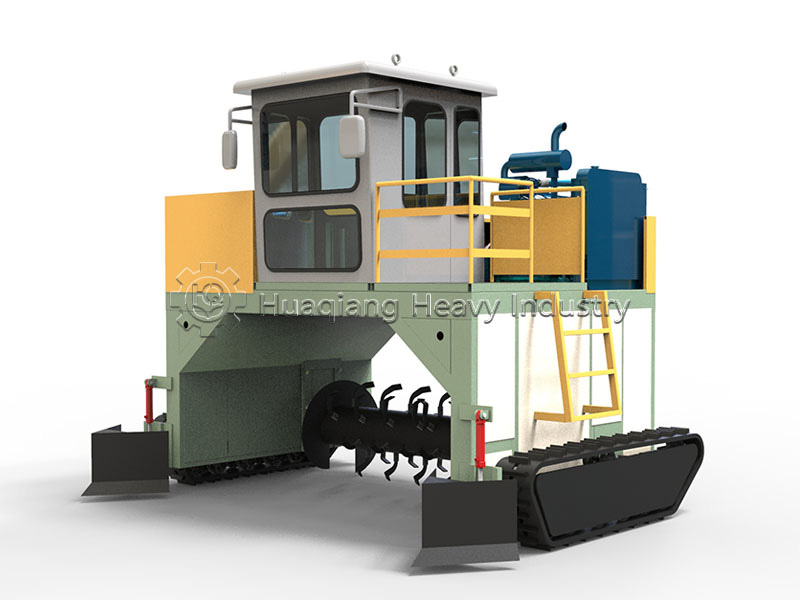
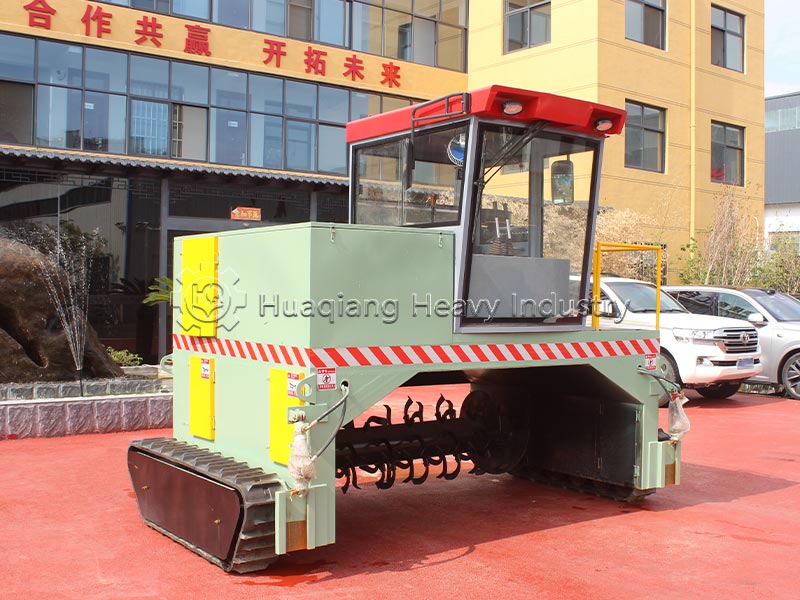
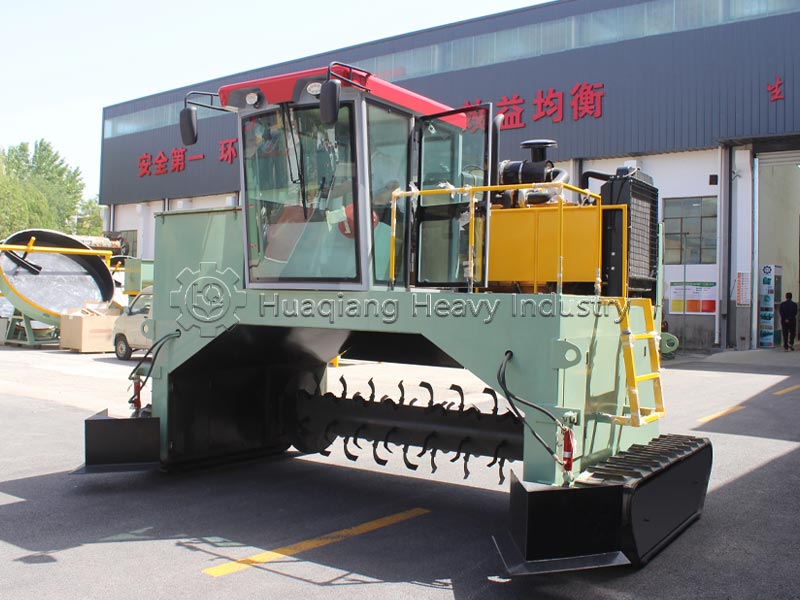
Windrow Compost Turning Machine
The windrow compost turner is a self-propelled, straddle-type machine designed for windrow composting. It operates by straddling the compost windrow, moving forward on a crawler chassis while a rotating drum underneath thoroughly turns the material from bottom to top. Powered by a diesel engine, it requires no external power cables, allowing for composting operations in various locations—such as field edges, open lots, or under trees. The crawler tracks ensure stable movement even on muddy ground after rain, preventing the machine from getting stuck or slipping. It is an ideal, reliable, and adaptable piece of equipment for livestock farms managing their own manure or for township-level organic fertilizer facilities looking to start composting operations with a modest investment.
How does the windrow compost turner process organic fertilizer raw materials?
The process begins by mixing raw materials and bulking agents in the correct proportions. Livestock manure is blended with materials such as crushed straw or rice husks; water is added—or the manure’s inherent moisture is utilized—to achieve the optimal moisture level. The mixture is piled on the ground into a long windrow with a trapezoidal cross-section, typically 1 to 1.5 meters high, with a base width matched to the turner’s drum width. During piling, the material should be compacted slightly to ensure a neat shape and a straight alignment, facilitating the machine’s straddle operation.
Once the windrow is formed, the material begins to heat up naturally. Within one or two days, the internal temperature rises to 50–60°C. At this point, the windrow compost turning machine is positioned at the end of the windrow, aligned with its centerline, and driven over it to begin the first turning cycle. As the machine moves slowly forward, the tines on the drum scoop material from the bottom, lift it to the top, and cast it backward; the material disperses in the air, absorbing ample oxygen, and lands shifted slightly toward the rear of the pile. After one pass, the windrow becomes loose and aerated; the temperature may drop briefly before quickly rising back into the high-temperature range.
During the high-temperature phase, the pile is turned once daily for 7 to 10 days, ensuring the entire mass undergoes temperatures of 50–70°C, which kills pathogens and weed seeds. As the temperature gradually drops after this peak, the turning frequency can be reduced to once every two or three days. Through repeated turning, the material moves from the start to the end of the windrow; its color shifts from yellowish-brown to dark brown, and its odor changes from pungent to an earthy, fresh scent. Maturation is complete after approximately 15 to 20 days; a front-end loader then removes the finished compost, clearing space for the next batch of raw materials.
What are the common issues with crawler-type compost turning machines, and what are the solutions?
| Common Problems | Cause Analysis | Solutions |
| Severe material sticking to the drum, material cannot be thrown out | High moisture content of the material, or excessive compaction during windrow formation | Mix in dry straw powder or rice husks to adjust moisture; tamp moderately during windrow formation but avoid excessive stepping; increase drum speed appropriately to enhance throwing force |
| Pile temperature does not rise or rises very slowly after turning | Imbalanced C/N ratio, or too low moisture content limiting microbial activity | Increase manure proportion to supplement nitrogen; check moisture and add water to 55%–65%; check if turning depth is too shallow causing insufficient oxygen supply |
| Track derails during operation | Track tension too loose, or excessive unilateral stress during turning | Adjust track tension to proper range according to the manual; when turning, operate at wider areas at windrow ends to reduce turning angle |
| Diesel engine emits black smoke and lacks power | Air filter clogged with dust, or engine overloaded | Clean or blow air filter element every shift; shorten cleaning intervals if the composting site has heavy dust; reduce travel speed or turning depth appropriately |
| Turning tines break or frequently fall off | Large stones or metal debris mixed in the material; reduced strength due to worn tines | Screen and remove iron before feeding; replace tines immediately if cracks or excessive wear are found; use original specification parts |
| Hydraulic system temperature too high, action slows down | Hydraulic oil deteriorated due to long-term non‑replacement, or radiator surface covered with dust | Clean dust from the hydraulic oil radiator surface; check hydraulic oil condition every 500 operating hours; replace if it turns black or white |
For which types of producers is the crawler-type compost turner suitable?
Medium-scale livestock and poultry farms. Farms housing thousands to tens of thousands of chickens or hundreds to thousands of pigs generate significant daily waste, requiring reliable turning equipment to mix manure with bulking agents for organic fertilizer production. Powered by an onboard diesel engine, the crawler-type compost turner eliminates the need for laying electrical cables at the composting site; it can operate on existing open ground with minimal leveling. It requires a modest investment yet solves two problems: waste disposal and self-sufficiency in fertilizer supply.
Township-level organic fertilizer processing centers and small-scale composting projects. These centers often operate on rented land where constructing permanent fermentation tanks or rail systems is impractical. Crawler-type compost turners require virtually no site modification—operations can begin immediately upon delivery, and the site can be vacated without leaving a trace. Diesel power allows composting to take place on open land far from residential areas, minimizing odor impact on the neighborhood.
Centralized processing projects for agricultural waste such as crop stalks and spent mushroom substrate. During harvest seasons, large volumes of stalks require disposal; windrow compost turning machines can operate directly in the fields, turning and fermenting piles on-site to save on long-distance raw material transport costs. For centralized composting of spent mushroom substrate bags, the turner’s wide drum processes the entire windrow in a single pass, matching the production rate of the waste substrate.
Environmental protection and agricultural service companies that provide mobile composting services. The equipment can be loaded onto vehicles and transported to various composting sites to provide services; it operates at one location after another and moves on immediately upon completion, resulting in high equipment utilization and a strong return on investment.
Specifications of the Windrow Compost Turning Machine
| Model | HQ-FD 2500 | HQ-FD 2600 | HQ-FD 3000 |
| Width(mm) | HQ-FD 2500 | 2600 | 3000 |
| Height(m) | 500-1000 | 500-1100 | 500-1200 |
| Stack spacing (m) | 1.0-1.2 | 1.0-1.2 | 1.0-1.2 |
| Max Particle Size (mm) | 250 | 250 | 250 |
| Power | R4102 Turbocharged 90HP Diesel Engine | R4105 Turbocharged 105HP Diesel Engine | R6105 Turbocharged 136HP Diesel Engine |
| Rated power speed(r/min) | 2200 | 2200 | 2200 |
| Working speed(m/min) | 6-18 | 6-18 | 6-18 |
| Driving speed(m/min) | 50 | 50 | 50 |
| Processing capacity(m3/h) | 400-600 | 600-800 | 1000-1200 |
| Overall size(m) | 3.64×2.6×2.7 | 3.75×2.6×2.7 | 4.36×2.75×2.95 |
