
Hydraulic Compost Turning Machine
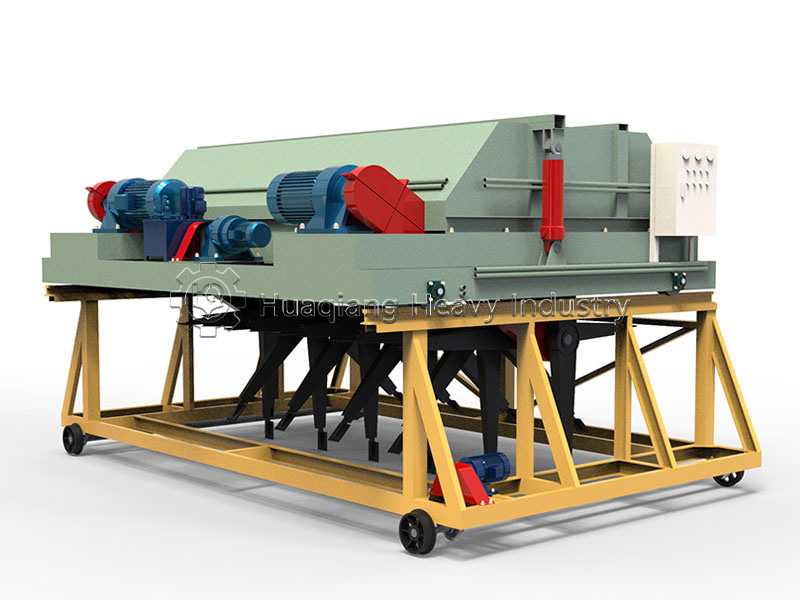
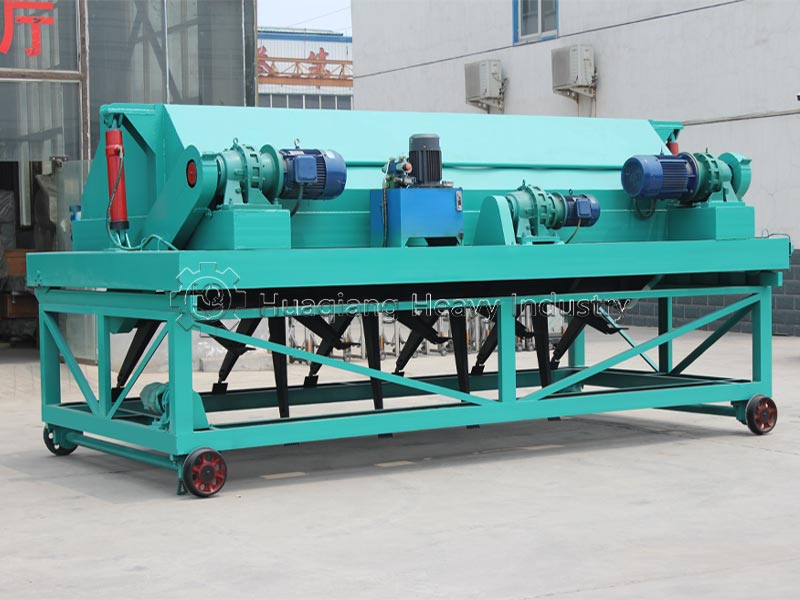
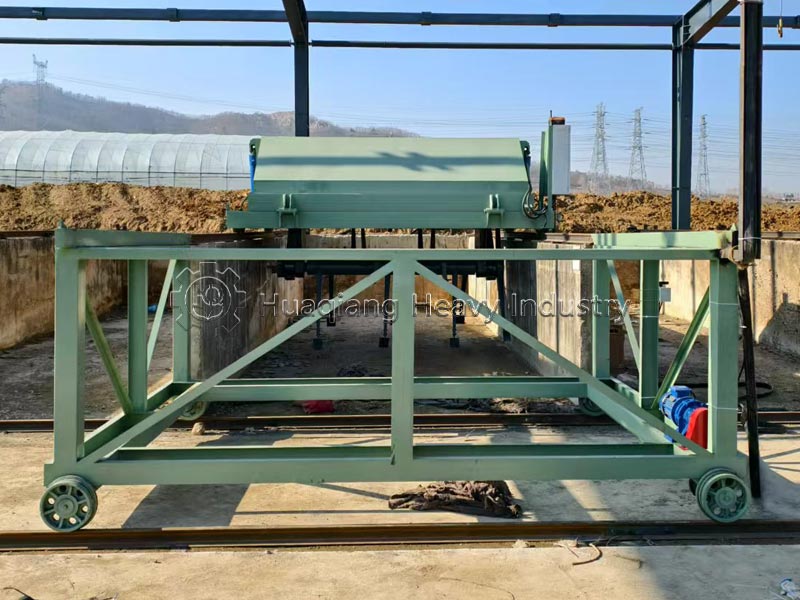
Hydraulic Compost Turning Machine
The hydraulic trough-type compost turner is the core turning equipment for the large-scale aerobic fermentation stage of organic fertilizer production. Designed to address industry challenges—such as high fiber content, fluctuating moisture levels, and tendencies for machinery jamming or material clumping—it utilizes a fully hydraulic drive system to upgrade its travel, lifting, and turning mechanisms. The gantry-style frame spans the fermentation trough, riding on rails installed on both sides. Leveraging the flexible power transmission of the hydraulic system, the equipment adapts dynamically to the operational needs of different fermentation stages. An integrated overflow protection mechanism effectively buffers the rigid impact caused by hard objects jamming the machine, thereby reducing equipment failure rates during continuous production. This machine significantly improves fermentation uniformity and decomposition efficiency, making it a preferred choice for small, medium, and large-scale organic fertilizer production lines.
How does the hydraulic trough-type compost turner process organic fertilizer raw materials?
Working in conjunction with a trough-based fermentation system, the hydraulic compost turner executes the entire aerobic composting process for organic fertilizer raw materials in distinct stages.
Raw materials undergo pretreatment before entering the trough; processes such as crushing and the mixing of additives are used to adjust the carbon-to-nitrogen (C/N) ratio to 25–30:1 and control moisture content between 55% and 65%. Once evenly distributed in the fermentation trough, the turning operation begins.
During the initial heating phase, the equipment operates in a “shallow turning, slow travel” mode, gently breaking up material and introducing oxygen to promote the rapid proliferation of aerobic microorganisms, thereby driving a steady rise in pile temperature.
During the high-temperature decomposition phase—once the pile temperature exceeds 55°C—the equipment adjusts by reducing turning depth and controlling turning frequency. Thorough turning breaks up clumps and dissipates excess heat, maintaining the temperature within the 55–70°C range to eliminate pathogens, insect eggs, and weed seeds while accelerating the decomposition and transformation of organic matter.
During the cooling and maturation phase—after the material has largely decomposed—the equipment increases turning height and travel speed while reducing turning intensity. This allows the pile to cool and mature gradually, promoting humus formation. Throughout the turning process, the material moves progressively toward the discharge end of the trough. Upon completion of the decomposition cycle, the material is discharged, and the equipment returns to the starting position to begin the next batch.
What are the common issues associated with hydraulic trough compost turning machines, and what are the solutions?
| Common Issues | Causes | Solutions |
| Travel Deviation and Uneven Rail Wear | Uneven oil supply flow to both side travel hydraulic motors, misalignment in rail installation parallelism, and diameter differences in travel wheels after long-term wear. | Adjust flow divider valve parameters in the hydraulic valve group to ensure consistent oil supply to both motors; recalibrate rail parallelism and levelness; replace excessively worn travel wheels and adjust wheel set lateral clearance. |
| Weak Turning Spindle Performance and Insufficient Turning Depth | Low working pressure in the hydraulic system, pressure loss due to leaking oil circuit seals, and abnormal cutting resistance from excessively worn turning teeth. | Verify relief valve pressure parameters and adjust to rated equipment working pressure; inspect oil line connections and hydraulic cylinder seals, replace leaking seal components; repair-weld or replace excessively worn turning teeth to restore normal tooth profile. |
| Excessively Rapid Hydraulic Oil Temperature Rise and System Efficiency Drop | Clogged hydraulic oil filters causing poor circulation, dust accumulation on radiator surfaces affecting heat dissipation, and frequent overflow from prolonged overload operation. | Regularly replace suction and return oil filters to ensure smooth oil circulation; clean dust and material residue from radiator surfaces; avoid prolonged overload operation and properly match turning depth with travel speed. |
| Asynchronous Bilateral Lifting and Spindle Tilting/Jamming | Deviation in oil inlet flow to dual hydraulic cylinders, uneven operating resistance due to lack of lubrication on guide columns, and offset trigger positions of lift limit switches. | Adjust synchronous control valve flow to ensure synchronized lifting of both cylinders; regularly apply grease to guide columns to reduce operating resistance; calibrate trigger positions of upper and lower limit switches to prevent overtravel jamming. |
| Frequent Overload Protection Triggering and Operation Interruption | Insufficient raw material pretreatment, mixed with large hard debris, and excessively deep turning depth or too fast travel speed. | Add a debris removal process before raw materials enter the trough to remove stones, metal and other hard objects; appropriately reduce turning depth based on material properties; lower travel speed under heavy load conditions to reduce instantaneous impact loads. |
For which types of manufacturers is the hydraulic trough compost turner suitable?
Hydraulic trough compost turners are suitable for a wide range of entities involved in the resource recovery of organic solid waste, with applications spanning fertilizer production, environmental management in livestock farming, and the treatment of processing by-products.
First, they are ideal for large-scale commercial organic fertilizer manufacturers—particularly those with an annual output exceeding 10,000 tons. These machines offer high processing capacity and operational stability; they can be integrated into multi-channel parallel production lines to meet the demands of continuous, batch-style manufacturing while ensuring consistent decomposition and quality in the finished fertilizer.
Second, they are well-suited for organic fertilizer facilities attached to large-scale livestock and poultry operations—such as industrial-scale ranches, pig farms housing over 10,000 head, and large poultry farms. These facilities can process manure and bedding material on-site, converting them into organic fertilizer via channel-based fermentation. The hydraulic overload protection system effectively handles the complex physical properties of mixed manure, thereby reducing daily operation and maintenance costs.
Additionally, the equipment is suitable for manufacturers in the agro-food processing sector—including sugar refineries, distilleries, fruit and vegetable processing plants, and traditional Chinese medicine manufacturers. These enterprises can ferment organic by-products generated during their operations—such as filter mud, spent grains, fruit pomace, and herbal residues—on-site to produce fertilizer, thereby achieving the resource recovery and recycling of waste materials.
Specifications of the Hydraulic Trough Compost Turner
| Model | Main Motor | Walking Motor | Moving Motor | Hydraulic Pump Motor |
| FPY4 | 22kw | 1.5kw | 1.1kw | 4kw |
| FPY5 | 30kw | 1.5kw | 1.5kw | 4kw |
| FPY6 | 37kw | 2.2kw | 1.5kw | 4kw |
