
Setting the inclination angle of a belt conveyor is far from a simple geometric choice; it is a dynamic balancing act involving material properties, mechanical structure, and energy efficiency. Conventional wisdom often views the relationship between inclination and efficiency as a simple linear decline—where a steeper angle results in lower efficiency—but in-depth engineering practice reveals this perspective to be overly simplistic. Conveying efficiency is actually determined by a multidimensional interplay between the inclination angle, the material's internal friction coefficient, the frictional characteristics of the belt surface, the idler trough angle, and the drive control strategy. When these elements are precisely coordinated, a moderate inclination does not necessarily entail a significant loss in efficiency; instead, it can maintain optimal conveying capacity while saving valuable floor space.
 The primary principle in matching the inclination angle is to respect the "nature" of the material. Every type of bulk material possesses an inherent internal dynamic friction coefficient and a specific dynamic friction coefficient relative to the conveyor belt. Together, these parameters establish the theoretical upper limit for the inclination angle—in principle, the angle should not exceed the arctangent value derived from these friction coefficients. However, theoretical limits do not equate to engineering feasibility. Due to the natural sag of the belt between idler sets, the actual local inclination exceeds the geometric design value; consequently, engineering standards typically require the inclination to be 10 to 15 degrees less than the angle of repose (or static friction angle) to ensure an adequate safety margin. Optimal inclination ranges vary significantly by material: 13–15 degrees for coal, 12–13 degrees for iron ore and limestone, and 11–12 degrees for grain. Ignoring this fundamental matching principle makes it difficult to prevent issues such as material rollback, pile-ups at the tail end, and safety hazards, even when using high-power drive systems.
Optimizing the match between conveyor inclination and efficiency is not about finding a single, fixed "ideal angle," but rather about constructing a dynamic, synergistic system that integrates material, mechanical, and control elements. From theoretically defining parameters based on the material's frictional properties to achieving geometric compensation via idler trough angles, and finally enabling real-time operational adjustments through intelligent drive systems, every step embodies a singular engineering insight: efficiency is not the adversary of inclination, but rather the natural reward for correctly understanding and effectively managing it. When designers move beyond the mindset that "shallower angles are always better" and embrace a systems-oriented approach—optimizing multiple parameters in concert—belt conveyors can deliver impressive efficiency across a wide range of operating angles.
The primary principle in matching the inclination angle is to respect the "nature" of the material. Every type of bulk material possesses an inherent internal dynamic friction coefficient and a specific dynamic friction coefficient relative to the conveyor belt. Together, these parameters establish the theoretical upper limit for the inclination angle—in principle, the angle should not exceed the arctangent value derived from these friction coefficients. However, theoretical limits do not equate to engineering feasibility. Due to the natural sag of the belt between idler sets, the actual local inclination exceeds the geometric design value; consequently, engineering standards typically require the inclination to be 10 to 15 degrees less than the angle of repose (or static friction angle) to ensure an adequate safety margin. Optimal inclination ranges vary significantly by material: 13–15 degrees for coal, 12–13 degrees for iron ore and limestone, and 11–12 degrees for grain. Ignoring this fundamental matching principle makes it difficult to prevent issues such as material rollback, pile-ups at the tail end, and safety hazards, even when using high-power drive systems.
Optimizing the match between conveyor inclination and efficiency is not about finding a single, fixed "ideal angle," but rather about constructing a dynamic, synergistic system that integrates material, mechanical, and control elements. From theoretically defining parameters based on the material's frictional properties to achieving geometric compensation via idler trough angles, and finally enabling real-time operational adjustments through intelligent drive systems, every step embodies a singular engineering insight: efficiency is not the adversary of inclination, but rather the natural reward for correctly understanding and effectively managing it. When designers move beyond the mindset that "shallower angles are always better" and embrace a systems-oriented approach—optimizing multiple parameters in concert—belt conveyors can deliver impressive efficiency across a wide range of operating angles.
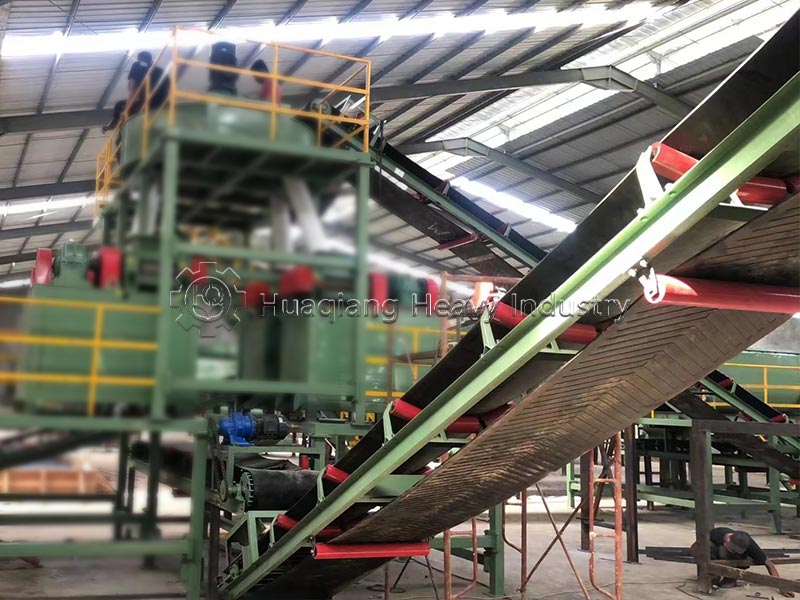 The primary principle in matching the inclination angle is to respect the "nature" of the material. Every type of bulk material possesses an inherent internal dynamic friction coefficient and a specific dynamic friction coefficient relative to the conveyor belt. Together, these parameters establish the theoretical upper limit for the inclination angle—in principle, the angle should not exceed the arctangent value derived from these friction coefficients. However, theoretical limits do not equate to engineering feasibility. Due to the natural sag of the belt between idler sets, the actual local inclination exceeds the geometric design value; consequently, engineering standards typically require the inclination to be 10 to 15 degrees less than the angle of repose (or static friction angle) to ensure an adequate safety margin. Optimal inclination ranges vary significantly by material: 13–15 degrees for coal, 12–13 degrees for iron ore and limestone, and 11–12 degrees for grain. Ignoring this fundamental matching principle makes it difficult to prevent issues such as material rollback, pile-ups at the tail end, and safety hazards, even when using high-power drive systems.
Optimizing the match between conveyor inclination and efficiency is not about finding a single, fixed "ideal angle," but rather about constructing a dynamic, synergistic system that integrates material, mechanical, and control elements. From theoretically defining parameters based on the material's frictional properties to achieving geometric compensation via idler trough angles, and finally enabling real-time operational adjustments through intelligent drive systems, every step embodies a singular engineering insight: efficiency is not the adversary of inclination, but rather the natural reward for correctly understanding and effectively managing it. When designers move beyond the mindset that "shallower angles are always better" and embrace a systems-oriented approach—optimizing multiple parameters in concert—belt conveyors can deliver impressive efficiency across a wide range of operating angles.
The primary principle in matching the inclination angle is to respect the "nature" of the material. Every type of bulk material possesses an inherent internal dynamic friction coefficient and a specific dynamic friction coefficient relative to the conveyor belt. Together, these parameters establish the theoretical upper limit for the inclination angle—in principle, the angle should not exceed the arctangent value derived from these friction coefficients. However, theoretical limits do not equate to engineering feasibility. Due to the natural sag of the belt between idler sets, the actual local inclination exceeds the geometric design value; consequently, engineering standards typically require the inclination to be 10 to 15 degrees less than the angle of repose (or static friction angle) to ensure an adequate safety margin. Optimal inclination ranges vary significantly by material: 13–15 degrees for coal, 12–13 degrees for iron ore and limestone, and 11–12 degrees for grain. Ignoring this fundamental matching principle makes it difficult to prevent issues such as material rollback, pile-ups at the tail end, and safety hazards, even when using high-power drive systems.
Optimizing the match between conveyor inclination and efficiency is not about finding a single, fixed "ideal angle," but rather about constructing a dynamic, synergistic system that integrates material, mechanical, and control elements. From theoretically defining parameters based on the material's frictional properties to achieving geometric compensation via idler trough angles, and finally enabling real-time operational adjustments through intelligent drive systems, every step embodies a singular engineering insight: efficiency is not the adversary of inclination, but rather the natural reward for correctly understanding and effectively managing it. When designers move beyond the mindset that "shallower angles are always better" and embrace a systems-oriented approach—optimizing multiple parameters in concert—belt conveyors can deliver impressive efficiency across a wide range of operating angles. 