Mastering the toughest organic waste: Where traditional crushers fail, the chain crusher thrives on long fibers and resilient materials.
Core Advantage: Flailing Beats Hammering
Unlike conventional hammer mills that rely on impact, the chain crusher utilizes a high-speed rotor with freely swinging, heavy-duty chains. This creates a unique “flailing and tearing” action that is exceptionally effective against tangled, fibrous biomass that would choke other machines.
1Anti-Wrapping Design
Its swinging chains naturally resist entanglement, making it the ideal choice for straw, vines, and garden trimmings without the risk of shaft jamming or frequent downtime for clearing.
2Efficient & Controllable
Material is reduced through repeated multi-directional impacts. Output size is easily adjusted via rotor speed and screen selection, providing flexibility for different downstream processes.
3Robust & Low-Maintenance
With chains as the primary wear part and a modular design, maintenance is straightforward. Replace individual chains quickly to minimize operational interruptions and keep costs low.
In essence: The chain crusher solves a specific but widespread problem in organic recycling. It doesn't try to be a universal crusher; it excels where others falter, ensuring your production line isn't bottlenecked by difficult-to-shred feedstock.
Comparative Analysis: Finding Its Niche
Understanding where the chain crusher fits requires a direct comparison with other common pretreatment equipment.
The chain crusher is the specialist for the initial breakdown of bulky, fibrous waste, setting the stage for efficient mixing and composting.
Role in the Production Chain
It acts as the essential first step for fiber-rich waste streams. After shredding by the chain crusher, material achieves a uniform size that allows for effective mixing with nitrogen sources (like manure in a double axis mixer) and optimal aeration during composting in windrows or tanks.
Investing in a chain crusher is investing in feedstock security. It ensures that the most challenging, fiber-rich components of organic waste can be reliably and efficiently processed, unlocking their value and keeping your recycling or fertilizer production operation running smoothly from the very start.

 1Anti-Wrapping Design
Its swinging chains naturally resist entanglement, making it the ideal choice for straw, vines, and garden trimmings without the risk of shaft jamming or frequent downtime for clearing.
2Efficient & Controllable
Material is reduced through repeated multi-directional impacts. Output size is easily adjusted via rotor speed and screen selection, providing flexibility for different downstream processes.
3Robust & Low-Maintenance
With chains as the primary wear part and a modular design, maintenance is straightforward. Replace individual chains quickly to minimize operational interruptions and keep costs low.
In essence: The chain crusher solves a specific but widespread problem in organic recycling. It doesn't try to be a universal crusher; it excels where others falter, ensuring your production line isn't bottlenecked by difficult-to-shred feedstock.
Comparative Analysis: Finding Its Niche
Understanding where the chain crusher fits requires a direct comparison with other common pretreatment equipment.
1Anti-Wrapping Design
Its swinging chains naturally resist entanglement, making it the ideal choice for straw, vines, and garden trimmings without the risk of shaft jamming or frequent downtime for clearing.
2Efficient & Controllable
Material is reduced through repeated multi-directional impacts. Output size is easily adjusted via rotor speed and screen selection, providing flexibility for different downstream processes.
3Robust & Low-Maintenance
With chains as the primary wear part and a modular design, maintenance is straightforward. Replace individual chains quickly to minimize operational interruptions and keep costs low.
In essence: The chain crusher solves a specific but widespread problem in organic recycling. It doesn't try to be a universal crusher; it excels where others falter, ensuring your production line isn't bottlenecked by difficult-to-shred feedstock.
Comparative Analysis: Finding Its Niche
Understanding where the chain crusher fits requires a direct comparison with other common pretreatment equipment.
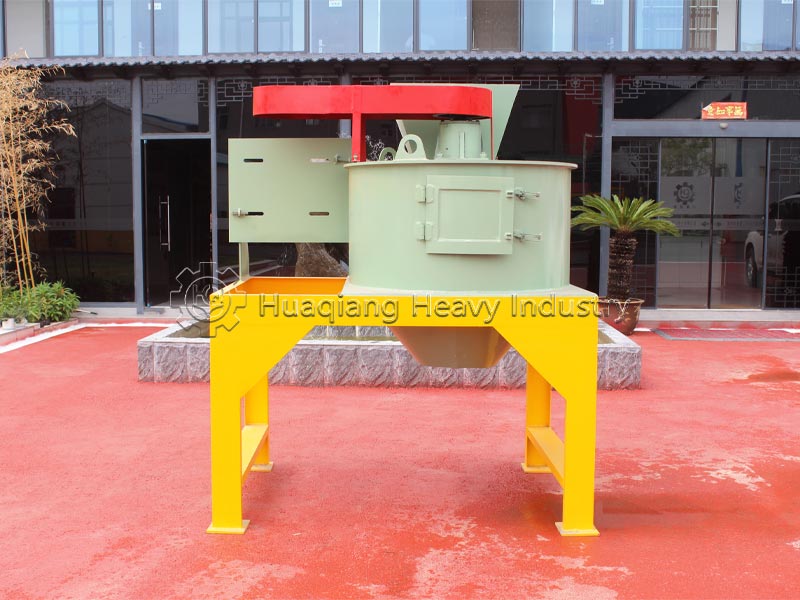 1Anti-Wrapping Design
Its swinging chains naturally resist entanglement, making it the ideal choice for straw, vines, and garden trimmings without the risk of shaft jamming or frequent downtime for clearing.
2Efficient & Controllable
Material is reduced through repeated multi-directional impacts. Output size is easily adjusted via rotor speed and screen selection, providing flexibility for different downstream processes.
3Robust & Low-Maintenance
With chains as the primary wear part and a modular design, maintenance is straightforward. Replace individual chains quickly to minimize operational interruptions and keep costs low.
In essence: The chain crusher solves a specific but widespread problem in organic recycling. It doesn't try to be a universal crusher; it excels where others falter, ensuring your production line isn't bottlenecked by difficult-to-shred feedstock.
Comparative Analysis: Finding Its Niche
Understanding where the chain crusher fits requires a direct comparison with other common pretreatment equipment.
1Anti-Wrapping Design
Its swinging chains naturally resist entanglement, making it the ideal choice for straw, vines, and garden trimmings without the risk of shaft jamming or frequent downtime for clearing.
2Efficient & Controllable
Material is reduced through repeated multi-directional impacts. Output size is easily adjusted via rotor speed and screen selection, providing flexibility for different downstream processes.
3Robust & Low-Maintenance
With chains as the primary wear part and a modular design, maintenance is straightforward. Replace individual chains quickly to minimize operational interruptions and keep costs low.
In essence: The chain crusher solves a specific but widespread problem in organic recycling. It doesn't try to be a universal crusher; it excels where others falter, ensuring your production line isn't bottlenecked by difficult-to-shred feedstock.
Comparative Analysis: Finding Its Niche
Understanding where the chain crusher fits requires a direct comparison with other common pretreatment equipment.
