
You might think a loader feeding hopper is nothing special – just a steel box that catches whatever a loader dumps into it. But stand next to one during a busy shift, and you will change your mind. That hungry mouth is where every fertilizer line takes its first breath.
The morning I watched the installation, a front-end loader was rumbling across the concrete pad, its bucket full of dark, crumbly phosphate. The operator tilted the bucket high, and the material cascaded down into the hopper's gaping throat – a waterfall of brown dust and tiny rocks. The hopper sat on heavy springs above a vibrating feeder, like a giant squatting on a trampoline. As the load hit, the whole assembly shuddered once, then settled into a steady hum.
 The hopper itself is a pyramid of quarter-inch steel plate, reinforced with ribs like an old battleship. Its top opening is wide enough to swallow a small car – five meters by four. But the real genius lies underneath. A set of adjustable gates controls how fast material drops onto the belt conveyor below. Open them too wide, and the belt chokes. Close them too tight, and the crusher starves. The old fitter spent an hour tuning those gates, tapping the steel with a wrench and listening to the echo. "Too high pitched, the plate is too thin. Too dull, the gate is binding." He finally nodded, tightened the last bolt, and the gates moved like silk.
Downstream, the belt conveyor stretched away toward a chain fertilizer crusher. The hopper's vibrating feeder – a trough mounted on rubber blocks – shook with a low frequency rumble, spreading the material into a thin, even ribbon. That ribbon would become the steady diet for every machine further along. Without that first controlled bite, the crusher would either gag on a sudden surge or chew on air.
During the test run, the loader dumped load after load. Dust flew, but the hopper never complained. Its wear liners – thick slabs of abrasion resistant steel bolted to the inside walls – took the punishment. A young worker leaned over the edge to peek inside. The old fitter pulled him back. "Never lean into a hungry mouth," he said. "That steel has eaten harder things than your hard hat."
When the line finally ran at full capacity, the hopper's role seemed almost invisible. The operator just kept feeding it, bucket by bucket, and the hopper just kept passing the material down. No drama, no glory – just the first bite of every meal. But watch closely. That steady rumble, that patient shaking, that endless appetite – that is what keeps the whole line alive. The loader feeding hopper: not a mouth. The first heartbeat.
The hopper itself is a pyramid of quarter-inch steel plate, reinforced with ribs like an old battleship. Its top opening is wide enough to swallow a small car – five meters by four. But the real genius lies underneath. A set of adjustable gates controls how fast material drops onto the belt conveyor below. Open them too wide, and the belt chokes. Close them too tight, and the crusher starves. The old fitter spent an hour tuning those gates, tapping the steel with a wrench and listening to the echo. "Too high pitched, the plate is too thin. Too dull, the gate is binding." He finally nodded, tightened the last bolt, and the gates moved like silk.
Downstream, the belt conveyor stretched away toward a chain fertilizer crusher. The hopper's vibrating feeder – a trough mounted on rubber blocks – shook with a low frequency rumble, spreading the material into a thin, even ribbon. That ribbon would become the steady diet for every machine further along. Without that first controlled bite, the crusher would either gag on a sudden surge or chew on air.
During the test run, the loader dumped load after load. Dust flew, but the hopper never complained. Its wear liners – thick slabs of abrasion resistant steel bolted to the inside walls – took the punishment. A young worker leaned over the edge to peek inside. The old fitter pulled him back. "Never lean into a hungry mouth," he said. "That steel has eaten harder things than your hard hat."
When the line finally ran at full capacity, the hopper's role seemed almost invisible. The operator just kept feeding it, bucket by bucket, and the hopper just kept passing the material down. No drama, no glory – just the first bite of every meal. But watch closely. That steady rumble, that patient shaking, that endless appetite – that is what keeps the whole line alive. The loader feeding hopper: not a mouth. The first heartbeat.
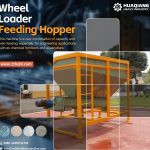 The hopper itself is a pyramid of quarter-inch steel plate, reinforced with ribs like an old battleship. Its top opening is wide enough to swallow a small car – five meters by four. But the real genius lies underneath. A set of adjustable gates controls how fast material drops onto the belt conveyor below. Open them too wide, and the belt chokes. Close them too tight, and the crusher starves. The old fitter spent an hour tuning those gates, tapping the steel with a wrench and listening to the echo. "Too high pitched, the plate is too thin. Too dull, the gate is binding." He finally nodded, tightened the last bolt, and the gates moved like silk.
Downstream, the belt conveyor stretched away toward a chain fertilizer crusher. The hopper's vibrating feeder – a trough mounted on rubber blocks – shook with a low frequency rumble, spreading the material into a thin, even ribbon. That ribbon would become the steady diet for every machine further along. Without that first controlled bite, the crusher would either gag on a sudden surge or chew on air.
During the test run, the loader dumped load after load. Dust flew, but the hopper never complained. Its wear liners – thick slabs of abrasion resistant steel bolted to the inside walls – took the punishment. A young worker leaned over the edge to peek inside. The old fitter pulled him back. "Never lean into a hungry mouth," he said. "That steel has eaten harder things than your hard hat."
When the line finally ran at full capacity, the hopper's role seemed almost invisible. The operator just kept feeding it, bucket by bucket, and the hopper just kept passing the material down. No drama, no glory – just the first bite of every meal. But watch closely. That steady rumble, that patient shaking, that endless appetite – that is what keeps the whole line alive. The loader feeding hopper: not a mouth. The first heartbeat.
The hopper itself is a pyramid of quarter-inch steel plate, reinforced with ribs like an old battleship. Its top opening is wide enough to swallow a small car – five meters by four. But the real genius lies underneath. A set of adjustable gates controls how fast material drops onto the belt conveyor below. Open them too wide, and the belt chokes. Close them too tight, and the crusher starves. The old fitter spent an hour tuning those gates, tapping the steel with a wrench and listening to the echo. "Too high pitched, the plate is too thin. Too dull, the gate is binding." He finally nodded, tightened the last bolt, and the gates moved like silk.
Downstream, the belt conveyor stretched away toward a chain fertilizer crusher. The hopper's vibrating feeder – a trough mounted on rubber blocks – shook with a low frequency rumble, spreading the material into a thin, even ribbon. That ribbon would become the steady diet for every machine further along. Without that first controlled bite, the crusher would either gag on a sudden surge or chew on air.
During the test run, the loader dumped load after load. Dust flew, but the hopper never complained. Its wear liners – thick slabs of abrasion resistant steel bolted to the inside walls – took the punishment. A young worker leaned over the edge to peek inside. The old fitter pulled him back. "Never lean into a hungry mouth," he said. "That steel has eaten harder things than your hard hat."
When the line finally ran at full capacity, the hopper's role seemed almost invisible. The operator just kept feeding it, bucket by bucket, and the hopper just kept passing the material down. No drama, no glory – just the first bite of every meal. But watch closely. That steady rumble, that patient shaking, that endless appetite – that is what keeps the whole line alive. The loader feeding hopper: not a mouth. The first heartbeat. 