
In what scenarios is conventional organic fertilizer insufficient, necessitating the use of bio-organic fertilizer instead?

The core value of conventional organic fertilizer lies in "feeding the soil"—replenishing organic matter, improving soil structure, and providing basic nutrients. However, in certain situations, the soil lacks more than just "food"; it requires a boost to its "immunity" and "rhizosphere ecology."
  1. Greenhouse environments with severe continuous cropping obstacles
In greenhouses used for continuous cultivation, issues such as soil salinization, the accumulation of pathogens, and the toxic effects of root exudates often compound over time. In such cases, the rate at which conventional organic fertilizer can improve the soil is outpaced by the rate of its degradation. Bio-organic fertilizers contain microorganisms like Bacillus subtilis and Trichoderma species, which can colonize the rhizosphere, suppress pathogens, and secrete growth-promoting substances—effectively acting as "probiotics" for the soil.
  1. Plots prone to soil-borne diseases
In areas frequently affected by root rot, wilt, or bacterial wilt, relying solely on organic matter for soil improvement addresses only the symptoms rather than the root cause. Functional microorganisms can reduce pathogen populations within the rhizosphere through competitive exclusion, antibiotic effects, and the induction of systemic resistance. This, however, requires that the microorganisms remain viable, are present in sufficient quantities, and are the appropriate strains for the specific problem.
  1. Seedling cultivation and transplanting
During the seedling stage, root systems are delicate and highly sensitive to salinity and pathogens. Bio-organic fertilizers use well-composted organic matter as a carrier, allowing beneficial microbial populations to colonize the rhizosphere gently; this improves survival rates and shortens the recovery period (transplant shock). Conversely, if conventional organic fertilizer is not fully decomposed, it can easily cause "root burn" (fertilizer burn) to young seedlings.
  1. Certified organic and "green" (eco-friendly) food production bases
Certified production bases are subject to strict regulations regarding agricultural inputs. Bio-organic fertilizers, which offer both nutritional benefits and biological pest/disease control, serve as a compliant alternative to certain chemical inputs—provided that the products chosen are fully registered and meet the required standards for viable microbial counts.
  1. Remediation of acidified, saline-alkali, or compacted soils
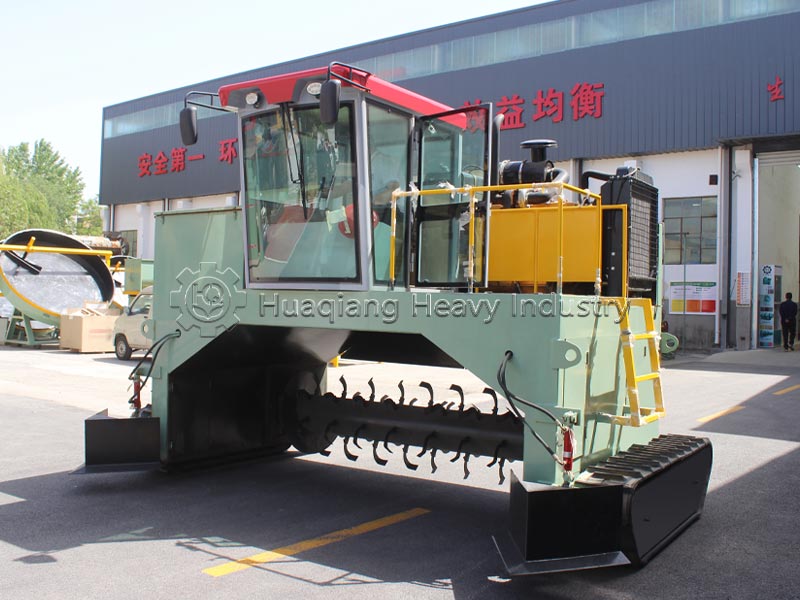
Such soils lack not only organic matter but also active microbial communities. Functional microorganisms can secrete organic acids and polysaccharides, which facilitate the formation of soil aggregates and the activation of nutrients, thereby accelerating the remediation process. In this context, conventional organic fertilizer provides the "framework," while bio-organic fertilizer supplies the "workforce." While conventional organic fertilizers are used to nourish the soil, bio-organic fertilizers are designed to nourish the roots. Such applications demand a high concentration of viable microorganisms; therefore, the production process relies on specialized equipment—including compost turning machines to ensure uniform decomposition, low-temperature fertilizer granulators to preserve the activity of the microbial strains, and fertilizer mixers to guarantee an even distribution of the microbial agents.
All Categories

MON-SAT 8:00-9:00

+91 69 863 6420