
Granulation of organic-inorganic compound fertilizers: Assess the formulation first, then select the equipment

The challenge in granulating organic-inorganic compound fertilizers stems from the conflicting "temperaments" of the two types of materials: inorganic salts rely on crystallization to form granules, while organic matter—characterized by fibers and loose particles—interferes with this process. Before selecting a granulator, you must determine the proportion of organic matter in your formulation and the coarseness of its fibers.
  1. Formulations with High Organic Matter and High Fiber Content
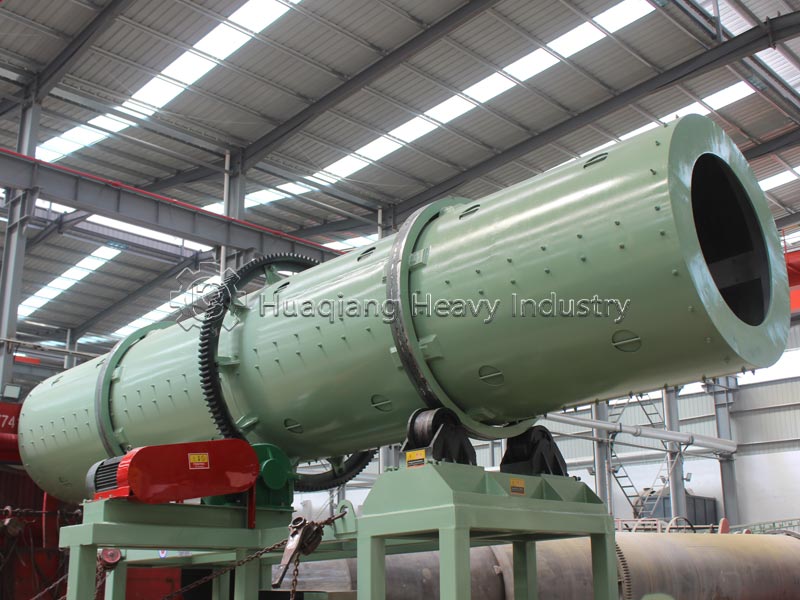
When the proportion of organic matter is high—consisting primarily of materials like oil-seed cake or decomposed straw—the limitations of disc granulators become apparent: low granulation rates and weak granule strength, leading to pulverization during transport. These issues can only be marginally improved by adding extra binders. While rotary drum granulators offer higher production capacity, they also rely on steam and drying systems; furthermore, they are less efficient at forming granules from low-density, high-fiber organic components, all while requiring a higher initial capital investment.
  1. Formulations with Low-to-Moderate Organic Matter (Primarily Decomposed, Finely Ground Material)
If the organic matter content is moderate (e.g., 15%–25%) and the organic components have been ground into a fine powder, disc granulation—which utilizes rolling and agglomeration—can be effective. The key is to strictly maintain the moisture content between 25% and 35% and to incorporate a drying system. This approach is well-suited for small-to-medium-scale operations where high-quality product appearance is required; however, it entails significantly higher energy consumption for drying and a higher rate of recycled material (fines/oversize) compared to purely inorganic compound fertilizers.
  1. Dry-Type Extrusion
For formulations with high fiber content or significant moisture fluctuations, dry-type extrusion—specifically using a flat die press pelleting machine—is a more robust solution. Flat-die extrusion is highly adaptable to materials with a moisture content of 20%–40%. It forms granules through direct physical pressure, resulting in high density and eliminating the need for a drying stage. When dealing with low-density, high-fiber organic components, extrusion granulation produces durable granules with a high yield and minimal recycled material. The trade-off is that the resulting granules are typically cylindrical or oblate (flattened spheres) in shape, lacking the perfect roundness achieved through disc granulation. The key to equipment selection lies in first analyzing the formula: the higher the organic matter content and the coarser the fibers, the more one should avoid equipment that relies heavily on wet granulation—opting instead for dry extrusion, or alternatively, enhancing the initial stages of fine shredding and binder conditioning. For formulas with a moderate organic matter content where product appearance is a priority, a disc granulator paired with a drying system remains a proven and reliable approach.
All Categories

MON-SAT 8:00-9:00

+91 69 863 6420