
Flat Die Pelleting Machine
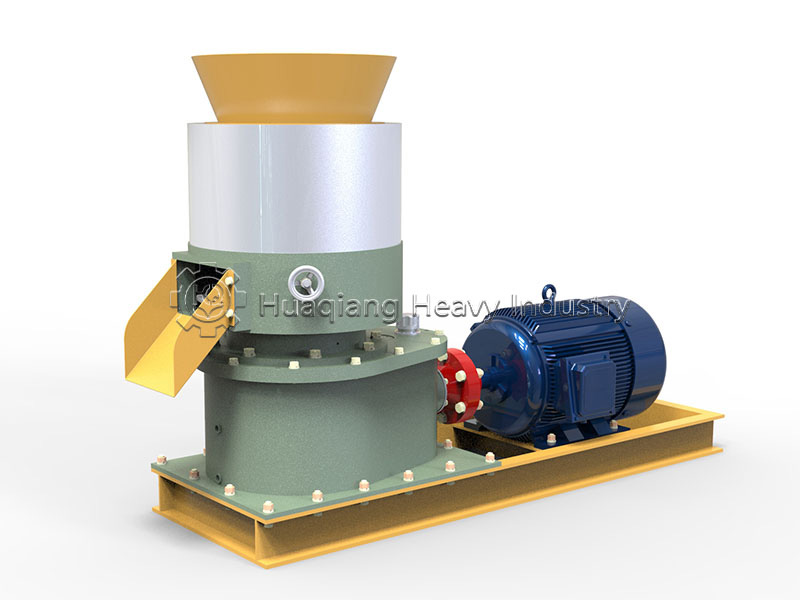
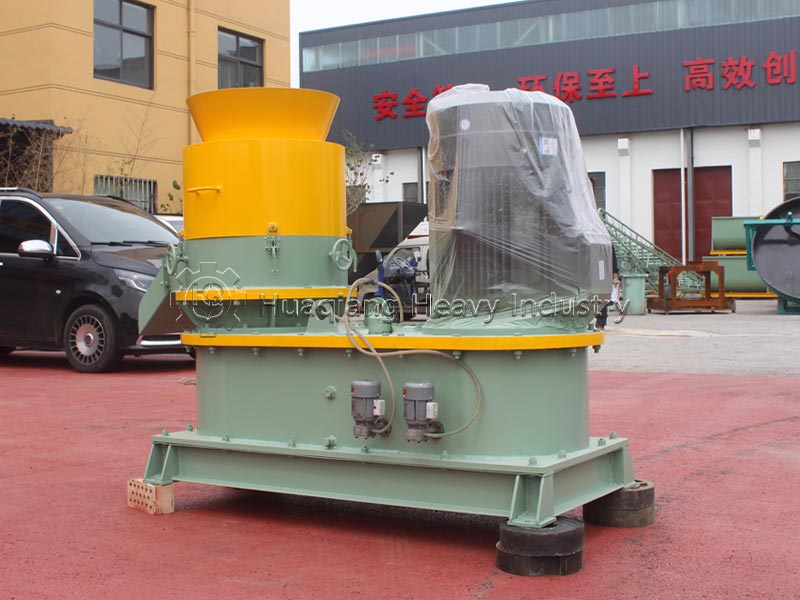
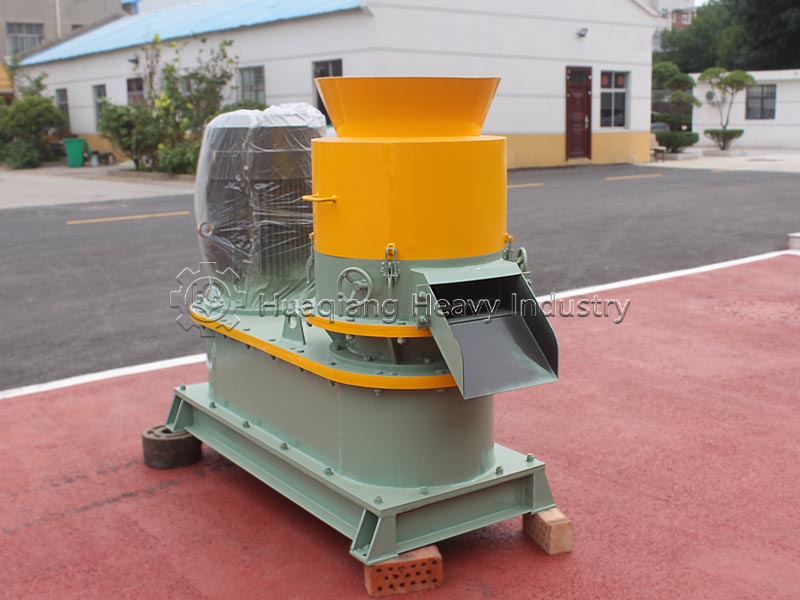
Flat Die Pelleting Machine
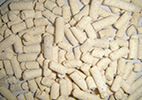
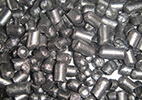
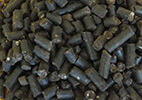
The flat die pelleting machine is an extrusion-type machine specifically designed for granulating organic materials; it is commonly found in processing facilities attached to livestock farms and in small-to-medium-sized organic fertilizer workshops. It performs heavy-duty work—forcing loose organic materials (such as fermented chicken, sheep, or cattle manure and powdered straw) through a perforated circular die plate and cutting them into cylindrical pellets. Although compact and simple in structure, the machine is highly effective at handling organic materials with high fiber content and moisture levels. Its greatest advantage is its versatility regarding feedstocks; it accepts fermented materials with varying moisture levels, avoiding the strict moisture requirements associated with other granulation processes. For livestock farmers and small entrepreneurs with limited capital who wish to enter the organic fertilizer business, the flat die pelleting machine is a reliable, practical choice.
Working Principle of Flat Die Pelleting Machine
The core operation of the flat die pelleting machine can be summarized in three actions: pressing, extruding, and cutting. After entering the granulation chamber, the material lands on a horizontal circular die plate; the main motor drives the die plate to rotate at a constant speed via a gearbox. The pressure rollers above the die plate are not directly driven by the motor but rotate passively through friction generated between the material, the rollers, and the die plate. As material is drawn into the gap between the rollers and the die plate, the rollers exert powerful crushing force, compacting the loose material and forcibly extruding it into the die holes. Inside the holes, the material undergoes a brief compression and shaping process; as it is compacted and moves downward, it is continuously extruded from the bottom of the die plate as dense cylindrical strands. Simultaneously, a cutter mounted beneath the die plate slices the extruded strands to the desired length, and the finished pellets fall into the discharge outlet.
Common Issues for Flat Die Pelleting Machine
Pellet discharge is sluggish or output is significantly low after using a new machine or a newly replaced die plate: This is usually because the inner walls of the die holes have not yet been “broken in,” resulting in excessive resistance. Running an oil-and-fine-sand mixture through the machine several times to polish the inner walls of the die holes will smooth out the discharge process.
Pellet surfaces are fuzzy or cracked, or pellets break easily: This is typically caused by the material having too low a moisture content or the fibers being excessively long. If the material is too dry, the particles fail to bond securely; they are often cut off before they can properly form. Increasing the material’s moisture content or re-grinding raw materials with long fibers will significantly improve the appearance and strength of the pellets.
Abnormal roller bouncing: This issue often stems from the roller bearings. Operating in a high-temperature, dusty environment under heavy loads, these bearings wear out rapidly if lubrication is insufficient, causing the rollers to rotate sluggishly or even seize up. Immediate shutdown and inspection are required, and worn bearings must be replaced promptly.
Intermittent pellet output and fluctuating production rates: This is usually caused by material bridging in the hopper. Organic materials with high fiber content often have poor flowability, leading to situations where the material arches over and fails to feed down. Installing a feeder with an anti-bridging function or manually agitating the material with a rod can ensure consistent feeding.
Maintenance Methods for Flat Die Pelleting Machine
Before each shift, check the die holes for blockages, ensure the rollers rotate freely, and verify the clearance between the cutter and the die face. Monitor the ammeter during operation and investigate immediately if the current rises abnormally. Apply high-temperature grease to the roller bearings once or twice per shift; do not wait for a low-lubrication alarm. Before shutting down, clear any residual material from the granulation chamber using dry material or an oil-material mixture.
Check the roller surfaces weekly for wear; excessive wear on the roller teeth reduces grip, necessitating timely replacement. Check the sharpness of the cutter blade; remove and sharpen or replace it if it becomes dull.
Perform a comprehensive inspection and maintenance check monthly. Inspect the die for wear on both sides and flip it over once one side reaches its wear limit. Clean accumulated material and deposits from the granulation chamber walls and discharge chute. Check the drive belt tension, as well as motor wiring and insulation.
Conduct a major overhaul annually or during the off-season. Fully assess wear-prone parts—such as the die, rollers, and cutter—and repair or replace them as necessary. Change the gearbox oil and inspect or replace the motor bearings. Inspect the frame for weld cracks; perform a final tightening and adjustment of the entire machine, followed by a no-load test run for acceptance.
Target Users
Livestock farms with integrated fertilizer processing. Chicken, pig, cattle, and sheep farms generate large quantities of manure daily. After fermentation, this waste can be converted into granular organic fertilizer using a flat die pelleting machine; the product can either be used on-site or packaged for sale to generate additional revenue. A single small-to-medium-sized flat die pelleting machine can handle the manure output from a flock of several thousand chickens or a herd of several hundred pigs.
Small-scale township organic fertilizer processing centers. Entrepreneurs can utilize local raw materials from livestock farms and crop cultivation bases to set up small processing workshops equipped with flat die pelleting machines, producing granular organic fertilizer for nearby farmlands and orchards. This venture requires low equipment investment and has a low technical barrier to entry.
Family farms and large-scale growers. Farmers who manage both crop cultivation and livestock rearing can process fermented chicken or cattle manure into granular fertilizer for their own fields; this simultaneously solves the problem of waste disposal and reduces fertilizer costs.
Small-scale entrepreneurial fertilizer processing plants. Businesses can establish a foothold in a niche market and—after accumulating a customer base and capital—gradually expand production or acquire additional equipment models as the business grows. The low startup barrier of flat die pelleting machines makes them an ideal choice for this type of user.
Flat Die Pelleting Machine Parameters
| Model | KP-210 | KP-260 | KP-400 | KP-500 |
| Capacity (t/h) | 0.2-0.3 | 0.4-0.5 | 1-1.2 | 2-5 |
| Pelleting Rate (%) | >95% | >95% | >95% | >95% |
| Rotation Speed(r/min) | 370 | 260 | 260 | 125 |
| Power(Kw) | 7.5 | 11 | 30 | 55 |
