
In a bio-organic fertilizer production line, the crushing stage serves a dual purpose: it not only breaks down decomposed raw materials but also prepares a suitable powder for microbial inoculation and granulation—all while ensuring that the microbial population remains viable and the final product stays safe. Consequently, a fertilizer crusher must possess four key characteristics:
First, it must operate at low temperatures with minimal heat generation. Since the crushed, decomposed material is soon mixed with functional microbial agents, any significant temperature rise caused by high-speed hammer impact could compromise the activity of these microbes. The ideal crusher should rely primarily on impact and shearing forces, keeping the temperature within the crushing chamber low enough that the processed material does not feel hot to the touch, thereby preserving the conditions necessary for low-temperature microbial inoculation.
Second, it should be screenless or feature an anti-clogging design. Raw materials—typically livestock manure, crop straw, or fungal residue—often have a moisture content of 20%–45%, are high in fiber, and tend to be sticky. Traditional screen-based crushers are highly prone to clogging, and frequent downtime for cleaning increases the risk of contamination by unwanted microorganisms. The equipment should feature an open crushing chamber or an anti-clogging structure, allowing both dry and moist materials to pass through smoothly.
 Third, it must produce a uniform and adjustable particle size. The fineness of the powder directly influences the granulation rate and the structural strength of the granules, whether produced via disc or pin-type granulators. The crusher should be capable of consistently reducing material to below 1mm, with a narrow particle size distribution—avoiding a mix of overly coarse particles and excessively fine dust. Furthermore, the fineness should be adjustable to accommodate different product formulations and granulation processes.
Fourth, it must be easy to clean, corrosion-resistant, and well-sealed. Because bio-fertilizer production often involves frequent batch changes, any residue left inside the machine can become a breeding ground for unwanted microbes; therefore, the equipment should be easy to open and clean, with minimal "dead zones" where material can accumulate. Components that come into contact with manure or waste must be resistant to corrosion from acids, alkalis, and salts. Additionally, the feed/discharge ports and dust-collection systems must be effectively sealed to contain dust and prevent contamination from external microorganisms.
In short, a bio-organic fertilizer crusher must meet four criteria: it should not generate excessive heat, clog, produce coarse particles, or leave behind residual material. While it may not be the most conspicuous piece of equipment on the production line, it has a direct impact on the uniformity of the microbial mixture, the smoothness of the granulation process, and the safety of the product.
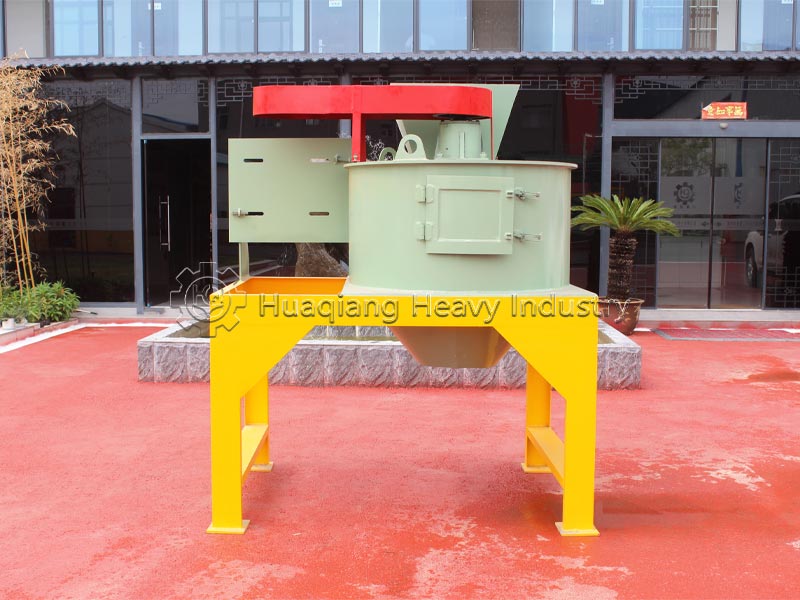 Third, it must produce a uniform and adjustable particle size. The fineness of the powder directly influences the granulation rate and the structural strength of the granules, whether produced via disc or pin-type granulators. The crusher should be capable of consistently reducing material to below 1mm, with a narrow particle size distribution—avoiding a mix of overly coarse particles and excessively fine dust. Furthermore, the fineness should be adjustable to accommodate different product formulations and granulation processes.
Fourth, it must be easy to clean, corrosion-resistant, and well-sealed. Because bio-fertilizer production often involves frequent batch changes, any residue left inside the machine can become a breeding ground for unwanted microbes; therefore, the equipment should be easy to open and clean, with minimal "dead zones" where material can accumulate. Components that come into contact with manure or waste must be resistant to corrosion from acids, alkalis, and salts. Additionally, the feed/discharge ports and dust-collection systems must be effectively sealed to contain dust and prevent contamination from external microorganisms.
In short, a bio-organic fertilizer crusher must meet four criteria: it should not generate excessive heat, clog, produce coarse particles, or leave behind residual material. While it may not be the most conspicuous piece of equipment on the production line, it has a direct impact on the uniformity of the microbial mixture, the smoothness of the granulation process, and the safety of the product.
