
Choosing an organic fertilizer granulator is often oversimplified to the question, "Which machine is best?" A more pragmatic approach is to first identify the target customer and then work backward to determine the appropriate equipment.
1.Cost-Efficiency First
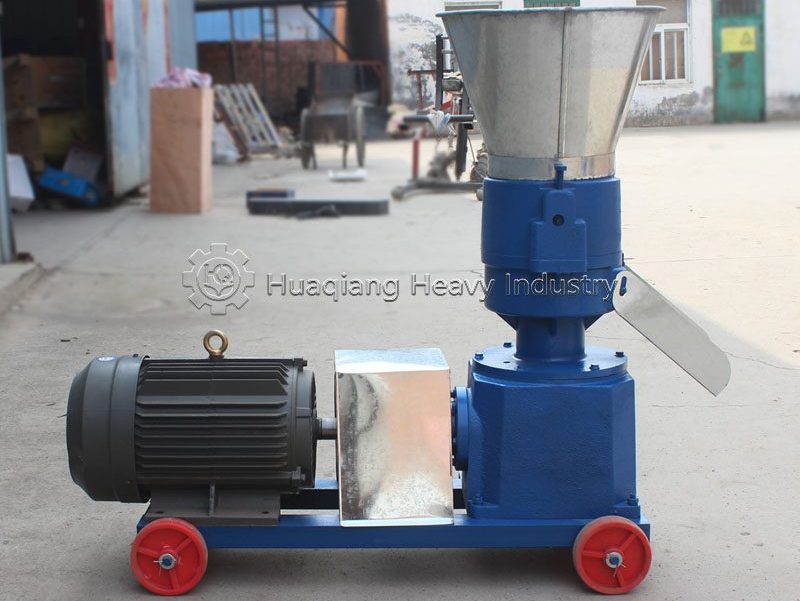
Fertilizers for field crops prioritize cost-effectiveness; the granules simply need to be suitable for mechanical spreading and resistant to caking. Double roller press granulators are the top choice here—they utilize a dry, ambient-temperature forming process that eliminates the need for drying and cooling, resulting in low energy consumption, low investment costs, and sufficient granule strength. Flat die pelleting machines are also suitable, offering smooth discharge when processing high-fiber materials. This approach prioritizes minimizing the cost per ton over achieving perfectly rounded granules.
2.Balancing Appearance and Quality
Orchards, tea plantations, and vegetable farms have specific requirements regarding fertilizer appearance and solubility; the rounder and more uniform the granules, the higher their marketability. Disc granulators produce smooth, attractive spherical granules with a high pelletization rate, making them ideal for these markets. If the product contains functional microbes, the low-temperature nature of disc granulation offers a crucial advantage: material temperatures remain stable between 45°C and 55°C, ensuring microbial survival.
 3.Preserving Microbes is Essential
Live microbes are the core of bio-organic fertilizers, so the granulation process must maintain low temperatures throughout. Disc granulators naturally meet this requirement, while stirring-tooth granulators can also keep temperatures below 50°C by controlling rotation speed and liquid spray volume. Both are viable options, but stirring-tooth granulators offer greater adaptability to high-fiber materials and higher pelletization rates, making them well-suited for large-scale bio-fertilizer production lines.
4.Flexible Switching
Medium-sized manufacturers targeting multiple market segments can install both disc and extrusion granulators in the same workshop, switching between them based on orders. High-nitrogen formulas can be processed via extrusion, high-phosphorus/potassium formulas via disc granulation, and bio-fertilizers via either disc or stirring-tooth granulation. This flexibility in equipment configuration is, in itself, a competitive advantage.
The Starting Point for Selection: Define the Market First, Then the Equipment
There is no absolute "best" granulator—only the one that best fits your specific needs. Choose extrusion-type equipment for field crop furrows and disc-type equipment for cash crops; prioritize low-temperature processing for bio-fertilizers; and employ a combination of methods for diverse product varieties.
3.Preserving Microbes is Essential
Live microbes are the core of bio-organic fertilizers, so the granulation process must maintain low temperatures throughout. Disc granulators naturally meet this requirement, while stirring-tooth granulators can also keep temperatures below 50°C by controlling rotation speed and liquid spray volume. Both are viable options, but stirring-tooth granulators offer greater adaptability to high-fiber materials and higher pelletization rates, making them well-suited for large-scale bio-fertilizer production lines.
4.Flexible Switching
Medium-sized manufacturers targeting multiple market segments can install both disc and extrusion granulators in the same workshop, switching between them based on orders. High-nitrogen formulas can be processed via extrusion, high-phosphorus/potassium formulas via disc granulation, and bio-fertilizers via either disc or stirring-tooth granulation. This flexibility in equipment configuration is, in itself, a competitive advantage.
The Starting Point for Selection: Define the Market First, Then the Equipment
There is no absolute "best" granulator—only the one that best fits your specific needs. Choose extrusion-type equipment for field crop furrows and disc-type equipment for cash crops; prioritize low-temperature processing for bio-fertilizers; and employ a combination of methods for diverse product varieties.
3.Preserving Microbes is Essential
Live microbes are the core of bio-organic fertilizers, so the granulation process must maintain low temperatures throughout. Disc granulators naturally meet this requirement, while stirring-tooth granulators can also keep temperatures below 50°C by controlling rotation speed and liquid spray volume. Both are viable options, but stirring-tooth granulators offer greater adaptability to high-fiber materials and higher pelletization rates, making them well-suited for large-scale bio-fertilizer production lines.
4.Flexible Switching
Medium-sized manufacturers targeting multiple market segments can install both disc and extrusion granulators in the same workshop, switching between them based on orders. High-nitrogen formulas can be processed via extrusion, high-phosphorus/potassium formulas via disc granulation, and bio-fertilizers via either disc or stirring-tooth granulation. This flexibility in equipment configuration is, in itself, a competitive advantage.
The Starting Point for Selection: Define the Market First, Then the Equipment
There is no absolute "best" granulator—only the one that best fits your specific needs. Choose extrusion-type equipment for field crop furrows and disc-type equipment for cash crops; prioritize low-temperature processing for bio-fertilizers; and employ a combination of methods for diverse product varieties. 