
Walk into the installation site of an organic fertilizer workshop, and the first thing that grabs your attention is undoubtedly the double screw compost turner. It lies quietly above the fermentation trough, its two giant screws like parallel steel dragons, waiting to be awakened. Workers are busy all around: some tightening bolts on the screw blades, others adjusting the hydraulic lift system, and a few crouching by the control cabinet to check wiring. There's no harsh noise here—just the soft clink of wrenches against metal, the low hum of a crane moving slowly, and the occasional shouted command.
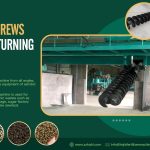 Don't underestimate those two screws. Once they start turning, they can toss and mix dozens of tons of compost material up and down, left and right, letting oxygen penetrate every corner. Turning, crushing, shifting—all in one smooth motion. One installer says with a smile, "It's like kneading dough. You have to let every gram of material 'breathe' air." Indeed, the twin-screw design provides more uniform turning and greater energy efficiency than traditional single-shaft turners.
Beside the turner, other fertilizer equipment is also taking its place in line. A large chain fertilizer crusher has just had its base leveled, its blade disc gleaming coldly under the sun. A drum screener is slowly hoisted into its bracket, while workers repeatedly calibrate the tilt angle with a spirit level. The granulator's mold is already installed, waiting to connect with the drum fertilizer dryer. And then there's the automatic packing scale—small but precise—its sensors carefully lifted from a wooden crate, as if a surgeon were picking up a scalpel.
The entire installation site feels like a carefully orchestrated symphony. The crane plays the bass section, welding sparks are the skipping notes, and the workers' shouts are the timpani strikes. No piece of equipment stands alone: conveyor belts link them together, pipes guide dust and hot air along their separate paths, and cables transmit commands like a neural network. You might ask: with so many machines crowded together, won't they get in each other's way? The answer lies in the neatly organized, crisscrossing cable trays and the clearly labeled numbers—order is the password to efficiency.
As the sun sets, the turner's motor finally powers up for a test run. The two screws start rotating slowly, their blades slicing smoothly through the air without a single abnormal sound. One of the watching technicians can't help but whistle. At that moment, everyone laughs. They know that in a few days, this workshop will turn livestock manure, straw, and lees into black-gold organic fertilizer. And the twin-screw turner will be the star of this green magic.
Who says steel has no soul? When it begins to serve the soil and rotate for the cycle of life, every single bolt gains warmth.
Don't underestimate those two screws. Once they start turning, they can toss and mix dozens of tons of compost material up and down, left and right, letting oxygen penetrate every corner. Turning, crushing, shifting—all in one smooth motion. One installer says with a smile, "It's like kneading dough. You have to let every gram of material 'breathe' air." Indeed, the twin-screw design provides more uniform turning and greater energy efficiency than traditional single-shaft turners.
Beside the turner, other fertilizer equipment is also taking its place in line. A large chain fertilizer crusher has just had its base leveled, its blade disc gleaming coldly under the sun. A drum screener is slowly hoisted into its bracket, while workers repeatedly calibrate the tilt angle with a spirit level. The granulator's mold is already installed, waiting to connect with the drum fertilizer dryer. And then there's the automatic packing scale—small but precise—its sensors carefully lifted from a wooden crate, as if a surgeon were picking up a scalpel.
The entire installation site feels like a carefully orchestrated symphony. The crane plays the bass section, welding sparks are the skipping notes, and the workers' shouts are the timpani strikes. No piece of equipment stands alone: conveyor belts link them together, pipes guide dust and hot air along their separate paths, and cables transmit commands like a neural network. You might ask: with so many machines crowded together, won't they get in each other's way? The answer lies in the neatly organized, crisscrossing cable trays and the clearly labeled numbers—order is the password to efficiency.
As the sun sets, the turner's motor finally powers up for a test run. The two screws start rotating slowly, their blades slicing smoothly through the air without a single abnormal sound. One of the watching technicians can't help but whistle. At that moment, everyone laughs. They know that in a few days, this workshop will turn livestock manure, straw, and lees into black-gold organic fertilizer. And the twin-screw turner will be the star of this green magic.
Who says steel has no soul? When it begins to serve the soil and rotate for the cycle of life, every single bolt gains warmth.
Don't underestimate those two screws. Once they start turning, they can toss and mix dozens of tons of compost material up and down, left and right, letting oxygen penetrate every corner. Turning, crushing, shifting—all in one smooth motion. One installer says with a smile, "It's like kneading dough. You have to let every gram of material 'breathe' air." Indeed, the twin-screw design provides more uniform turning and greater energy efficiency than traditional single-shaft turners.
Beside the turner, other fertilizer equipment is also taking its place in line. A large chain fertilizer crusher has just had its base leveled, its blade disc gleaming coldly under the sun. A drum screener is slowly hoisted into its bracket, while workers repeatedly calibrate the tilt angle with a spirit level. The granulator's mold is already installed, waiting to connect with the drum fertilizer dryer. And then there's the automatic packing scale—small but precise—its sensors carefully lifted from a wooden crate, as if a surgeon were picking up a scalpel.
The entire installation site feels like a carefully orchestrated symphony. The crane plays the bass section, welding sparks are the skipping notes, and the workers' shouts are the timpani strikes. No piece of equipment stands alone: conveyor belts link them together, pipes guide dust and hot air along their separate paths, and cables transmit commands like a neural network. You might ask: with so many machines crowded together, won't they get in each other's way? The answer lies in the neatly organized, crisscrossing cable trays and the clearly labeled numbers—order is the password to efficiency.
As the sun sets, the turner's motor finally powers up for a test run. The two screws start rotating slowly, their blades slicing smoothly through the air without a single abnormal sound. One of the watching technicians can't help but whistle. At that moment, everyone laughs. They know that in a few days, this workshop will turn livestock manure, straw, and lees into black-gold organic fertilizer. And the twin-screw turner will be the star of this green magic.
Who says steel has no soul? When it begins to serve the soil and rotate for the cycle of life, every single bolt gains warmth. 