
Every fertilizer plant has one. That pile of rejected material in the corner. The oversize lumps that crashed the screen. The caked-together chunks that no amount of shaking can separate. For years, operators had two choices: dispose of it at a loss, or assign someone with a hammer to spend a shift breaking it down by hand.
Walk up to one during operation, and you'll hear it before you see it—a high-speed whine, the rattle of chains or bars, the percussive impact of material being reduced in fractions of a second. Inside, two or more rotating cages spin in opposite directions, their rows of hardened steel pins intermeshing like aggressive fingers. Material enters the center and is hurled outward, struck repeatedly by pins moving at different speeds and directions. By the time it reaches the periphery, what entered as a stubborn lump exits as free-flowing granules.
The cage crusher isn't glamorous. It doesn't have the mixer's rhythmic dance or the dryer's commanding presence. But in any NPK or BB fertilizer line that handles recycled material, it's indispensable.
 Think about where oversize material comes from. In a granulation plant, lumps form when conditions drift—too much moisture, too much heat, too much compaction. In a blending operation, caking happens during storage, especially with hygroscopic materials like urea. Even the best-run lines generate rejects: screen overs that won't pass the mesh, baghouse fines that need reincorporation, startup and shutdown material that never quite made spec.
Without a cage crusher, that material becomes waste or low-value byproduct. With one, it becomes feedstock again.
The beauty of the design lies in its simplicity. No screens to blind, no knives to sharpen, no close tolerances to maintain. The rotating cages create impact forces that shatter agglomerates along natural fracture lines. Hard lumps break; soft granules pass through relatively unscathed. The adjustable speed lets operators dial in the right balance between size reduction and over-grinding. Too fast, and you generate excessive fines. Too slow, and lumps survive to clog the next screen.
Positioned correctly in the line, the cage crusher performs a kind of alchemy. Rejects from the screening station feed directly into it. The crushed material—now a mixture of acceptable granules and fines—returns to the process, joining fresh ingredients in the mixer or granulator. Nothing leaves the system. Nothing goes to waste. The loop closes.
Modern designs incorporate features that make this integration seamless. Quick-release housings for cleaning when switching products. Wear-resistant liners in high-impact zones. Bearing isolators that keep dust out and grease in. Some even include variable-frequency drives that adjust speed automatically based on feed rate or lump size, maintaining consistent output without operator intervention.
But perhaps the most important feature is forgiveness. The cage crusher tolerates what other machines reject. A lump that would stall a conveyor or plug a chute disappears inside it in seconds. A batch of caked material that would ruin a blend becomes usable again. It's the insurance policy that keeps production moving when conditions aren't perfect.
Stand at the discharge of a cage crusher during operation, and you'll see a continuous stream of reduced material flowing onto the return conveyor. It's not uniform—there will always be some fines, some near-size particles—but it's consistent. And consistency is what the rest of the line demands. The rotary screener machine downstream don't care where material came from; they only care about size. The horizontal mixer doesn't judge; it only blends. The cage crusher feeds them what they need.
Farmers never see this machine. They never know about the lumps that didn't make it into their bags, the rejects that were salvaged instead of discarded. But they benefit from it. Every ton that moves through a well-designed line includes material that might otherwise have been wasted. Every acre planted with that fertilizer represents nutrients that were fully utilized, not thrown away.
The cage crusher doesn't ask for recognition. It sits there in the corner of the plant, often overlooked, rarely photographed. But when a lump hits those spinning pins and disintegrates in an instant, something satisfying happens. Waste becomes resource. Problem becomes solution. And the line keeps running.
Think about where oversize material comes from. In a granulation plant, lumps form when conditions drift—too much moisture, too much heat, too much compaction. In a blending operation, caking happens during storage, especially with hygroscopic materials like urea. Even the best-run lines generate rejects: screen overs that won't pass the mesh, baghouse fines that need reincorporation, startup and shutdown material that never quite made spec.
Without a cage crusher, that material becomes waste or low-value byproduct. With one, it becomes feedstock again.
The beauty of the design lies in its simplicity. No screens to blind, no knives to sharpen, no close tolerances to maintain. The rotating cages create impact forces that shatter agglomerates along natural fracture lines. Hard lumps break; soft granules pass through relatively unscathed. The adjustable speed lets operators dial in the right balance between size reduction and over-grinding. Too fast, and you generate excessive fines. Too slow, and lumps survive to clog the next screen.
Positioned correctly in the line, the cage crusher performs a kind of alchemy. Rejects from the screening station feed directly into it. The crushed material—now a mixture of acceptable granules and fines—returns to the process, joining fresh ingredients in the mixer or granulator. Nothing leaves the system. Nothing goes to waste. The loop closes.
Modern designs incorporate features that make this integration seamless. Quick-release housings for cleaning when switching products. Wear-resistant liners in high-impact zones. Bearing isolators that keep dust out and grease in. Some even include variable-frequency drives that adjust speed automatically based on feed rate or lump size, maintaining consistent output without operator intervention.
But perhaps the most important feature is forgiveness. The cage crusher tolerates what other machines reject. A lump that would stall a conveyor or plug a chute disappears inside it in seconds. A batch of caked material that would ruin a blend becomes usable again. It's the insurance policy that keeps production moving when conditions aren't perfect.
Stand at the discharge of a cage crusher during operation, and you'll see a continuous stream of reduced material flowing onto the return conveyor. It's not uniform—there will always be some fines, some near-size particles—but it's consistent. And consistency is what the rest of the line demands. The rotary screener machine downstream don't care where material came from; they only care about size. The horizontal mixer doesn't judge; it only blends. The cage crusher feeds them what they need.
Farmers never see this machine. They never know about the lumps that didn't make it into their bags, the rejects that were salvaged instead of discarded. But they benefit from it. Every ton that moves through a well-designed line includes material that might otherwise have been wasted. Every acre planted with that fertilizer represents nutrients that were fully utilized, not thrown away.
The cage crusher doesn't ask for recognition. It sits there in the corner of the plant, often overlooked, rarely photographed. But when a lump hits those spinning pins and disintegrates in an instant, something satisfying happens. Waste becomes resource. Problem becomes solution. And the line keeps running.
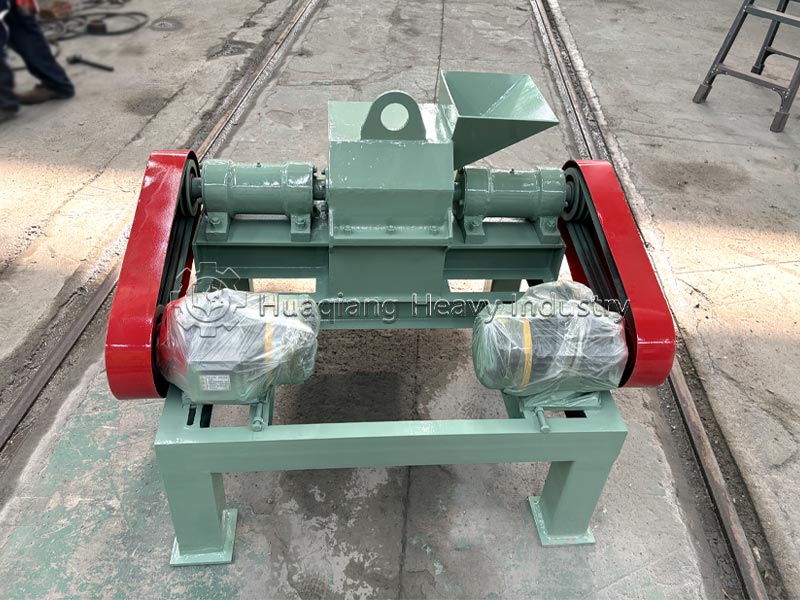 Think about where oversize material comes from. In a granulation plant, lumps form when conditions drift—too much moisture, too much heat, too much compaction. In a blending operation, caking happens during storage, especially with hygroscopic materials like urea. Even the best-run lines generate rejects: screen overs that won't pass the mesh, baghouse fines that need reincorporation, startup and shutdown material that never quite made spec.
Without a cage crusher, that material becomes waste or low-value byproduct. With one, it becomes feedstock again.
The beauty of the design lies in its simplicity. No screens to blind, no knives to sharpen, no close tolerances to maintain. The rotating cages create impact forces that shatter agglomerates along natural fracture lines. Hard lumps break; soft granules pass through relatively unscathed. The adjustable speed lets operators dial in the right balance between size reduction and over-grinding. Too fast, and you generate excessive fines. Too slow, and lumps survive to clog the next screen.
Positioned correctly in the line, the cage crusher performs a kind of alchemy. Rejects from the screening station feed directly into it. The crushed material—now a mixture of acceptable granules and fines—returns to the process, joining fresh ingredients in the mixer or granulator. Nothing leaves the system. Nothing goes to waste. The loop closes.
Modern designs incorporate features that make this integration seamless. Quick-release housings for cleaning when switching products. Wear-resistant liners in high-impact zones. Bearing isolators that keep dust out and grease in. Some even include variable-frequency drives that adjust speed automatically based on feed rate or lump size, maintaining consistent output without operator intervention.
But perhaps the most important feature is forgiveness. The cage crusher tolerates what other machines reject. A lump that would stall a conveyor or plug a chute disappears inside it in seconds. A batch of caked material that would ruin a blend becomes usable again. It's the insurance policy that keeps production moving when conditions aren't perfect.
Stand at the discharge of a cage crusher during operation, and you'll see a continuous stream of reduced material flowing onto the return conveyor. It's not uniform—there will always be some fines, some near-size particles—but it's consistent. And consistency is what the rest of the line demands. The rotary screener machine downstream don't care where material came from; they only care about size. The horizontal mixer doesn't judge; it only blends. The cage crusher feeds them what they need.
Farmers never see this machine. They never know about the lumps that didn't make it into their bags, the rejects that were salvaged instead of discarded. But they benefit from it. Every ton that moves through a well-designed line includes material that might otherwise have been wasted. Every acre planted with that fertilizer represents nutrients that were fully utilized, not thrown away.
The cage crusher doesn't ask for recognition. It sits there in the corner of the plant, often overlooked, rarely photographed. But when a lump hits those spinning pins and disintegrates in an instant, something satisfying happens. Waste becomes resource. Problem becomes solution. And the line keeps running.
Think about where oversize material comes from. In a granulation plant, lumps form when conditions drift—too much moisture, too much heat, too much compaction. In a blending operation, caking happens during storage, especially with hygroscopic materials like urea. Even the best-run lines generate rejects: screen overs that won't pass the mesh, baghouse fines that need reincorporation, startup and shutdown material that never quite made spec.
Without a cage crusher, that material becomes waste or low-value byproduct. With one, it becomes feedstock again.
The beauty of the design lies in its simplicity. No screens to blind, no knives to sharpen, no close tolerances to maintain. The rotating cages create impact forces that shatter agglomerates along natural fracture lines. Hard lumps break; soft granules pass through relatively unscathed. The adjustable speed lets operators dial in the right balance between size reduction and over-grinding. Too fast, and you generate excessive fines. Too slow, and lumps survive to clog the next screen.
Positioned correctly in the line, the cage crusher performs a kind of alchemy. Rejects from the screening station feed directly into it. The crushed material—now a mixture of acceptable granules and fines—returns to the process, joining fresh ingredients in the mixer or granulator. Nothing leaves the system. Nothing goes to waste. The loop closes.
Modern designs incorporate features that make this integration seamless. Quick-release housings for cleaning when switching products. Wear-resistant liners in high-impact zones. Bearing isolators that keep dust out and grease in. Some even include variable-frequency drives that adjust speed automatically based on feed rate or lump size, maintaining consistent output without operator intervention.
But perhaps the most important feature is forgiveness. The cage crusher tolerates what other machines reject. A lump that would stall a conveyor or plug a chute disappears inside it in seconds. A batch of caked material that would ruin a blend becomes usable again. It's the insurance policy that keeps production moving when conditions aren't perfect.
Stand at the discharge of a cage crusher during operation, and you'll see a continuous stream of reduced material flowing onto the return conveyor. It's not uniform—there will always be some fines, some near-size particles—but it's consistent. And consistency is what the rest of the line demands. The rotary screener machine downstream don't care where material came from; they only care about size. The horizontal mixer doesn't judge; it only blends. The cage crusher feeds them what they need.
Farmers never see this machine. They never know about the lumps that didn't make it into their bags, the rejects that were salvaged instead of discarded. But they benefit from it. Every ton that moves through a well-designed line includes material that might otherwise have been wasted. Every acre planted with that fertilizer represents nutrients that were fully utilized, not thrown away.
The cage crusher doesn't ask for recognition. It sits there in the corner of the plant, often overlooked, rarely photographed. But when a lump hits those spinning pins and disintegrates in an instant, something satisfying happens. Waste becomes resource. Problem becomes solution. And the line keeps running. 