
Cage Crusher
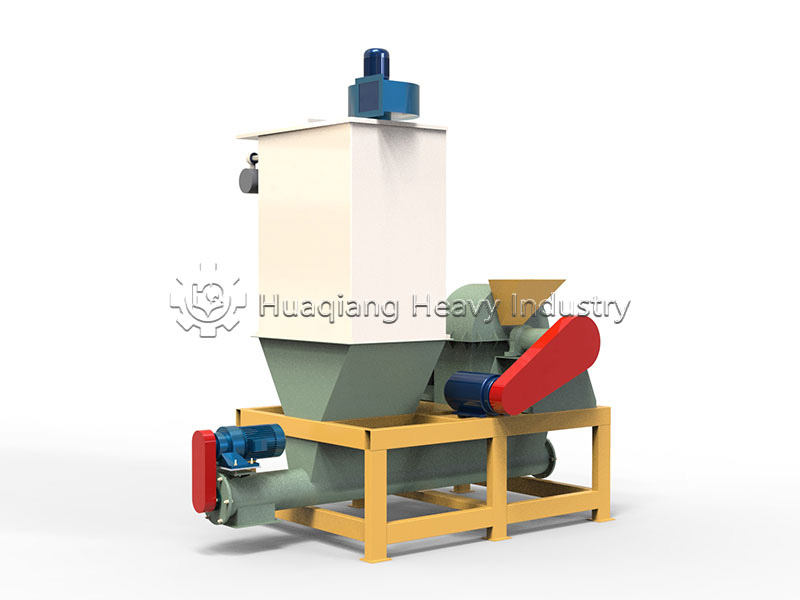
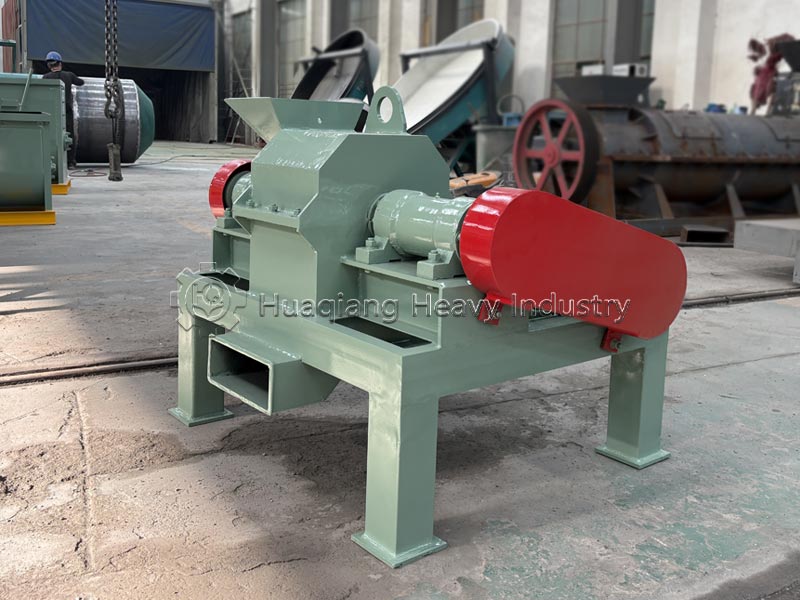
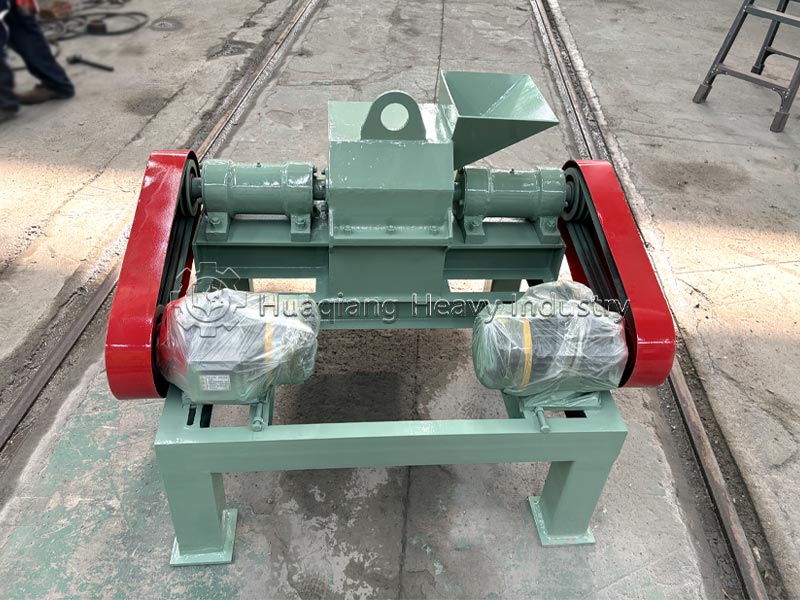
Cage Crusher
The cage crusher uses a double-layered, relatively rotating cage rotor as its core, employing high-speed differential rotation to finely crush materials. It is primarily used in organic fertilizer and compound fertilizer production for crushing returned finished products and semi-wet materials, widely adopted due to its advantages such as uniform crushing, low energy consumption, and simple operation and maintenance. The equipment has a compact structure, and the double-layered cage design ensures that the material is subjected to multiple impacts within the machine, resulting in a crushing efficiency higher than single-stage crushers of equivalent power. It is an economical and practical piece of equipment for achieving closed-loop material circulation in fertilizer production lines.
Working Principle
Material falls into the center of the crushing chamber through the feed inlet. The inner and outer cage rotors rotate at high speeds in different directions or at differential speeds. Multiple layers of crushing rods on the cages form a high-density impact zone during rotation. As the material passes through the gaps between the double-layered cages, it is repeatedly impacted, sheared, and ground by the inner and outer cage rods. The finely crushed material is thrown radially out of the cage under centrifugal force, collected by the casing, and discharged from the bottom outlet. The material has a short path within the cage, receives numerous impacts, and achieves a fast crushing speed.
Performance Characteristics
High Crushing Efficiency: The differential rotation of the dual cages generates strong shearing force, allowing materials to achieve a fine particle size in a single pass.
Uniform Discharge: The gap between the cage bars determines the upper limit of the discharge particle size, resulting in a uniform and consistent finished product fineness.
No Clogging with Wet Materials: The open structure of the cages provides good permeability, preventing semi-wet materials from clogging between the cage bars.
Economical Energy Consumption: Short material residence time within the machine results in lower power consumption per unit output.
Compact Footprint: The vertical structure requires little space, facilitating installation in existing production lines.
Maintenance Methods
Daily Inspection: Inspect the crushing bars on the inner and outer cages daily, replacing any broken or severely worn bars promptly. Check for flexible cage rotation and any abnormal noise.
Weekly Inspection: Check the tightness of the cage bars, tightening any loose bars due to vibration.
Monthly Inspection: Check the bearing lubrication status, replenishing or replacing grease as needed.
Quarterly Inspection: Check the dynamic balance of the cages quarterly. Uneven wear of the cage bars after long-term operation may lead to increased vibration.
Annual Overhaul: Replace all worn cage bars, inspect the main shaft and bearings, and replace them if necessary.
