
Horizontal Mixer
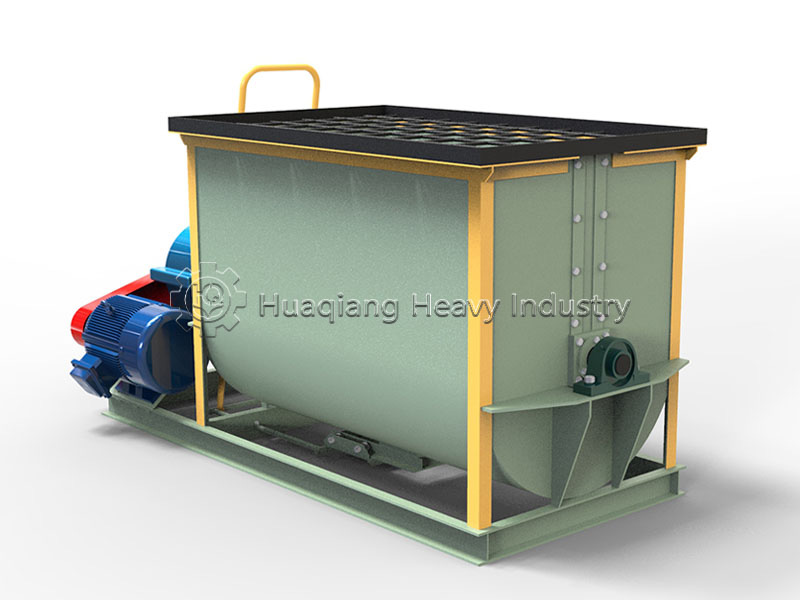
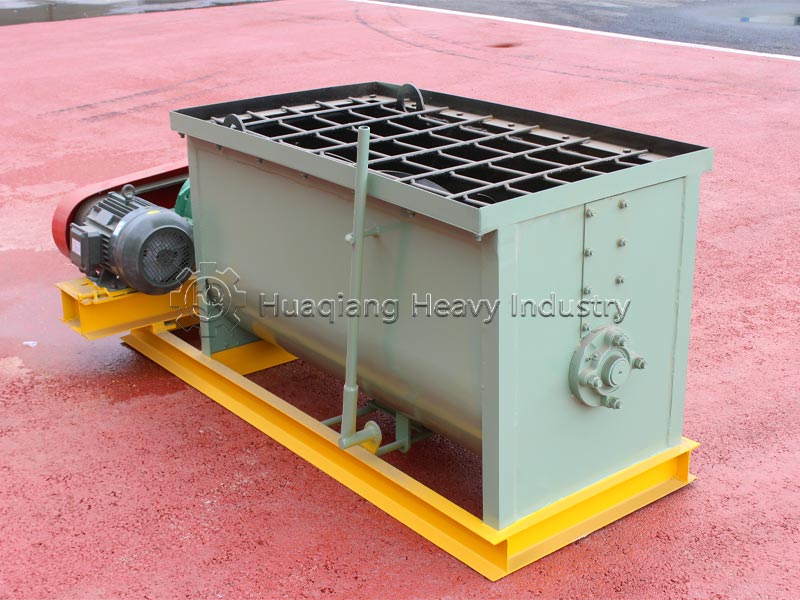
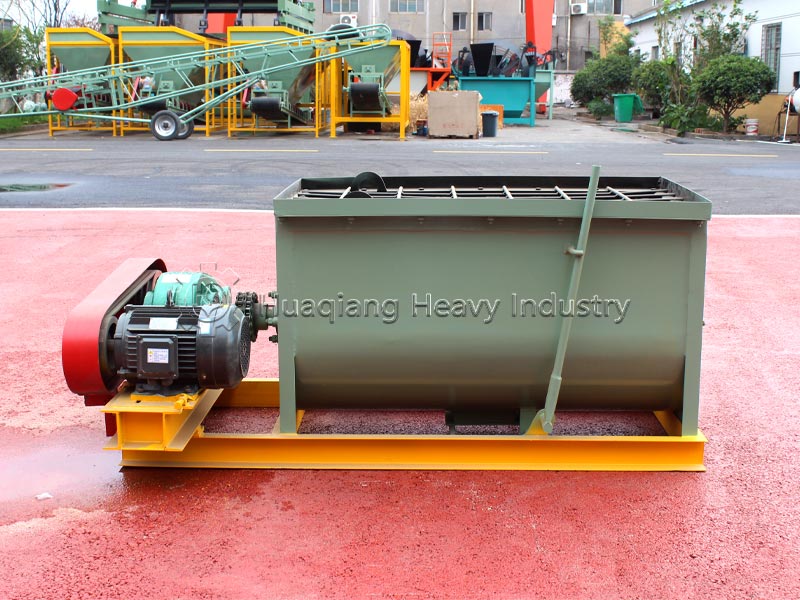
Horizontal Mixer
The horizontal ribbon mixer operates within the ingredient mixing stage of organic and compound fertilizer production lines, serving as a critical link between raw material proportioning and granulation. After being metered according to the formula, the constituent materials enter the mixer; they are blended into a homogeneous mixture over several minutes before being discharged to the granulator. Since the uniformity of the mixture directly determines the nutrient distribution in the finished fertilizer, the mixer is a core piece of equipment for ensuring product quality.
Mixing Process
The horizontal ribbon mixer operates on an intermittent batch basis within the production line. The proportioning system feeds the constituent materials into the mixing tank—either sequentially or simultaneously—according to the formula.
Dry materials undergo pre-mixing, followed by wet mixing through the addition of water or liquid binders via a spraying system. Mixing duration is set based on material characteristics and formula requirements, typically ranging from 2 to 5 minutes.
Once mixing is complete, the material is discharged into a buffer hopper and transported to the granulator. A single granulation line is typically equipped with one mixer; their capacities are matched to establish a continuous production rhythm.
Process Advantages
Short batch mixing times and high production efficiency; capacity is well-matched with downstream granulation.
High mixing uniformity ensures consistent nutrient distribution in the finished fertilizer and guarantees product quality.
Capable of both dry and wet mixing; a single machine adapts to various process formula requirements.
Integrated liquid spraying and mixing simplifies the water addition and conditioning workflow.
Flexible intermittent operation allows for easy cleaning when switching formulas, making it suitable for multi-variety production.
Application Scenarios
Organic fertilizer production lines: Uniform mixing of fermented materials, additives, and microbial agents.
Compound fertilizer production lines: Blending of N-P-K raw materials and fillers.
Organic-inorganic compound fertilizer production: Thorough mixing of organic materials and inorganic fertilizers.
Bio-organic fertilizer production: Ambient-temperature mixing of microbial agents and carriers without compromising agent activity.
Customized formula fertilizer production: Flexible switching and mixing for multi-variety, small-batch formulations.
