
Core Advantages of Flat Die Pellet Machines
Simple and Reliable Structure
Horizontal flat die design is simple, easy to install, operate, and maintain. Main components are standardized, easy to replace, reducing maintenance costs and downtime.
Wide Raw Material Adaptability
Can process various biomass raw materials including wood chips, straw, rice husks, bagasse, peanut shells, etc. Relatively lenient requirements for raw material moisture and particle size, stronger adaptability.
Low Energy Consumption, High Efficiency
Optimized pressure transmission mechanism provides high energy utilization efficiency, unit production energy consumption 20-30% lower than ring die pellet machines. Particularly suitable for areas with limited power supply.
Low Investment Threshold
Equipment costs relatively low, small footprint, suitable for small farms, cooperatives, and individual entrepreneurs. Investment payback period typically 1-2 years, with significant economic benefits.
Simple Operation and Maintenance
Simple and intuitive operation interface, ordinary workers can become proficient after short-term training. Minimal daily maintenance work, lubrication and consumable replacement are simple.
Flexible Production Capacity
By replacing flat dies with different hole diameters, pellets of various specifications can be produced. Production capacity can be flexibly adjusted according to demand, adapting to market changes.
Environmental Protection and Safety
Fully enclosed design reduces dust escape, noise controlled below 85 decibels. Overload protection and emergency stop devices ensure operational safety.
Stable Product Quality
Produced pellets have uniform density, smooth surface, moderate strength. Calorific value reaches 4200-4800 kcal/kg, meeting biomass pellet fuel standards.
 Wide Application Fields
Flat die pellet machines are widely used in multiple fields due to their unique advantages:
Industrial Boiler Fuel
In the biomass energy field, flat die pellet machines are particularly suitable for processing dispersed agricultural waste such as corn stalks, wheat straw, rice straw, etc. These raw materials are often burned or discarded in traditional treatment methods, causing environmental pollution and resource waste. Flat die pellet machines can convert these wastes into high-value clean energy, achieving win-win economic and environmental benefits.
Operation and Maintenance Essentials
To ensure long-term stable operation of flat die pellet machines, the following operation and maintenance principles should be followed:
Raw Material Pretreatment: Strictly control raw material moisture between 12-18%, particle size 3-5 mm. Overly wet or dry raw materials will affect pellet quality and equipment lifespan.
Daily Inspection: Check lubrication system, fasteners, and transmission components before each startup. Observe current, temperature, and vibration screener machine during operation, address abnormalities promptly.
Regular Maintenance: Replenish grease every 200-300 operating hours; check flat die and roller wear every 1000 hours; check drive system and bearing condition every 2000 hours.
Safe Operation: Do not open protective covers while equipment is running; wait for equipment to completely stop before maintenance; regularly check effectiveness of safety protection devices.
Technical Parameters and Selection Guide
When selecting a flat die pellet machine, the following technical parameters should be considered:
Production Capacity: According to raw material characteristics and pellet specifications, production capacity typically ranges from 0.5-3 tons/hour. Small equipment suitable for farms and cooperatives, large equipment suitable for professional production plants.
Power Configuration: Main motor power ranges from 15kW to 150kW, selected based on production capacity and raw material hardness. Frequency conversion control optimizes energy consumption and production efficiency.
Flat Die Specifications: Hole diameters 6-12 mm optional, hole shapes include round, square, and special shapes. Die thickness affects pellet density and strength.
Automation Level: Modern flat die pellet machines equipped with PLC control systems achieve automatic feeding, temperature control, and fault diagnosis. Different automation levels can be selected according to needs.
Future Development Trends
With technological advancement and market demand changes, flat die pellet machines are developing in the following directions:
Intelligent Upgrades: IoT technology enables remote monitoring and fault warning; AI algorithms optimize process parameters; predictive maintenance reduces downtime.
Material Innovation: New wear-resistant materials extend flat die and roller service life; ceramic coatings reduce friction resistance; composite materials reduce equipment weight.
Energy-saving Design: Optimize pressure transmission mechanism to reduce energy loss. Waste heat recovery systems use compression heat to preheat raw materials, lowering overall energy consumption.
Multi-functional Integration: Integrate raw material pretreatment, pelleting, cooling, and packaging into a complete production line. Modular design facilitates expansion and upgrading.
As key equipment for biomass pellet production, flat die pellet machines play an important role in the renewable energy field with their simple structure, wide adaptability, and low investment threshold. They convert dispersed agricultural waste and forestry by-products into clean, efficient solid fuels, not only solving waste disposal problems but also providing strong support for rural economic development and energy transition. With continuous technological advancement, flat die pellet machines will become more intelligent, efficient, and reliable, contributing greater strength to global sustainable development.
Wide Application Fields
Flat die pellet machines are widely used in multiple fields due to their unique advantages:
Industrial Boiler Fuel
In the biomass energy field, flat die pellet machines are particularly suitable for processing dispersed agricultural waste such as corn stalks, wheat straw, rice straw, etc. These raw materials are often burned or discarded in traditional treatment methods, causing environmental pollution and resource waste. Flat die pellet machines can convert these wastes into high-value clean energy, achieving win-win economic and environmental benefits.
Operation and Maintenance Essentials
To ensure long-term stable operation of flat die pellet machines, the following operation and maintenance principles should be followed:
Raw Material Pretreatment: Strictly control raw material moisture between 12-18%, particle size 3-5 mm. Overly wet or dry raw materials will affect pellet quality and equipment lifespan.
Daily Inspection: Check lubrication system, fasteners, and transmission components before each startup. Observe current, temperature, and vibration screener machine during operation, address abnormalities promptly.
Regular Maintenance: Replenish grease every 200-300 operating hours; check flat die and roller wear every 1000 hours; check drive system and bearing condition every 2000 hours.
Safe Operation: Do not open protective covers while equipment is running; wait for equipment to completely stop before maintenance; regularly check effectiveness of safety protection devices.
Technical Parameters and Selection Guide
When selecting a flat die pellet machine, the following technical parameters should be considered:
Production Capacity: According to raw material characteristics and pellet specifications, production capacity typically ranges from 0.5-3 tons/hour. Small equipment suitable for farms and cooperatives, large equipment suitable for professional production plants.
Power Configuration: Main motor power ranges from 15kW to 150kW, selected based on production capacity and raw material hardness. Frequency conversion control optimizes energy consumption and production efficiency.
Flat Die Specifications: Hole diameters 6-12 mm optional, hole shapes include round, square, and special shapes. Die thickness affects pellet density and strength.
Automation Level: Modern flat die pellet machines equipped with PLC control systems achieve automatic feeding, temperature control, and fault diagnosis. Different automation levels can be selected according to needs.
Future Development Trends
With technological advancement and market demand changes, flat die pellet machines are developing in the following directions:
Intelligent Upgrades: IoT technology enables remote monitoring and fault warning; AI algorithms optimize process parameters; predictive maintenance reduces downtime.
Material Innovation: New wear-resistant materials extend flat die and roller service life; ceramic coatings reduce friction resistance; composite materials reduce equipment weight.
Energy-saving Design: Optimize pressure transmission mechanism to reduce energy loss. Waste heat recovery systems use compression heat to preheat raw materials, lowering overall energy consumption.
Multi-functional Integration: Integrate raw material pretreatment, pelleting, cooling, and packaging into a complete production line. Modular design facilitates expansion and upgrading.
As key equipment for biomass pellet production, flat die pellet machines play an important role in the renewable energy field with their simple structure, wide adaptability, and low investment threshold. They convert dispersed agricultural waste and forestry by-products into clean, efficient solid fuels, not only solving waste disposal problems but also providing strong support for rural economic development and energy transition. With continuous technological advancement, flat die pellet machines will become more intelligent, efficient, and reliable, contributing greater strength to global sustainable development.
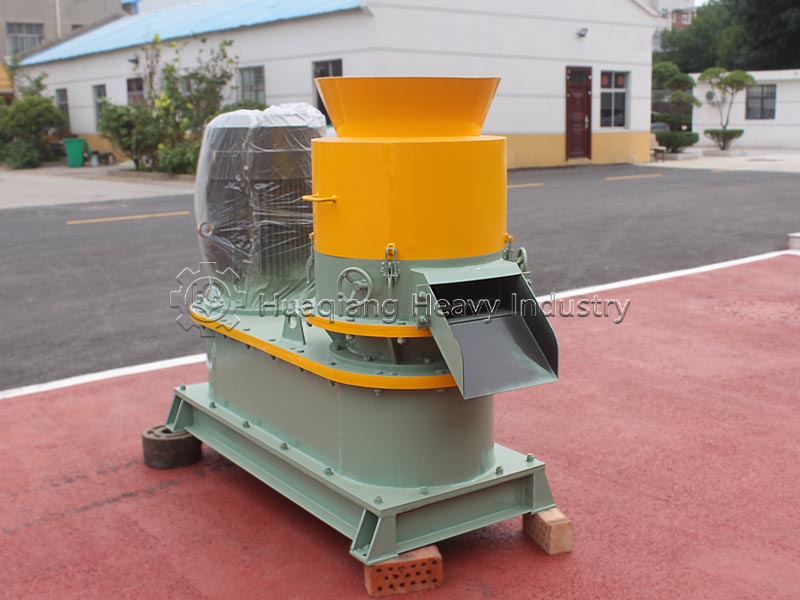 Wide Application Fields
Flat die pellet machines are widely used in multiple fields due to their unique advantages:
Industrial Boiler Fuel
In the biomass energy field, flat die pellet machines are particularly suitable for processing dispersed agricultural waste such as corn stalks, wheat straw, rice straw, etc. These raw materials are often burned or discarded in traditional treatment methods, causing environmental pollution and resource waste. Flat die pellet machines can convert these wastes into high-value clean energy, achieving win-win economic and environmental benefits.
Operation and Maintenance Essentials
To ensure long-term stable operation of flat die pellet machines, the following operation and maintenance principles should be followed:
Raw Material Pretreatment: Strictly control raw material moisture between 12-18%, particle size 3-5 mm. Overly wet or dry raw materials will affect pellet quality and equipment lifespan.
Daily Inspection: Check lubrication system, fasteners, and transmission components before each startup. Observe current, temperature, and vibration screener machine during operation, address abnormalities promptly.
Regular Maintenance: Replenish grease every 200-300 operating hours; check flat die and roller wear every 1000 hours; check drive system and bearing condition every 2000 hours.
Safe Operation: Do not open protective covers while equipment is running; wait for equipment to completely stop before maintenance; regularly check effectiveness of safety protection devices.
Technical Parameters and Selection Guide
When selecting a flat die pellet machine, the following technical parameters should be considered:
Production Capacity: According to raw material characteristics and pellet specifications, production capacity typically ranges from 0.5-3 tons/hour. Small equipment suitable for farms and cooperatives, large equipment suitable for professional production plants.
Power Configuration: Main motor power ranges from 15kW to 150kW, selected based on production capacity and raw material hardness. Frequency conversion control optimizes energy consumption and production efficiency.
Flat Die Specifications: Hole diameters 6-12 mm optional, hole shapes include round, square, and special shapes. Die thickness affects pellet density and strength.
Automation Level: Modern flat die pellet machines equipped with PLC control systems achieve automatic feeding, temperature control, and fault diagnosis. Different automation levels can be selected according to needs.
Future Development Trends
With technological advancement and market demand changes, flat die pellet machines are developing in the following directions:
Intelligent Upgrades: IoT technology enables remote monitoring and fault warning; AI algorithms optimize process parameters; predictive maintenance reduces downtime.
Material Innovation: New wear-resistant materials extend flat die and roller service life; ceramic coatings reduce friction resistance; composite materials reduce equipment weight.
Energy-saving Design: Optimize pressure transmission mechanism to reduce energy loss. Waste heat recovery systems use compression heat to preheat raw materials, lowering overall energy consumption.
Multi-functional Integration: Integrate raw material pretreatment, pelleting, cooling, and packaging into a complete production line. Modular design facilitates expansion and upgrading.
As key equipment for biomass pellet production, flat die pellet machines play an important role in the renewable energy field with their simple structure, wide adaptability, and low investment threshold. They convert dispersed agricultural waste and forestry by-products into clean, efficient solid fuels, not only solving waste disposal problems but also providing strong support for rural economic development and energy transition. With continuous technological advancement, flat die pellet machines will become more intelligent, efficient, and reliable, contributing greater strength to global sustainable development.
Wide Application Fields
Flat die pellet machines are widely used in multiple fields due to their unique advantages:
Industrial Boiler Fuel
In the biomass energy field, flat die pellet machines are particularly suitable for processing dispersed agricultural waste such as corn stalks, wheat straw, rice straw, etc. These raw materials are often burned or discarded in traditional treatment methods, causing environmental pollution and resource waste. Flat die pellet machines can convert these wastes into high-value clean energy, achieving win-win economic and environmental benefits.
Operation and Maintenance Essentials
To ensure long-term stable operation of flat die pellet machines, the following operation and maintenance principles should be followed:
Raw Material Pretreatment: Strictly control raw material moisture between 12-18%, particle size 3-5 mm. Overly wet or dry raw materials will affect pellet quality and equipment lifespan.
Daily Inspection: Check lubrication system, fasteners, and transmission components before each startup. Observe current, temperature, and vibration screener machine during operation, address abnormalities promptly.
Regular Maintenance: Replenish grease every 200-300 operating hours; check flat die and roller wear every 1000 hours; check drive system and bearing condition every 2000 hours.
Safe Operation: Do not open protective covers while equipment is running; wait for equipment to completely stop before maintenance; regularly check effectiveness of safety protection devices.
Technical Parameters and Selection Guide
When selecting a flat die pellet machine, the following technical parameters should be considered:
Production Capacity: According to raw material characteristics and pellet specifications, production capacity typically ranges from 0.5-3 tons/hour. Small equipment suitable for farms and cooperatives, large equipment suitable for professional production plants.
Power Configuration: Main motor power ranges from 15kW to 150kW, selected based on production capacity and raw material hardness. Frequency conversion control optimizes energy consumption and production efficiency.
Flat Die Specifications: Hole diameters 6-12 mm optional, hole shapes include round, square, and special shapes. Die thickness affects pellet density and strength.
Automation Level: Modern flat die pellet machines equipped with PLC control systems achieve automatic feeding, temperature control, and fault diagnosis. Different automation levels can be selected according to needs.
Future Development Trends
With technological advancement and market demand changes, flat die pellet machines are developing in the following directions:
Intelligent Upgrades: IoT technology enables remote monitoring and fault warning; AI algorithms optimize process parameters; predictive maintenance reduces downtime.
Material Innovation: New wear-resistant materials extend flat die and roller service life; ceramic coatings reduce friction resistance; composite materials reduce equipment weight.
Energy-saving Design: Optimize pressure transmission mechanism to reduce energy loss. Waste heat recovery systems use compression heat to preheat raw materials, lowering overall energy consumption.
Multi-functional Integration: Integrate raw material pretreatment, pelleting, cooling, and packaging into a complete production line. Modular design facilitates expansion and upgrading.
As key equipment for biomass pellet production, flat die pellet machines play an important role in the renewable energy field with their simple structure, wide adaptability, and low investment threshold. They convert dispersed agricultural waste and forestry by-products into clean, efficient solid fuels, not only solving waste disposal problems but also providing strong support for rural economic development and energy transition. With continuous technological advancement, flat die pellet machines will become more intelligent, efficient, and reliable, contributing greater strength to global sustainable development. 