
Vibration Screener Machine
Vibration Screener Machine
Vibration screener machines are key equipment in organic fertilizer and compound fertilizer production lines for de-dusting and fine grading of finished granules. After fertilizer granules are dried and cooled, they often contain a certain amount of fine powder and broken particles. If not removed, this will affect the product’s appearance and application effect after packaging. Vibration screener machines use high-frequency vibration to thoroughly separate fine powder from the granules, and simultaneously separate the granules into qualified and oversized particles according to particle size, resulting in clean and uniform finished granules. This equipment plays a crucial role in fine-tuning in the later stages of the granulation line, directly contributing to improved product marketability and customer satisfaction.
Working Principle
Material falls into the screen surface through the feed inlet. The screen body vibrates directionally under the drive of a vibrating motor. The material is continuously thrown up by the vibration force, and the particles briefly pause in the air before falling back onto the screen surface, repeating this jumping motion. During this jumping and falling process, fine particles pass through the screen holes and become undersize material, while coarse particles remain on the screen surface and continue to advance to the discharge end. By setting up multiple layers of screens, the lower layers further separate even finer components from the passing material, achieving multi-stage separation. Vibration screener machines feature a small amplitude and high frequency, effectively separating fine powders and small particles.
Equipment Composition
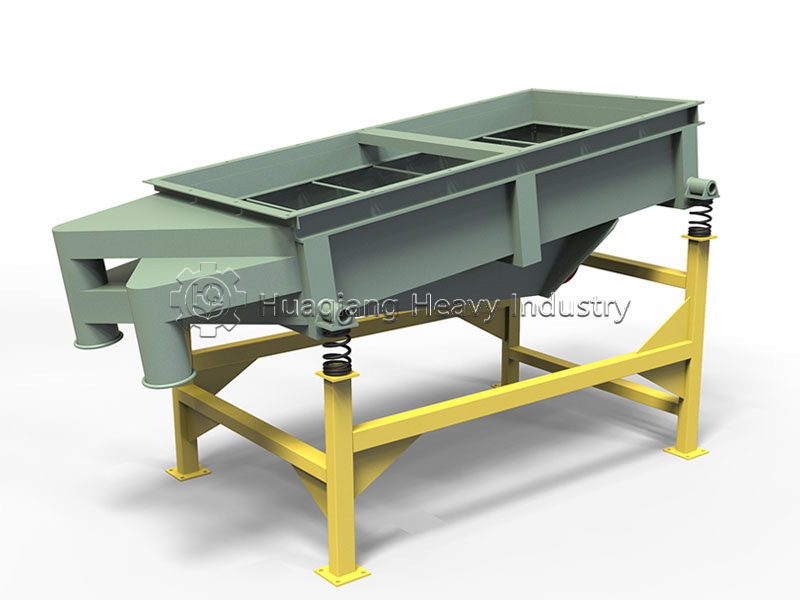
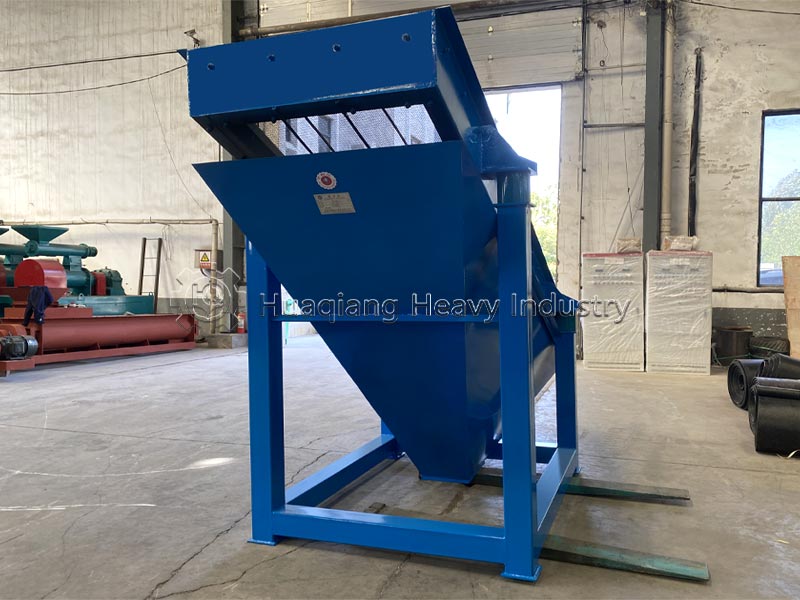
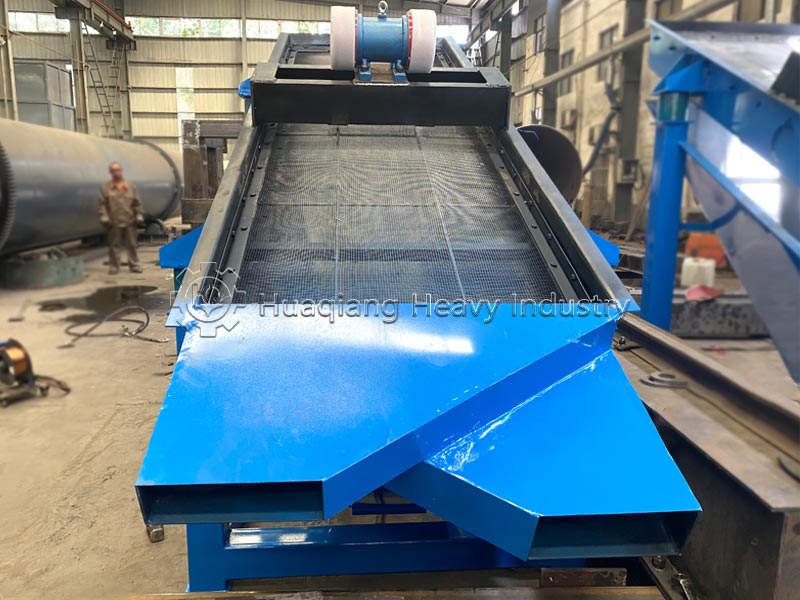
Screen Box: Welded steel plate, with an internal screen fixing frame; multi-layer structure can accommodate 2-3 layers of screens.
Vibrating Motors: Two or four vibrating motors are symmetrically installed to generate directional excitation force; power and excitation force are adjustable.
Screen Assembly: Stainless steel wire woven screen or polyurethane elastic screen plate; precise screen aperture size, quick replacement.
Shock Absorbing Supports: Rubber springs or metal helical springs support the screen box and absorb vibration.
Feed Buffer Plate: Located at the feed inlet, ensuring material is evenly spread on the screen surface.
Discharge Chute: Materials of each grade are discharged separately via the chute, preventing mixing.
Protective Cover: A dust cover can be added above the screen body to reduce dust emission.
Operating Precautions
Before starting, check the screen for damage or looseness, ensure the screen surface is clean, and verify the vibrating motor mounting bolts are tight. Start under no-load conditions; begin feeding only after the vibration has stabilized.
The feed rate should be uniform to avoid a sudden large influx of material that could press against the screen surface and affect the screening effect. During operation, carefully observe the vibration of the screen body. If any abnormal vibration or sound is detected, stop the machine immediately for inspection.
Regularly check the screen tension. A loose screen will lead to decreased screening efficiency and screen breakage. Do not clean the screen surface or adjust components while the machine is vibrating.
Before stopping the machine, stop the material flow first, and then stop the machine after the material on the screen surface has been emptied. For long-term shutdowns, clean any residual material from the screen surface to prevent screen corrosion or blockage. Lubricate the vibrating motor bearings according to the specified intervals.
