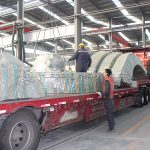
The Rotary Drum Granulator: Where a Fertilizer Line Comes Alive

Walk onto the floor of a working NPK plant, and one machine commands the space: the rotary drum granulator. It’s a massive, gently sloping cylinder, turning slowly, shrouded in wisps of steam. Around it, a full cast of equipment moves in perfect rhythm—each piece essential, each one feeding the heart of the operation.
  1. The Star: Rotary Drum Granulator
The drum itself is where dust becomes grain. Inside, a continuous tumble of powder, steam, and binder transforms fine raw materials into soft, rounded pellets. The drum rotates at just the right speed—fast enough to create rolling action, slow enough to build granules layer by layer. Steam heats and moistens simultaneously, encouraging particles to bond without mechanical force. What exits is no longer powder; it’s a cascade of moist, uniform granules, ready for the next stage.
  1. The Supporting Cast
No granulator runs alone. Upstream, cage crusher break down lumpy urea, phosphate, and potash into free flowing powder. An automatic batching system weighs each ingredient to the gram, and a ribbon mixer blends them into a homogeneous dry mix. This precise feed is what gives the drum consistency. Downstream, the real choreography begins. Fresh granules tumble into a drum fertilizer dryer, where hot air pulls out moisture, hardening the surface. A rotary cooler follows, blasting ambient air to lock in strength and prevent caking. Next, a vibrating screener shakes the granules across multiple decks. Perfectly sized pellets (usually 2–4 mm) move forward; oversize pieces are sent back to a crusher, and undersize fines return directly to the granulator feed. Nothing is wasted—the line closes its own loop. A rotary coating machine then adds a thin film of oil or anti caking powder, giving the granules a polished finish and long shelf life. Finally, an automatic packer fills bags with pinpoint accuracy, and a robotic palletizer stacks them neatly for shipment.
  1. The Rhythm of Production
From the control room, you see it all: conveyors feeding the mixer, the drum’s steady rotation, the dryer roaring with heat, screens rattling in rhythm. A PLC system monitors temperatures, pressures, and moisture levels, adjusting steam flow and feed rates on the fly. The whole line runs 24 hours a day, driven by the drum at its center.
  1. Why It Endures
The rotary drum granulator remains the workhorse of fertilizer production because it’s forgiving, scalable, and versatile. It handles high throughput—up to 100 tons per hour—and adapts to countless formulas, from straight NPK to organic blends. Its simplicity means less downtime; its reliability means years of continuous service. From crusher to packer, every machine plays its part. But the drum is where the magic happens—where precise formulas gain form, and where the foundation of modern agriculture takes shape, one perfect granule at a time.