
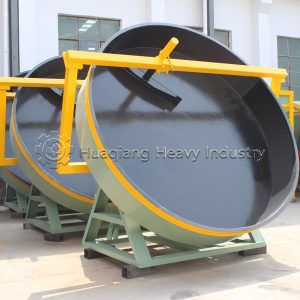
There's a machine in the corner of the fertilizer plant that doesn't look like much. Just a spinning disc, tilted at an angle, catching the light as it turns. No roaring engines. No intimidating hydraulics. No complex control panels with flashing lights.
But watch it for a while, and you'll see something remarkable happen. Powder goes in. Round things come out. It looks almost like magic.
The Simplest Idea That Changed Everything
Here's the thing about fertilizer: it doesn't have to be round. Plants don't care if their food comes in pellets or powder. The soil microbes certainly don't mind.
But farmers care. And farmers pay more for round.
Why? Because round rolls. Round flows through spreaders without clogging. Round lands evenly across a field instead of drifting on the wind. Round looks like a product instead of a problem.
The disc granulator exists for one reason: to make things round. And it does it with a design so simple you almost can't believe it works.
 How a Disc Thinks
Imagine a dinner plate tilted sideways and set spinning. That's essentially what we're talking about. A shallow pan, angled somewhere between forty and fifty-five degrees, rotating slowly on its axis.
Powdered material feeds onto the surface from above. As the disc turns, the powder travels—up the sloping edge, across the face, down again in a continuous cycle. Round and round it goes, never stopping, never resting.
Here's where the magic starts. A fine mist sprays onto the tumbling material, just enough moisture to make particles slightly sticky. Not wet—never wet. Just tacky enough that when two particles bump into each other, they might decide to stay together.
Tiny seeds form. Barely visible specks that will become the heart of each granule. They roll. They grow. Layer by layer, particle by particle, they accumulate mass. Like snowballs rolling downhill, they build themselves from the inside out.
When they reach the perfect size—when they're round enough, heavy enough, finished enough—they finally migrate to the edge of the disc and spill over. Born.
The Operator's Eye
Talk to someone who runs a disc granulator, and you'll hear something unexpected. They don't talk about settings and specifications. They talk about feel.
"She's hungry today," an operator might say, watching the disc. Translation: the material is flowing faster than usual, and he needs to adjust the feed rate.
"She's getting wet." Translation: the moisture is creeping up, and if he doesn't dial back the spray, everything will turn to mud in the next five minutes.
"She's singing." Translation: everything is perfect. The rhythm is right. The granules are forming exactly as they should. He could watch her spin all day.
That's the thing about disc granulation. It's simple enough to understand in five minutes, complex enough to spend a lifetime mastering. The machine does the work, but the human provides the soul.
The Family After the Disc
But the granule's journey isn't over. Fresh from the disc, it's tender—easily crushed, too moist for bagging. The machines that follow treat it gently.
First stop: a drum fertilizer dryer. Warm air flows through the tumbling granules, gently reducing moisture to the ideal level. Not too fast—that would crack them. Not too slow—that would waste energy. The dryer's job is patience.
Next: a drum fertilizer cooler. Warm granules straight from the dryer would sweat inside a sealed bag, creating condensation and all the problems that brings. The cooler brings them to ambient temperature, setting the moisture evenly throughout each particle.
Another rotary screener follows. Even with the best disc operation, some granules will be too large or too small. Oversize particles get diverted to a cage crusher, broken down, and sent back to the beginning. Undersize granules go back to the disc for another chance to grow. The on-spec material—perfectly sized, perfectly round—moves forward.
A coating machine adds a final touch. This isn't just for appearance, though it does make the granules look polished and professional. The coating prevents caking during storage, reduces dust during handling, and can even carry additional beneficial microbes or nutrients.
Finally, the automatic packaging scale takes over. Filling bags with robotic precision, it weighs each one to exact specifications before they move to palletizing and wrapping.
How a Disc Thinks
Imagine a dinner plate tilted sideways and set spinning. That's essentially what we're talking about. A shallow pan, angled somewhere between forty and fifty-five degrees, rotating slowly on its axis.
Powdered material feeds onto the surface from above. As the disc turns, the powder travels—up the sloping edge, across the face, down again in a continuous cycle. Round and round it goes, never stopping, never resting.
Here's where the magic starts. A fine mist sprays onto the tumbling material, just enough moisture to make particles slightly sticky. Not wet—never wet. Just tacky enough that when two particles bump into each other, they might decide to stay together.
Tiny seeds form. Barely visible specks that will become the heart of each granule. They roll. They grow. Layer by layer, particle by particle, they accumulate mass. Like snowballs rolling downhill, they build themselves from the inside out.
When they reach the perfect size—when they're round enough, heavy enough, finished enough—they finally migrate to the edge of the disc and spill over. Born.
The Operator's Eye
Talk to someone who runs a disc granulator, and you'll hear something unexpected. They don't talk about settings and specifications. They talk about feel.
"She's hungry today," an operator might say, watching the disc. Translation: the material is flowing faster than usual, and he needs to adjust the feed rate.
"She's getting wet." Translation: the moisture is creeping up, and if he doesn't dial back the spray, everything will turn to mud in the next five minutes.
"She's singing." Translation: everything is perfect. The rhythm is right. The granules are forming exactly as they should. He could watch her spin all day.
That's the thing about disc granulation. It's simple enough to understand in five minutes, complex enough to spend a lifetime mastering. The machine does the work, but the human provides the soul.
The Family After the Disc
But the granule's journey isn't over. Fresh from the disc, it's tender—easily crushed, too moist for bagging. The machines that follow treat it gently.
First stop: a drum fertilizer dryer. Warm air flows through the tumbling granules, gently reducing moisture to the ideal level. Not too fast—that would crack them. Not too slow—that would waste energy. The dryer's job is patience.
Next: a drum fertilizer cooler. Warm granules straight from the dryer would sweat inside a sealed bag, creating condensation and all the problems that brings. The cooler brings them to ambient temperature, setting the moisture evenly throughout each particle.
Another rotary screener follows. Even with the best disc operation, some granules will be too large or too small. Oversize particles get diverted to a cage crusher, broken down, and sent back to the beginning. Undersize granules go back to the disc for another chance to grow. The on-spec material—perfectly sized, perfectly round—moves forward.
A coating machine adds a final touch. This isn't just for appearance, though it does make the granules look polished and professional. The coating prevents caking during storage, reduces dust during handling, and can even carry additional beneficial microbes or nutrients.
Finally, the automatic packaging scale takes over. Filling bags with robotic precision, it weighs each one to exact specifications before they move to palletizing and wrapping.
 How a Disc Thinks
Imagine a dinner plate tilted sideways and set spinning. That's essentially what we're talking about. A shallow pan, angled somewhere between forty and fifty-five degrees, rotating slowly on its axis.
Powdered material feeds onto the surface from above. As the disc turns, the powder travels—up the sloping edge, across the face, down again in a continuous cycle. Round and round it goes, never stopping, never resting.
Here's where the magic starts. A fine mist sprays onto the tumbling material, just enough moisture to make particles slightly sticky. Not wet—never wet. Just tacky enough that when two particles bump into each other, they might decide to stay together.
Tiny seeds form. Barely visible specks that will become the heart of each granule. They roll. They grow. Layer by layer, particle by particle, they accumulate mass. Like snowballs rolling downhill, they build themselves from the inside out.
When they reach the perfect size—when they're round enough, heavy enough, finished enough—they finally migrate to the edge of the disc and spill over. Born.
The Operator's Eye
Talk to someone who runs a disc granulator, and you'll hear something unexpected. They don't talk about settings and specifications. They talk about feel.
"She's hungry today," an operator might say, watching the disc. Translation: the material is flowing faster than usual, and he needs to adjust the feed rate.
"She's getting wet." Translation: the moisture is creeping up, and if he doesn't dial back the spray, everything will turn to mud in the next five minutes.
"She's singing." Translation: everything is perfect. The rhythm is right. The granules are forming exactly as they should. He could watch her spin all day.
That's the thing about disc granulation. It's simple enough to understand in five minutes, complex enough to spend a lifetime mastering. The machine does the work, but the human provides the soul.
The Family After the Disc
But the granule's journey isn't over. Fresh from the disc, it's tender—easily crushed, too moist for bagging. The machines that follow treat it gently.
First stop: a drum fertilizer dryer. Warm air flows through the tumbling granules, gently reducing moisture to the ideal level. Not too fast—that would crack them. Not too slow—that would waste energy. The dryer's job is patience.
Next: a drum fertilizer cooler. Warm granules straight from the dryer would sweat inside a sealed bag, creating condensation and all the problems that brings. The cooler brings them to ambient temperature, setting the moisture evenly throughout each particle.
Another rotary screener follows. Even with the best disc operation, some granules will be too large or too small. Oversize particles get diverted to a cage crusher, broken down, and sent back to the beginning. Undersize granules go back to the disc for another chance to grow. The on-spec material—perfectly sized, perfectly round—moves forward.
A coating machine adds a final touch. This isn't just for appearance, though it does make the granules look polished and professional. The coating prevents caking during storage, reduces dust during handling, and can even carry additional beneficial microbes or nutrients.
Finally, the automatic packaging scale takes over. Filling bags with robotic precision, it weighs each one to exact specifications before they move to palletizing and wrapping.
How a Disc Thinks
Imagine a dinner plate tilted sideways and set spinning. That's essentially what we're talking about. A shallow pan, angled somewhere between forty and fifty-five degrees, rotating slowly on its axis.
Powdered material feeds onto the surface from above. As the disc turns, the powder travels—up the sloping edge, across the face, down again in a continuous cycle. Round and round it goes, never stopping, never resting.
Here's where the magic starts. A fine mist sprays onto the tumbling material, just enough moisture to make particles slightly sticky. Not wet—never wet. Just tacky enough that when two particles bump into each other, they might decide to stay together.
Tiny seeds form. Barely visible specks that will become the heart of each granule. They roll. They grow. Layer by layer, particle by particle, they accumulate mass. Like snowballs rolling downhill, they build themselves from the inside out.
When they reach the perfect size—when they're round enough, heavy enough, finished enough—they finally migrate to the edge of the disc and spill over. Born.
The Operator's Eye
Talk to someone who runs a disc granulator, and you'll hear something unexpected. They don't talk about settings and specifications. They talk about feel.
"She's hungry today," an operator might say, watching the disc. Translation: the material is flowing faster than usual, and he needs to adjust the feed rate.
"She's getting wet." Translation: the moisture is creeping up, and if he doesn't dial back the spray, everything will turn to mud in the next five minutes.
"She's singing." Translation: everything is perfect. The rhythm is right. The granules are forming exactly as they should. He could watch her spin all day.
That's the thing about disc granulation. It's simple enough to understand in five minutes, complex enough to spend a lifetime mastering. The machine does the work, but the human provides the soul.
The Family After the Disc
But the granule's journey isn't over. Fresh from the disc, it's tender—easily crushed, too moist for bagging. The machines that follow treat it gently.
First stop: a drum fertilizer dryer. Warm air flows through the tumbling granules, gently reducing moisture to the ideal level. Not too fast—that would crack them. Not too slow—that would waste energy. The dryer's job is patience.
Next: a drum fertilizer cooler. Warm granules straight from the dryer would sweat inside a sealed bag, creating condensation and all the problems that brings. The cooler brings them to ambient temperature, setting the moisture evenly throughout each particle.
Another rotary screener follows. Even with the best disc operation, some granules will be too large or too small. Oversize particles get diverted to a cage crusher, broken down, and sent back to the beginning. Undersize granules go back to the disc for another chance to grow. The on-spec material—perfectly sized, perfectly round—moves forward.
A coating machine adds a final touch. This isn't just for appearance, though it does make the granules look polished and professional. The coating prevents caking during storage, reduces dust during handling, and can even carry additional beneficial microbes or nutrients.
Finally, the automatic packaging scale takes over. Filling bags with robotic precision, it weighs each one to exact specifications before they move to palletizing and wrapping. 