
Although both are livestock manures, the production process for chicken manure and pig manure organic fertilizers differ significantly. Applying the same process to both often leads to problems: chicken manure releases pungent ammonia, while pig manure tends to cake and become difficult to turn.
Raw material characteristics dictate the approach to pre-treatment. Chicken manure has a moisture content of approximately 50–60% and a low carbon-to-nitrogen (C/N) ratio of 10:1, making nitrogen highly prone to loss as ammonia gas. Pre-treatment requires adding straw to adjust the C/N ratio to 25:1 and mixing in zeolite powder to adsorb ammonia and minimize nutrient loss. In contrast, pig manure often exceeds 70% moisture content; it is viscous and dense, requiring initial dewatering via a solid-liquid separator followed by the addition of coarse-fiber bulking agents like rice husks. Without these steps, the material clumps together, hindering oxygen penetration.
 Fermentation management requires different priorities. Chicken manure is rich in organic matter and heats up rapidly—often exceeding 65°C within 48 hours—necessitating increased ventilation and temperature control (keeping the peak below 70°C) to prevent excessive mineralization; turning frequency should be kept low to avoid massive ammonia release. Pig manure, being viscous, heats up slowly; initial management requires turning every two days combined with forced aeration, shifting to twice-weekly turning once the temperature reaches 60°C. The fermentation cycle for pig manure is typically 5–7 days longer than that of chicken manure due to its dense structure, which slows down the decomposition process.
Granulation requirements also differ. Chicken manure has low fiber content and fine particles; while it forms pellets quickly in a disc granulator, the resulting granules have low structural strength, necessitating the addition of binders like bentonite. Pig manure contains more coarse fiber and requires finer grinding before granulation, but its inherent viscosity yields high-strength granules that resist breakage during drying.
Product characteristics and applications vary. Chicken manure organic fertilizer has high levels of readily available nitrogen, making it suitable for top-dressing leafy vegetables, though thorough decomposition is essential to prevent crop burn. Pig manure organic fertilizer production releases nutrients gradually, making it better suited for long-term needs such as soil improvement and fruit tree cultivation. Only by understanding the inherent differences between chicken manure and pig manure—and establishing specific production parameters for each stage, from pre-treatment and fermentation to granulation—can the respective nutrient value of each be maximized.
Fermentation management requires different priorities. Chicken manure is rich in organic matter and heats up rapidly—often exceeding 65°C within 48 hours—necessitating increased ventilation and temperature control (keeping the peak below 70°C) to prevent excessive mineralization; turning frequency should be kept low to avoid massive ammonia release. Pig manure, being viscous, heats up slowly; initial management requires turning every two days combined with forced aeration, shifting to twice-weekly turning once the temperature reaches 60°C. The fermentation cycle for pig manure is typically 5–7 days longer than that of chicken manure due to its dense structure, which slows down the decomposition process.
Granulation requirements also differ. Chicken manure has low fiber content and fine particles; while it forms pellets quickly in a disc granulator, the resulting granules have low structural strength, necessitating the addition of binders like bentonite. Pig manure contains more coarse fiber and requires finer grinding before granulation, but its inherent viscosity yields high-strength granules that resist breakage during drying.
Product characteristics and applications vary. Chicken manure organic fertilizer has high levels of readily available nitrogen, making it suitable for top-dressing leafy vegetables, though thorough decomposition is essential to prevent crop burn. Pig manure organic fertilizer production releases nutrients gradually, making it better suited for long-term needs such as soil improvement and fruit tree cultivation. Only by understanding the inherent differences between chicken manure and pig manure—and establishing specific production parameters for each stage, from pre-treatment and fermentation to granulation—can the respective nutrient value of each be maximized.
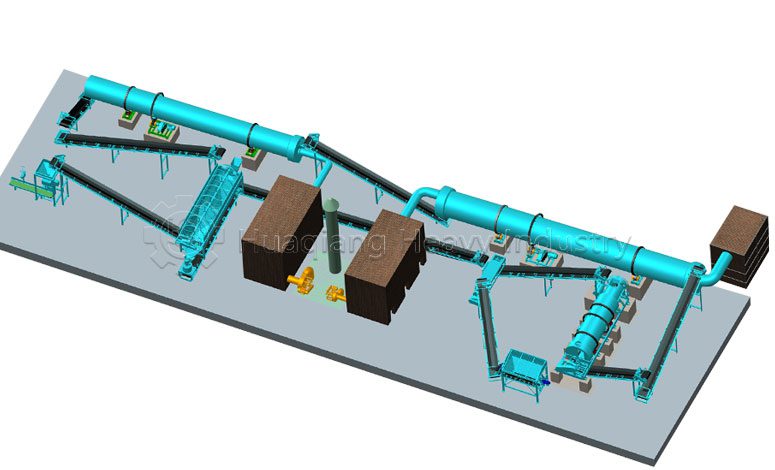 Fermentation management requires different priorities. Chicken manure is rich in organic matter and heats up rapidly—often exceeding 65°C within 48 hours—necessitating increased ventilation and temperature control (keeping the peak below 70°C) to prevent excessive mineralization; turning frequency should be kept low to avoid massive ammonia release. Pig manure, being viscous, heats up slowly; initial management requires turning every two days combined with forced aeration, shifting to twice-weekly turning once the temperature reaches 60°C. The fermentation cycle for pig manure is typically 5–7 days longer than that of chicken manure due to its dense structure, which slows down the decomposition process.
Granulation requirements also differ. Chicken manure has low fiber content and fine particles; while it forms pellets quickly in a disc granulator, the resulting granules have low structural strength, necessitating the addition of binders like bentonite. Pig manure contains more coarse fiber and requires finer grinding before granulation, but its inherent viscosity yields high-strength granules that resist breakage during drying.
Product characteristics and applications vary. Chicken manure organic fertilizer has high levels of readily available nitrogen, making it suitable for top-dressing leafy vegetables, though thorough decomposition is essential to prevent crop burn. Pig manure organic fertilizer production releases nutrients gradually, making it better suited for long-term needs such as soil improvement and fruit tree cultivation. Only by understanding the inherent differences between chicken manure and pig manure—and establishing specific production parameters for each stage, from pre-treatment and fermentation to granulation—can the respective nutrient value of each be maximized.
Fermentation management requires different priorities. Chicken manure is rich in organic matter and heats up rapidly—often exceeding 65°C within 48 hours—necessitating increased ventilation and temperature control (keeping the peak below 70°C) to prevent excessive mineralization; turning frequency should be kept low to avoid massive ammonia release. Pig manure, being viscous, heats up slowly; initial management requires turning every two days combined with forced aeration, shifting to twice-weekly turning once the temperature reaches 60°C. The fermentation cycle for pig manure is typically 5–7 days longer than that of chicken manure due to its dense structure, which slows down the decomposition process.
Granulation requirements also differ. Chicken manure has low fiber content and fine particles; while it forms pellets quickly in a disc granulator, the resulting granules have low structural strength, necessitating the addition of binders like bentonite. Pig manure contains more coarse fiber and requires finer grinding before granulation, but its inherent viscosity yields high-strength granules that resist breakage during drying.
Product characteristics and applications vary. Chicken manure organic fertilizer has high levels of readily available nitrogen, making it suitable for top-dressing leafy vegetables, though thorough decomposition is essential to prevent crop burn. Pig manure organic fertilizer production releases nutrients gradually, making it better suited for long-term needs such as soil improvement and fruit tree cultivation. Only by understanding the inherent differences between chicken manure and pig manure—and establishing specific production parameters for each stage, from pre-treatment and fermentation to granulation—can the respective nutrient value of each be maximized. 