
In the realm of organic fertilizer and feed production, pelleting technology is crucial for transforming powdered raw materials into uniform, dense granules. Among various pelleting equipment, the flat die pelleting machine stands out for its compact structure, operational flexibility, and relatively low investment cost, making it an ideal choice for small to medium-scale producers and specific application scenarios. It acts like a precision artisan, shaping loose materials into higher-value, standardized products.
 Core Working Principle: The Art of Pressure and Die
The operating principle of a flat die pellet mill is intuitive and efficient. At its heart lies a horizontally placed annular flat die with densely packed holes and rollers that rotate on its surface.
Mixing & Feeding: Pre-conditioned powdered material (moisture typically adjusted to 15%-20%) is fed into the machine's hopper.
Uniform Distribution: A distributor spreads the material evenly across the surface of the horizontal die.
Compression & Forming: Motor-driven rollers (usually 2 or 3) rotate over the die. Under the immense pressure from the rollers, the material is forced through the cylindrical holes in the die below.
Cutting to Length: The continuous cylindrical strands emerging from the bottom of the die are cut into pre-set lengths by a rotating cutter mounted underneath.
Product Discharge: The formed pellets are discharged from the outlet, often requiring subsequent cooling and screening for optimal quality.
This process resembles an efficient "mechanical noodle maker," pressing "dough" through a "die" to produce uniform "noodles."
Key Components: A System of Precision Collaboration
A typical flat die pellet mill consists of several key components working in harmony:
Main Frame: A sturdy structure supporting all components.
Ring Die Pelleting Machine: The core component, usually made of alloy steel or wear-resistant stainless steel. The hole diameter (e.g., 4mm, 6mm, 8mm) determines pellet diameter, while die thickness affects pellet hardness and capacity.
Roller Assembly: The compression components in contact with the die, also requiring high wear resistance. The gap between rollers and die is critical and must be finely adjusted based on material properties.
Transmission System: Includes the main motor, gearbox, and drive shaft, providing power to the rollers and cutter.
Feeding System: Typically a variable-frequency speed-controlled screw feeder that precisely regulates feed rate to match main motor load.
Cutting Device: An adjustable rotating cutter that determines pellet length.
Lubrication & Control System: Ensures automatic lubrication for bearings and houses the basic operation control panel.
Advantages & Ideal Applications
Why Choose a Flat Die Machine?
Simple Structure: Lower investment and maintenance costs compared to ring die mills.
Excellent for Fibrous Materials: Particularly adept at processing fiber-rich organic materials like sawdust, straw, and rice husks.
Lower Power Requirement: Suitable for areas with limited electrical infrastructure.
Easy Die Replacement: Facilitates flexible production of different pellet sizes.
Dry-in-Dry-out Process: Often requires no steam conditioning, simplifying the process.
Primary Applications: Small-scale organic fertilizer lines, biomass fuel briquetting, specialty feed production, and R&D pilot testing.
Role in the Fertilizer Equipment Family
The flat die pellet mill acts as the "forming specialist" in a complete organic fertilizer granulation line, collaborating with other equipment:
Chain Crusher: Reduces raw materials (e.g., compost, straw) to a suitable fineness.
Mixer: Blends various materials (organic base, microbial agents, binders) uniformly.
Flat Die Pellet Mill: Compresses the mixed powder into wet pellets.
Rotary Dryer: Reduces moisture in wet pellets to a safe storage level (<15%).
Cooler & Screener: Cools pellets and screens out合格 product, returning fines to the mixing or pelleting stage.
Selection and Operational Guide
Considerations for Selection:
Raw Material Properties: Fiber content, oil content, moisture, abrasiveness.
Target Capacity: Must match actual production needs.
Pellet Specifications: Diameter, length, density requirements.
Die & Roller Material: Wear resistance directly impacts service life and maintenance cost.
Operation & Maintenance Tips:
Pre-conditioning is Key: Proper control of material moisture and particle size is essential for successful pelleting.
"Run-in" New Dies: Use oil-rich material to run in a new die.
Consistent Feeding: Maintain a stable feed rate to avoid machine overload or idling.
Regular Inspection & Lubrication: Monitor wear on dies and rollers closely and maintain proper lubrication.
Core Working Principle: The Art of Pressure and Die
The operating principle of a flat die pellet mill is intuitive and efficient. At its heart lies a horizontally placed annular flat die with densely packed holes and rollers that rotate on its surface.
Mixing & Feeding: Pre-conditioned powdered material (moisture typically adjusted to 15%-20%) is fed into the machine's hopper.
Uniform Distribution: A distributor spreads the material evenly across the surface of the horizontal die.
Compression & Forming: Motor-driven rollers (usually 2 or 3) rotate over the die. Under the immense pressure from the rollers, the material is forced through the cylindrical holes in the die below.
Cutting to Length: The continuous cylindrical strands emerging from the bottom of the die are cut into pre-set lengths by a rotating cutter mounted underneath.
Product Discharge: The formed pellets are discharged from the outlet, often requiring subsequent cooling and screening for optimal quality.
This process resembles an efficient "mechanical noodle maker," pressing "dough" through a "die" to produce uniform "noodles."
Key Components: A System of Precision Collaboration
A typical flat die pellet mill consists of several key components working in harmony:
Main Frame: A sturdy structure supporting all components.
Ring Die Pelleting Machine: The core component, usually made of alloy steel or wear-resistant stainless steel. The hole diameter (e.g., 4mm, 6mm, 8mm) determines pellet diameter, while die thickness affects pellet hardness and capacity.
Roller Assembly: The compression components in contact with the die, also requiring high wear resistance. The gap between rollers and die is critical and must be finely adjusted based on material properties.
Transmission System: Includes the main motor, gearbox, and drive shaft, providing power to the rollers and cutter.
Feeding System: Typically a variable-frequency speed-controlled screw feeder that precisely regulates feed rate to match main motor load.
Cutting Device: An adjustable rotating cutter that determines pellet length.
Lubrication & Control System: Ensures automatic lubrication for bearings and houses the basic operation control panel.
Advantages & Ideal Applications
Why Choose a Flat Die Machine?
Simple Structure: Lower investment and maintenance costs compared to ring die mills.
Excellent for Fibrous Materials: Particularly adept at processing fiber-rich organic materials like sawdust, straw, and rice husks.
Lower Power Requirement: Suitable for areas with limited electrical infrastructure.
Easy Die Replacement: Facilitates flexible production of different pellet sizes.
Dry-in-Dry-out Process: Often requires no steam conditioning, simplifying the process.
Primary Applications: Small-scale organic fertilizer lines, biomass fuel briquetting, specialty feed production, and R&D pilot testing.
Role in the Fertilizer Equipment Family
The flat die pellet mill acts as the "forming specialist" in a complete organic fertilizer granulation line, collaborating with other equipment:
Chain Crusher: Reduces raw materials (e.g., compost, straw) to a suitable fineness.
Mixer: Blends various materials (organic base, microbial agents, binders) uniformly.
Flat Die Pellet Mill: Compresses the mixed powder into wet pellets.
Rotary Dryer: Reduces moisture in wet pellets to a safe storage level (<15%).
Cooler & Screener: Cools pellets and screens out合格 product, returning fines to the mixing or pelleting stage.
Selection and Operational Guide
Considerations for Selection:
Raw Material Properties: Fiber content, oil content, moisture, abrasiveness.
Target Capacity: Must match actual production needs.
Pellet Specifications: Diameter, length, density requirements.
Die & Roller Material: Wear resistance directly impacts service life and maintenance cost.
Operation & Maintenance Tips:
Pre-conditioning is Key: Proper control of material moisture and particle size is essential for successful pelleting.
"Run-in" New Dies: Use oil-rich material to run in a new die.
Consistent Feeding: Maintain a stable feed rate to avoid machine overload or idling.
Regular Inspection & Lubrication: Monitor wear on dies and rollers closely and maintain proper lubrication.
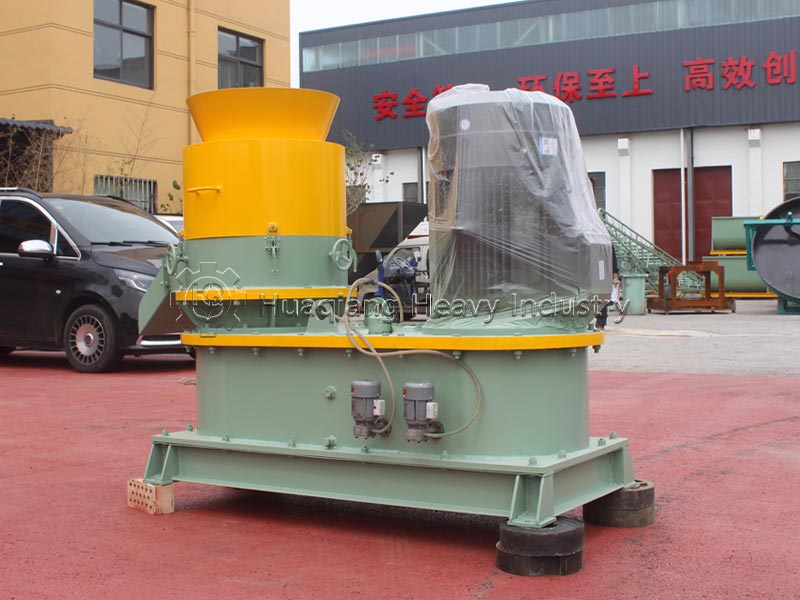 Core Working Principle: The Art of Pressure and Die
The operating principle of a flat die pellet mill is intuitive and efficient. At its heart lies a horizontally placed annular flat die with densely packed holes and rollers that rotate on its surface.
Mixing & Feeding: Pre-conditioned powdered material (moisture typically adjusted to 15%-20%) is fed into the machine's hopper.
Uniform Distribution: A distributor spreads the material evenly across the surface of the horizontal die.
Compression & Forming: Motor-driven rollers (usually 2 or 3) rotate over the die. Under the immense pressure from the rollers, the material is forced through the cylindrical holes in the die below.
Cutting to Length: The continuous cylindrical strands emerging from the bottom of the die are cut into pre-set lengths by a rotating cutter mounted underneath.
Product Discharge: The formed pellets are discharged from the outlet, often requiring subsequent cooling and screening for optimal quality.
This process resembles an efficient "mechanical noodle maker," pressing "dough" through a "die" to produce uniform "noodles."
Key Components: A System of Precision Collaboration
A typical flat die pellet mill consists of several key components working in harmony:
Main Frame: A sturdy structure supporting all components.
Ring Die Pelleting Machine: The core component, usually made of alloy steel or wear-resistant stainless steel. The hole diameter (e.g., 4mm, 6mm, 8mm) determines pellet diameter, while die thickness affects pellet hardness and capacity.
Roller Assembly: The compression components in contact with the die, also requiring high wear resistance. The gap between rollers and die is critical and must be finely adjusted based on material properties.
Transmission System: Includes the main motor, gearbox, and drive shaft, providing power to the rollers and cutter.
Feeding System: Typically a variable-frequency speed-controlled screw feeder that precisely regulates feed rate to match main motor load.
Cutting Device: An adjustable rotating cutter that determines pellet length.
Lubrication & Control System: Ensures automatic lubrication for bearings and houses the basic operation control panel.
Advantages & Ideal Applications
Why Choose a Flat Die Machine?
Simple Structure: Lower investment and maintenance costs compared to ring die mills.
Excellent for Fibrous Materials: Particularly adept at processing fiber-rich organic materials like sawdust, straw, and rice husks.
Lower Power Requirement: Suitable for areas with limited electrical infrastructure.
Easy Die Replacement: Facilitates flexible production of different pellet sizes.
Dry-in-Dry-out Process: Often requires no steam conditioning, simplifying the process.
Primary Applications: Small-scale organic fertilizer lines, biomass fuel briquetting, specialty feed production, and R&D pilot testing.
Role in the Fertilizer Equipment Family
The flat die pellet mill acts as the "forming specialist" in a complete organic fertilizer granulation line, collaborating with other equipment:
Chain Crusher: Reduces raw materials (e.g., compost, straw) to a suitable fineness.
Mixer: Blends various materials (organic base, microbial agents, binders) uniformly.
Flat Die Pellet Mill: Compresses the mixed powder into wet pellets.
Rotary Dryer: Reduces moisture in wet pellets to a safe storage level (<15%).
Cooler & Screener: Cools pellets and screens out合格 product, returning fines to the mixing or pelleting stage.
Selection and Operational Guide
Considerations for Selection:
Raw Material Properties: Fiber content, oil content, moisture, abrasiveness.
Target Capacity: Must match actual production needs.
Pellet Specifications: Diameter, length, density requirements.
Die & Roller Material: Wear resistance directly impacts service life and maintenance cost.
Operation & Maintenance Tips:
Pre-conditioning is Key: Proper control of material moisture and particle size is essential for successful pelleting.
"Run-in" New Dies: Use oil-rich material to run in a new die.
Consistent Feeding: Maintain a stable feed rate to avoid machine overload or idling.
Regular Inspection & Lubrication: Monitor wear on dies and rollers closely and maintain proper lubrication.
Core Working Principle: The Art of Pressure and Die
The operating principle of a flat die pellet mill is intuitive and efficient. At its heart lies a horizontally placed annular flat die with densely packed holes and rollers that rotate on its surface.
Mixing & Feeding: Pre-conditioned powdered material (moisture typically adjusted to 15%-20%) is fed into the machine's hopper.
Uniform Distribution: A distributor spreads the material evenly across the surface of the horizontal die.
Compression & Forming: Motor-driven rollers (usually 2 or 3) rotate over the die. Under the immense pressure from the rollers, the material is forced through the cylindrical holes in the die below.
Cutting to Length: The continuous cylindrical strands emerging from the bottom of the die are cut into pre-set lengths by a rotating cutter mounted underneath.
Product Discharge: The formed pellets are discharged from the outlet, often requiring subsequent cooling and screening for optimal quality.
This process resembles an efficient "mechanical noodle maker," pressing "dough" through a "die" to produce uniform "noodles."
Key Components: A System of Precision Collaboration
A typical flat die pellet mill consists of several key components working in harmony:
Main Frame: A sturdy structure supporting all components.
Ring Die Pelleting Machine: The core component, usually made of alloy steel or wear-resistant stainless steel. The hole diameter (e.g., 4mm, 6mm, 8mm) determines pellet diameter, while die thickness affects pellet hardness and capacity.
Roller Assembly: The compression components in contact with the die, also requiring high wear resistance. The gap between rollers and die is critical and must be finely adjusted based on material properties.
Transmission System: Includes the main motor, gearbox, and drive shaft, providing power to the rollers and cutter.
Feeding System: Typically a variable-frequency speed-controlled screw feeder that precisely regulates feed rate to match main motor load.
Cutting Device: An adjustable rotating cutter that determines pellet length.
Lubrication & Control System: Ensures automatic lubrication for bearings and houses the basic operation control panel.
Advantages & Ideal Applications
Why Choose a Flat Die Machine?
Simple Structure: Lower investment and maintenance costs compared to ring die mills.
Excellent for Fibrous Materials: Particularly adept at processing fiber-rich organic materials like sawdust, straw, and rice husks.
Lower Power Requirement: Suitable for areas with limited electrical infrastructure.
Easy Die Replacement: Facilitates flexible production of different pellet sizes.
Dry-in-Dry-out Process: Often requires no steam conditioning, simplifying the process.
Primary Applications: Small-scale organic fertilizer lines, biomass fuel briquetting, specialty feed production, and R&D pilot testing.
Role in the Fertilizer Equipment Family
The flat die pellet mill acts as the "forming specialist" in a complete organic fertilizer granulation line, collaborating with other equipment:
Chain Crusher: Reduces raw materials (e.g., compost, straw) to a suitable fineness.
Mixer: Blends various materials (organic base, microbial agents, binders) uniformly.
Flat Die Pellet Mill: Compresses the mixed powder into wet pellets.
Rotary Dryer: Reduces moisture in wet pellets to a safe storage level (<15%).
Cooler & Screener: Cools pellets and screens out合格 product, returning fines to the mixing or pelleting stage.
Selection and Operational Guide
Considerations for Selection:
Raw Material Properties: Fiber content, oil content, moisture, abrasiveness.
Target Capacity: Must match actual production needs.
Pellet Specifications: Diameter, length, density requirements.
Die & Roller Material: Wear resistance directly impacts service life and maintenance cost.
Operation & Maintenance Tips:
Pre-conditioning is Key: Proper control of material moisture and particle size is essential for successful pelleting.
"Run-in" New Dies: Use oil-rich material to run in a new die.
Consistent Feeding: Maintain a stable feed rate to avoid machine overload or idling.
Regular Inspection & Lubrication: Monitor wear on dies and rollers closely and maintain proper lubrication. 