
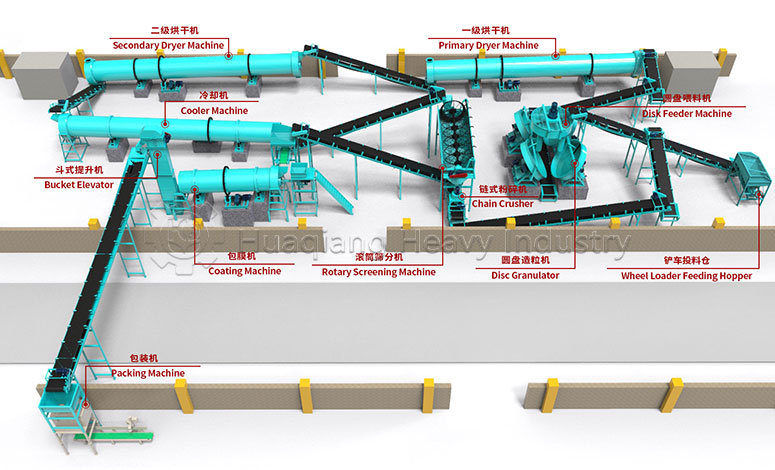
The core requirements for a bio-organic fertilizer production line differ from those for standard organic fertilizer production: the process involves introducing functional microorganisms into the decomposed material and maintaining their viability during low-temperature granulation. Consequently, whether the raw material is "clean, stable, and low in salt" is more critical than its absolute nutrient content.
1.Sheep Manure
Sheep manure is the "top performer" among the excreta of herbivorous animals. It comes in granular form, has a relatively low moisture content, and is rich in organic matter. It carries a lower risk of high salt concentrations or heavy metal contamination. Once decomposed, it develops a loose, friable texture that is highly compatible with the introduction of functional microorganisms. For bio-organic fertilizer production, sheep manure requires minimal pre-processing, heats up quickly during fermentation, and allows for easy moisture control during granulation—making it an ideal raw material.
2.Cattle Manure
Cattle manure is characterized by coarse fibers, high moisture content, and relatively low nutrient levels, though it is generally safe. It is best used in combination with sheep manure or other additives. After undergoing solid-liquid separation and trough-style fermentation, the fibers are broken down and the material’s permeability is improved, making it suitable for the bio-organic fertilizer production line. If used alone, cattle manure results in a product with low nutrient concentration, making it better suited for "soil-amending" applications.
 3.Chicken Manure
Chicken manure is a "high-nutrient" raw material for bio-organic fertilizer, but it also presents concentrated risks: high salt and uric acid content, as well as a significant likelihood of antibiotic and heavy metal residues. To produce bio-organic fertilizer, it must undergo thorough high-temperature decomposition and rigorous sampling/testing; it should also be mixed with additives like straw to dilute the salt content. If process controls are not strictly maintained, it is difficult to ensure the survival of the functional microorganisms or the safety of the final product.
4.Pig Manure
Pig manure is highly viscous and often contains a significant amount of sand, which causes notable wear and tear on crushing and granulation equipment. It also carries risks regarding salt and antibiotic residues. While it can be processed through a bio-organic fertilizer production line, it requires more meticulous pre-treatment and is best combined with fibrous additives; its overall suitability is moderate. If the goal is to produce bio-organic fertilizer, sheep manure is the best choice; cow manure is suitable for use in blends, while chicken manure requires strict management, and pig manure necessitates careful pre-treatment.
 3.Chicken Manure
Chicken manure is a "high-nutrient" raw material for bio-organic fertilizer, but it also presents concentrated risks: high salt and uric acid content, as well as a significant likelihood of antibiotic and heavy metal residues. To produce bio-organic fertilizer, it must undergo thorough high-temperature decomposition and rigorous sampling/testing; it should also be mixed with additives like straw to dilute the salt content. If process controls are not strictly maintained, it is difficult to ensure the survival of the functional microorganisms or the safety of the final product.
4.Pig Manure
Pig manure is highly viscous and often contains a significant amount of sand, which causes notable wear and tear on crushing and granulation equipment. It also carries risks regarding salt and antibiotic residues. While it can be processed through a bio-organic fertilizer production line, it requires more meticulous pre-treatment and is best combined with fibrous additives; its overall suitability is moderate. If the goal is to produce bio-organic fertilizer, sheep manure is the best choice; cow manure is suitable for use in blends, while chicken manure requires strict management, and pig manure necessitates careful pre-treatment.
