
Comparison of fertilizer quality: Rotary drum granulation vs. Roller press granulator production lines

In the production of compound fertilizers, drum granulation and roller compaction are two widely used processing technologies. While both can transform powdered raw materials into granular fertilizers, their differing formation principles result in variations in the final product’s appearance, strength, moisture content, and nutrient retention.
  1. Differences in Granule Appearance and Specifications
Rotary drum granulator relies on the rotation of a drum, which causes materials to roll and agglomerate into roughly spherical granules, resulting in a well-rounded appearance. Roller compaction, by contrast, compresses materials between two rollers to form a sheet-like structure, which is subsequently crushed and screened into granules; the final product typically features irregular or semi-granular shapes.
  1. Granule Strength and Storage Stability
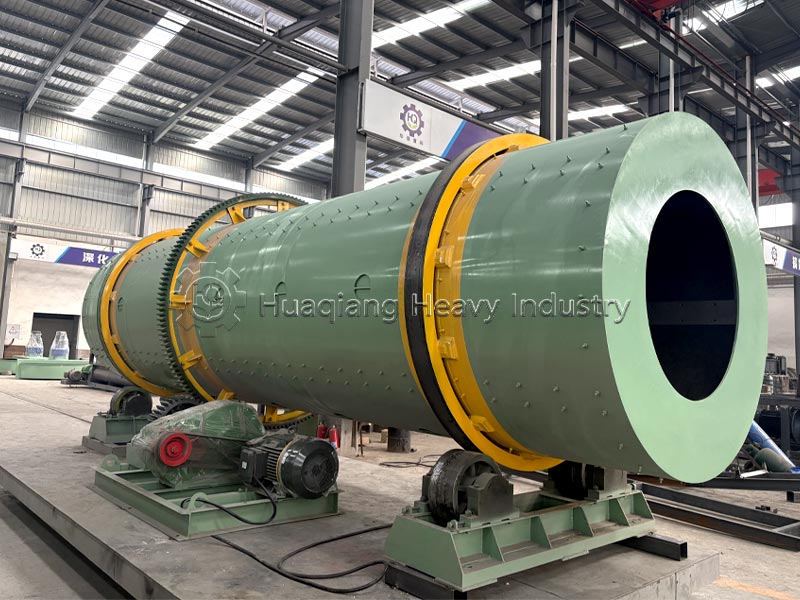
In drum granulation, granules are formed through the layer-by-layer accretion of material; with proper control of moisture levels and drying temperatures, high granule strength can be achieved. Roller compaction relies primarily on mechanical pressure to bind raw materials together, resulting in high granule density. However, the actual compressive strength is influenced by factors such as the adhesiveness of the raw materials, the applied roller pressure, and the crushing and screening process.
  1. Moisture Content and Nutrient Retention
Drum granulation generally requires the addition of water or steam, followed by drying and cooling stages. Roller compaction is a "dry" granulation process; it typically requires little to no added moisture and eliminates the need for high-temperature drying, offering a distinct advantage when handling heat-sensitive raw materials.
  1. Choosing a Process Based on Quality Requirements
If the priority is granule roundness, aesthetic appeal, and uniformity, a rotary drum granulation production line is a suitable choice. Conversely, if the goal is to minimize drying steps and reduce costs associated with moisture management, a roller press granulator production line may be preferred. In summary, both processes have unique characteristics. The final quality of the fertilizer depends not only on the granulation equipment but also on the raw material formulation, operational parameters, and subsequent screening and processing steps.
All Categories

MON-SAT 8:00-9:00

+91 69 863 6420