
Composting livestock manure is, in essence, a "relay race" driven by microorganisms, unfolding in four distinct stages: initial heating, high-temperature phase, cooling, and maturation.
1.Preparation and Initiation
Fresh manure typically has a moisture content as high as 70%–85% and an unsuitable carbon-to-nitrogen (C:N) ratio. Dry amendments—such as straw or rice husks—are added to adjust the moisture content to 55%–65% and the C:N ratio to 25–30:1. Once the pile is formed, aerobic microorganisms become active, breaking down sugars and proteins, which causes the temperature of the pile to rise rapidly within 1–3 days.
2.High-Temperature Sterilization
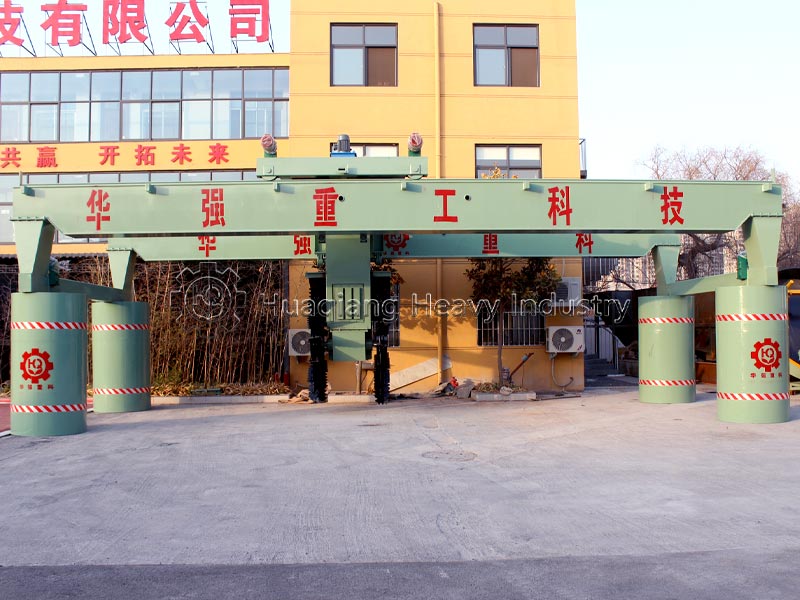
As the temperature exceeds 50°C, thermophilic (heat-loving) bacteria take over, driving the temperature to 55–65°C, where it remains for 7–15 days. This stage is critical: pathogens, insect eggs, and weed seeds are eliminated, organic matter decomposes rapidly, and foul odors diminish. However, because oxygen is consumed extremely quickly during this high-temperature phase, the pile must be turned regularly using specialized compost turning machine. This process moves outer material toward the center and introduces fresh oxygen; otherwise, the pile could shift into an anaerobic state, halting the decomposition process.
 3.Cooling and Humification
Following the high-temperature phase, easily degradable organic matter is largely exhausted, microbial activity slows, and the pile temperature drops below 40°C. Mesophilic (moderate-temperature) microorganisms become active again, breaking down more complex substances like cellulose and lignin, while humus begins to accumulate. The material shifts from a lighter to a darker color, and the foul odor is replaced by an earthy, pleasant scent.
4.Maturation and Curing
Once the temperature returns to ambient levels, the material enters a maturation (curing) phase, which typically lasts 10–15 days. During this time, the pile is no longer turned, allowing the humus to further stabilize. The final product is dark brown, loose and granular in texture, and odorless. The C:N ratio drops to 15–20:1, and the seed germination index exceeds 80%—all of which indicate that the compost has reached full maturity. From raw manure to "black gold," composting is a delicate dance of temperature, moisture, oxygen, and microorganisms. By mastering the rhythm of each stage, waste can be truly transformed into safe, highly effective organic fertilizer.
3.Cooling and Humification
Following the high-temperature phase, easily degradable organic matter is largely exhausted, microbial activity slows, and the pile temperature drops below 40°C. Mesophilic (moderate-temperature) microorganisms become active again, breaking down more complex substances like cellulose and lignin, while humus begins to accumulate. The material shifts from a lighter to a darker color, and the foul odor is replaced by an earthy, pleasant scent.
4.Maturation and Curing
Once the temperature returns to ambient levels, the material enters a maturation (curing) phase, which typically lasts 10–15 days. During this time, the pile is no longer turned, allowing the humus to further stabilize. The final product is dark brown, loose and granular in texture, and odorless. The C:N ratio drops to 15–20:1, and the seed germination index exceeds 80%—all of which indicate that the compost has reached full maturity. From raw manure to "black gold," composting is a delicate dance of temperature, moisture, oxygen, and microorganisms. By mastering the rhythm of each stage, waste can be truly transformed into safe, highly effective organic fertilizer.
 3.Cooling and Humification
Following the high-temperature phase, easily degradable organic matter is largely exhausted, microbial activity slows, and the pile temperature drops below 40°C. Mesophilic (moderate-temperature) microorganisms become active again, breaking down more complex substances like cellulose and lignin, while humus begins to accumulate. The material shifts from a lighter to a darker color, and the foul odor is replaced by an earthy, pleasant scent.
4.Maturation and Curing
Once the temperature returns to ambient levels, the material enters a maturation (curing) phase, which typically lasts 10–15 days. During this time, the pile is no longer turned, allowing the humus to further stabilize. The final product is dark brown, loose and granular in texture, and odorless. The C:N ratio drops to 15–20:1, and the seed germination index exceeds 80%—all of which indicate that the compost has reached full maturity. From raw manure to "black gold," composting is a delicate dance of temperature, moisture, oxygen, and microorganisms. By mastering the rhythm of each stage, waste can be truly transformed into safe, highly effective organic fertilizer.
3.Cooling and Humification
Following the high-temperature phase, easily degradable organic matter is largely exhausted, microbial activity slows, and the pile temperature drops below 40°C. Mesophilic (moderate-temperature) microorganisms become active again, breaking down more complex substances like cellulose and lignin, while humus begins to accumulate. The material shifts from a lighter to a darker color, and the foul odor is replaced by an earthy, pleasant scent.
4.Maturation and Curing
Once the temperature returns to ambient levels, the material enters a maturation (curing) phase, which typically lasts 10–15 days. During this time, the pile is no longer turned, allowing the humus to further stabilize. The final product is dark brown, loose and granular in texture, and odorless. The C:N ratio drops to 15–20:1, and the seed germination index exceeds 80%—all of which indicate that the compost has reached full maturity. From raw manure to "black gold," composting is a delicate dance of temperature, moisture, oxygen, and microorganisms. By mastering the rhythm of each stage, waste can be truly transformed into safe, highly effective organic fertilizer. 