
The choice of granulation equipment is often determined by the product type. Stirring tooth-drum granulators and rotary drum granulators serve the distinct sectors of organic fertilizer and compound fertilizer, respectively.
1.Stirring tooth-drumgranulator
The new type stirring tooth-drum granulator employs a high-speed rotor to drive agitating teeth, subjecting materials to intense mixing, shearing, and throwing actions that rapidly agglomerate powder into granules. Designed specifically for organic materials—such as fermented livestock manure, straw, and fungal residue—it easily handles the high fiber content and high viscosity that challenge standard equipment. It achieves a granulation rate exceeding 90% and produces dense granules; the process operates under wet, low-temperature conditions that preserve functional bacteria, making it ideal for bio-organic fertilizer production.
 2.Rotary Drum Granulator
The rotary drum granulator consists of a large, inclined, rotating cylinder. Materials tumble inside, and with the addition of water spray or steam, they gradually agglomerate into granules through rolling friction. Its strengths lie in high capacity and stable operation—with single-unit daily outputs ranging from tens to hundreds of tons—making it the standard choice for inorganic compound fertilizer and BB fertilizer production. It yields round, uniform granules with an attractive commercial appearance. However, the process has specific requirements regarding material viscosity; it struggles to granulate pure organic materials and necessitates a comprehensive post-processing system for drying, cooling, and screening.
3.Key Differences and Selection Logic
The stirring tooth-drum granulator is "material-specific"—specializing in high-fiber organic materials with rapid granulation, a streamlined process, and low investment costs. The rotary drum granulator is "scale-oriented"—suited for large-volume inorganic compound fertilizer production, offering high capacity and superior granule aesthetics, albeit with complex systems and higher energy consumption. Consequently, the stirring tooth-drum granulator is the better fit for bio-organic or high-fiber organic fertilizers, whereas the rotary drum granulator offers a more mature and reliable solution for large-scale, continuous production of inorganic compound or BB fertilizers.
2.Rotary Drum Granulator
The rotary drum granulator consists of a large, inclined, rotating cylinder. Materials tumble inside, and with the addition of water spray or steam, they gradually agglomerate into granules through rolling friction. Its strengths lie in high capacity and stable operation—with single-unit daily outputs ranging from tens to hundreds of tons—making it the standard choice for inorganic compound fertilizer and BB fertilizer production. It yields round, uniform granules with an attractive commercial appearance. However, the process has specific requirements regarding material viscosity; it struggles to granulate pure organic materials and necessitates a comprehensive post-processing system for drying, cooling, and screening.
3.Key Differences and Selection Logic
The stirring tooth-drum granulator is "material-specific"—specializing in high-fiber organic materials with rapid granulation, a streamlined process, and low investment costs. The rotary drum granulator is "scale-oriented"—suited for large-volume inorganic compound fertilizer production, offering high capacity and superior granule aesthetics, albeit with complex systems and higher energy consumption. Consequently, the stirring tooth-drum granulator is the better fit for bio-organic or high-fiber organic fertilizers, whereas the rotary drum granulator offers a more mature and reliable solution for large-scale, continuous production of inorganic compound or BB fertilizers.
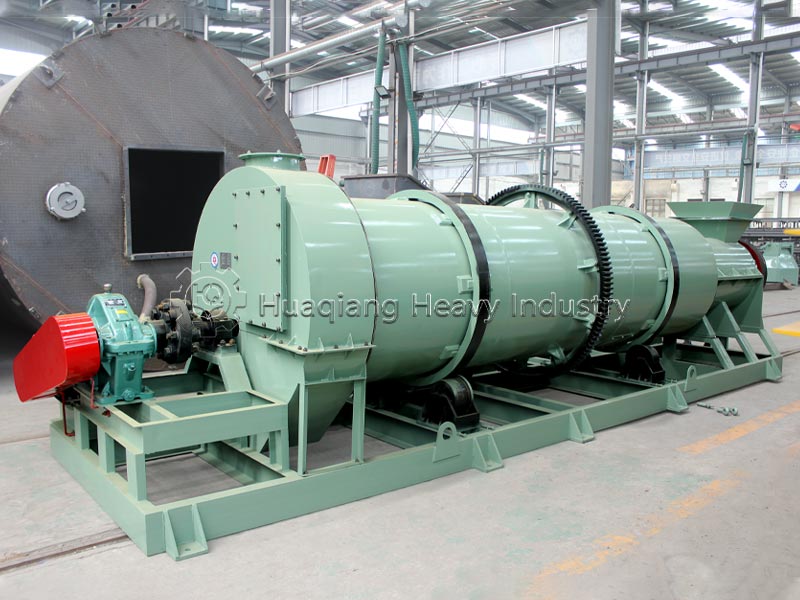 2.Rotary Drum Granulator
The rotary drum granulator consists of a large, inclined, rotating cylinder. Materials tumble inside, and with the addition of water spray or steam, they gradually agglomerate into granules through rolling friction. Its strengths lie in high capacity and stable operation—with single-unit daily outputs ranging from tens to hundreds of tons—making it the standard choice for inorganic compound fertilizer and BB fertilizer production. It yields round, uniform granules with an attractive commercial appearance. However, the process has specific requirements regarding material viscosity; it struggles to granulate pure organic materials and necessitates a comprehensive post-processing system for drying, cooling, and screening.
3.Key Differences and Selection Logic
The stirring tooth-drum granulator is "material-specific"—specializing in high-fiber organic materials with rapid granulation, a streamlined process, and low investment costs. The rotary drum granulator is "scale-oriented"—suited for large-volume inorganic compound fertilizer production, offering high capacity and superior granule aesthetics, albeit with complex systems and higher energy consumption. Consequently, the stirring tooth-drum granulator is the better fit for bio-organic or high-fiber organic fertilizers, whereas the rotary drum granulator offers a more mature and reliable solution for large-scale, continuous production of inorganic compound or BB fertilizers.
2.Rotary Drum Granulator
The rotary drum granulator consists of a large, inclined, rotating cylinder. Materials tumble inside, and with the addition of water spray or steam, they gradually agglomerate into granules through rolling friction. Its strengths lie in high capacity and stable operation—with single-unit daily outputs ranging from tens to hundreds of tons—making it the standard choice for inorganic compound fertilizer and BB fertilizer production. It yields round, uniform granules with an attractive commercial appearance. However, the process has specific requirements regarding material viscosity; it struggles to granulate pure organic materials and necessitates a comprehensive post-processing system for drying, cooling, and screening.
3.Key Differences and Selection Logic
The stirring tooth-drum granulator is "material-specific"—specializing in high-fiber organic materials with rapid granulation, a streamlined process, and low investment costs. The rotary drum granulator is "scale-oriented"—suited for large-volume inorganic compound fertilizer production, offering high capacity and superior granule aesthetics, albeit with complex systems and higher energy consumption. Consequently, the stirring tooth-drum granulator is the better fit for bio-organic or high-fiber organic fertilizers, whereas the rotary drum granulator offers a more mature and reliable solution for large-scale, continuous production of inorganic compound or BB fertilizers. 