
Many organic fertilizer producers believe that since pig manure and chicken manure are both livestock and poultry excrement, their organic fertilizer production equipment is completely interchangeable. In fact, while the basic production line frameworks are similar, the core equipment configurations and parameters differ significantly due to variations in raw material moisture content, texture, and impurities. Therefore, they cannot be completely interchangeable; targeted selection is crucial to ensure smooth production and product quality.
Raw material pretreatment equipment: Fresh pig manure has a high moisture content (70%-80%) and a fine, viscous texture, requiring solid-liquid separation and dehydration equipment to forcibly reduce moisture and meet subsequent fermentation conditions. This is essential equipment for production. Chicken manure, on the other hand, has a lower moisture content, higher fiber content, and higher salt content. Small-scale organic fertilizer production lines do not require dehydration equipment; only impurity removal and crushing equipment is needed to clean feathers, bedding, and other impurities. For large-scale production, dehydration equipment can be selected as needed.
 The parameters and configurations of fermentation and compost turning equipment also differ. Pig manure fermentation is slow-heating, prone to compaction and suffocation, and produces a strong odor. It requires high-powered, highly ventilated turning equipment to effectively break up compacted materials, ensure adequate oxygen supply, dispel odors, and accelerate the composting process. Chicken manure fermentation heats up quickly and has a short cycle; conventional power turning equipment is sufficient for production. Only uniform turning and auxiliary desalination are needed, resulting in a lower equipment operating load.
Fine processing and granulation equipment also differs. Chicken manure has good viscosity and high organic matter content, making it suitable for conventional granulation equipment with a high pelletizing rate. Pig manure has a loose texture and is difficult to form, requiring wear-resistant, anti-clogging specialized granulation equipment to avoid loose and easily broken finished pellets.
In summary, the two types of equipment can be partially interchangeable, but the core processes must be adapted to specific needs and the characteristics of the raw materials to avoid production failures and achieve stable and efficient production.
The parameters and configurations of fermentation and compost turning equipment also differ. Pig manure fermentation is slow-heating, prone to compaction and suffocation, and produces a strong odor. It requires high-powered, highly ventilated turning equipment to effectively break up compacted materials, ensure adequate oxygen supply, dispel odors, and accelerate the composting process. Chicken manure fermentation heats up quickly and has a short cycle; conventional power turning equipment is sufficient for production. Only uniform turning and auxiliary desalination are needed, resulting in a lower equipment operating load.
Fine processing and granulation equipment also differs. Chicken manure has good viscosity and high organic matter content, making it suitable for conventional granulation equipment with a high pelletizing rate. Pig manure has a loose texture and is difficult to form, requiring wear-resistant, anti-clogging specialized granulation equipment to avoid loose and easily broken finished pellets.
In summary, the two types of equipment can be partially interchangeable, but the core processes must be adapted to specific needs and the characteristics of the raw materials to avoid production failures and achieve stable and efficient production.
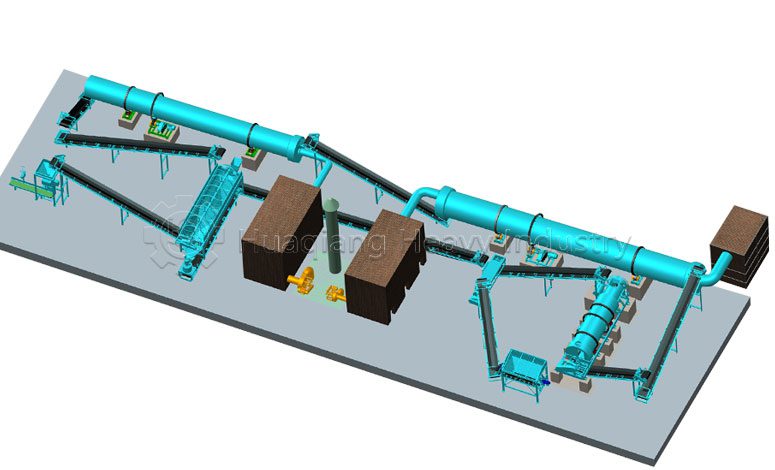 The parameters and configurations of fermentation and compost turning equipment also differ. Pig manure fermentation is slow-heating, prone to compaction and suffocation, and produces a strong odor. It requires high-powered, highly ventilated turning equipment to effectively break up compacted materials, ensure adequate oxygen supply, dispel odors, and accelerate the composting process. Chicken manure fermentation heats up quickly and has a short cycle; conventional power turning equipment is sufficient for production. Only uniform turning and auxiliary desalination are needed, resulting in a lower equipment operating load.
Fine processing and granulation equipment also differs. Chicken manure has good viscosity and high organic matter content, making it suitable for conventional granulation equipment with a high pelletizing rate. Pig manure has a loose texture and is difficult to form, requiring wear-resistant, anti-clogging specialized granulation equipment to avoid loose and easily broken finished pellets.
In summary, the two types of equipment can be partially interchangeable, but the core processes must be adapted to specific needs and the characteristics of the raw materials to avoid production failures and achieve stable and efficient production.
The parameters and configurations of fermentation and compost turning equipment also differ. Pig manure fermentation is slow-heating, prone to compaction and suffocation, and produces a strong odor. It requires high-powered, highly ventilated turning equipment to effectively break up compacted materials, ensure adequate oxygen supply, dispel odors, and accelerate the composting process. Chicken manure fermentation heats up quickly and has a short cycle; conventional power turning equipment is sufficient for production. Only uniform turning and auxiliary desalination are needed, resulting in a lower equipment operating load.
Fine processing and granulation equipment also differs. Chicken manure has good viscosity and high organic matter content, making it suitable for conventional granulation equipment with a high pelletizing rate. Pig manure has a loose texture and is difficult to form, requiring wear-resistant, anti-clogging specialized granulation equipment to avoid loose and easily broken finished pellets.
In summary, the two types of equipment can be partially interchangeable, but the core processes must be adapted to specific needs and the characteristics of the raw materials to avoid production failures and achieve stable and efficient production. 