
Raw material pretreatment is the first step in the NPK fertilizer production line and is fundamental to ensuring stable nutrient content and uniform particle size in the finished product. It directly determines the smoothness of subsequent processes and the product qualification rate. The core raw materials for NPK fertilizers are widely sourced. Nitrogen sources are mainly urea, ammonium chloride, and ammonium sulfate. Urea is mostly industrially synthesized, while ammonium chloride and ammonium sulfate are mostly byproducts of coal chemical and steel plant desulfurization processes. Phosphorus sources are mainly monoammonium phosphate and diammonium phosphate, derived from acid hydrolysis after phosphate mining. Potassium sources are mainly potassium chloride and potassium sulfate, obtained from potash mining and salt lake extraction, respectively, along with small amounts of trace elements and binders.
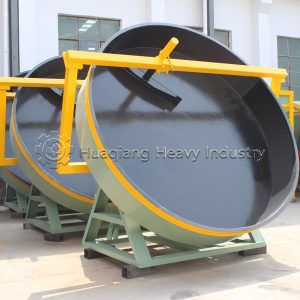 The pretreatment process mainly includes three core steps: crushing, screening, and drying. Operational procedures must be standardized and strictly controlled. Lump raw materials first enter a chain crusher or cage crusher to be pulverized into fine powder of 80 mesh or higher, ensuring uniform mixing and laying the foundation for smooth granulation in the fertilizer granulator. Then, a vibrating screen removes impurities and large particles, with the screen aperture controlled at 0.5-1mm to prevent clogging of the batching equipment and the fertilizer granulator's feed inlet. For organic-inorganic compound NPK fertilizers, the organic portion of the raw material must first be fully decomposed and turned over in a fertilizer turner to reduce viscosity and avoid affecting subsequent granulation.
For highly hygroscopic raw materials such as urea and monoammonium phosphate, a drum dryer or airflow dryer is required, with the temperature controlled at 80-100℃ to reduce the moisture content to below 3%, preventing clumping during storage and batching. Key control points are particle size, drying temperature, and feed uniformity. Insufficient particle size will lead to difficulties in granulation in the fertilizer granulator, excessive moisture will cause the fertilizer granulator to stick to the walls, and uneven feeding will affect the accuracy of the proportioning. Standardized control of pretreatment processes can significantly improve the stability of NPK fertilizer production lines, reduce failure rates, and lay a solid foundation for subsequent processes.
The pretreatment process mainly includes three core steps: crushing, screening, and drying. Operational procedures must be standardized and strictly controlled. Lump raw materials first enter a chain crusher or cage crusher to be pulverized into fine powder of 80 mesh or higher, ensuring uniform mixing and laying the foundation for smooth granulation in the fertilizer granulator. Then, a vibrating screen removes impurities and large particles, with the screen aperture controlled at 0.5-1mm to prevent clogging of the batching equipment and the fertilizer granulator's feed inlet. For organic-inorganic compound NPK fertilizers, the organic portion of the raw material must first be fully decomposed and turned over in a fertilizer turner to reduce viscosity and avoid affecting subsequent granulation.
For highly hygroscopic raw materials such as urea and monoammonium phosphate, a drum dryer or airflow dryer is required, with the temperature controlled at 80-100℃ to reduce the moisture content to below 3%, preventing clumping during storage and batching. Key control points are particle size, drying temperature, and feed uniformity. Insufficient particle size will lead to difficulties in granulation in the fertilizer granulator, excessive moisture will cause the fertilizer granulator to stick to the walls, and uneven feeding will affect the accuracy of the proportioning. Standardized control of pretreatment processes can significantly improve the stability of NPK fertilizer production lines, reduce failure rates, and lay a solid foundation for subsequent processes.
The pretreatment process mainly includes three core steps: crushing, screening, and drying. Operational procedures must be standardized and strictly controlled. Lump raw materials first enter a chain crusher or cage crusher to be pulverized into fine powder of 80 mesh or higher, ensuring uniform mixing and laying the foundation for smooth granulation in the fertilizer granulator. Then, a vibrating screen removes impurities and large particles, with the screen aperture controlled at 0.5-1mm to prevent clogging of the batching equipment and the fertilizer granulator's feed inlet. For organic-inorganic compound NPK fertilizers, the organic portion of the raw material must first be fully decomposed and turned over in a fertilizer turner to reduce viscosity and avoid affecting subsequent granulation.
For highly hygroscopic raw materials such as urea and monoammonium phosphate, a drum dryer or airflow dryer is required, with the temperature controlled at 80-100℃ to reduce the moisture content to below 3%, preventing clumping during storage and batching. Key control points are particle size, drying temperature, and feed uniformity. Insufficient particle size will lead to difficulties in granulation in the fertilizer granulator, excessive moisture will cause the fertilizer granulator to stick to the walls, and uneven feeding will affect the accuracy of the proportioning. Standardized control of pretreatment processes can significantly improve the stability of NPK fertilizer production lines, reduce failure rates, and lay a solid foundation for subsequent processes. 