
The scope of application for cow manure organic fertilizer production lines is broader than you might imagine

Many people assume that such production lines are exclusive to cattle farms, but their utility extends far beyond that.
  1. Large-scale Cattle Farms
Farms with hundreds or more head of cattle generate tons—or even tens of tons—of fresh manure daily, creating significant environmental pressure. By integrating a production line, these farms can process high-moisture manure through solid-liquid separation, fermentation/composting, and granulation, turning it into a marketable fertilizer product. This simultaneously addresses waste disposal challenges and generates additional revenue. Such systems are typically designed as an integral part of the farm, with high requirements for compost turning machine and dewatering.
  1. Regional Centralized Manure Treatment Centers
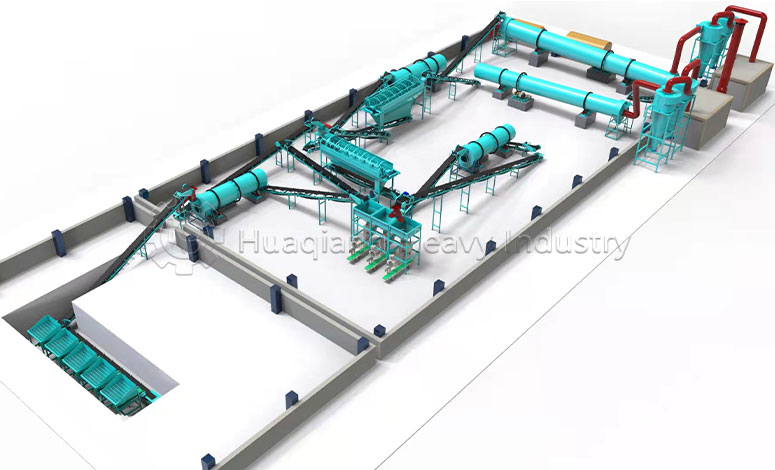
In areas where multiple livestock farms are scattered, building a dedicated production line at each individual site is often not economically viable. Instead, a third party can establish a centralized facility to collect and process cow manure from various farms. This model requires a well-planned collection radius to keep transportation costs manageable. These facilities are generally larger than those found on individual farms, and because their products are sold to the regional agricultural supplies market, they demand higher standards for granule quality and packaging.
  1. Circular Economy Hubs (Integrated Crop-Livestock Systems)
In "livestock—biogas—crop" integrated agricultural parks, a production line serves as a vital link between animal husbandry and crop cultivation. Once fermented and granulated, the cow manure can be applied directly to the park’s orchards, forage fields, or vegetable plots, reducing the need to purchase external chemical fertilizers. In this context, the primary goal is not the commercial sale of fertilizer; therefore, the equipment can be streamlined, with a focus on ensuring thorough fermentation and safe application.
  1. Feedstock Processing Lines for Specialized Organic Fertilizer Plants
Dedicated organic fertilizer plants may not raise cattle themselves, but they often utilize cow manure as a primary raw material, blending it with other inputs like chicken manure or crop straw. The fibrous content of cow manure improves the aeration of the compost pile, making it an ideal component to mix with high-nitrogen materials. In these operations, the emphasis is on the stability of raw material procurement and the flexibility of the product formulation. Ultimately, the scope of application for a cow manure organic fertilizer production line is defined by the origin of the manure and the final destination of the fertilizer. Different scenarios—such as on-site disposal or regional centralized processing—dictate different equipment configurations.
All Categories

MON-SAT 8:00-9:00

+91 69 863 6420