
The granulation process of NPK fertilizer production lines is the core link in compound fertilizer production, involving various equipment and processes to ensure uniform, high-strength fertilizer granules that are easy to store and apply. Before granulation, raw materials such as urea, diammonium phosphate, and potassium chloride are prepared and pre-processed using fertilizer crushers and weighing scales. Crushing equipment, such as hammer crushers, pulverizes the lumpy raw materials to a uniform particle size, and the weighing system uses electronic scales to accurately proportion the N:P:K ratio, preventing uneven nutrient distribution.
The granulation process mainly includes three types: extrusion granulation, tower granulation, and drum granulation. The core equipment of extrusion granulation is the double-roll extrusion granulator, which compresses the mixed materials into sheets or strips through high-pressure rollers, and then crushes and screens them into granules. This process does not require heating and drying, is suitable for low-concentration NPK fertilizers, and has simple equipment and low investment, but the granule strength is moderate. Tower granulation uses a spray tower and a melting pump to spray the molten slurry from the top of the tower, cooling and solidifying it into spherical granules in the air. Key equipment includes a melting pot, nozzles, and a cooling tower, ensuring round and smooth granules. It is suitable for high-tower compound fertilizer production, and the granules have good solubility, but the energy consumption is higher.
 The drum granulation process relies on a drum granulator, which rolls the wet material into balls inside the drum, with the addition of binders such as water or steam to assist in shaping. The equipment includes a drum machine, a spraying system, and a dryer, followed by a drying oven to remove moisture. The process flow is: raw material mixing → wet humidification → drum rolling → drying and cooling → screening and packaging. This process is highly flexible and can handle a variety of formulations, but humidity control is necessary to prevent caking.
Auxiliary equipment such as vibrating screens are used for grading, cooling machines reduce granule temperature, and packaging machines automate bag sealing. Environmental protection equipment such as dust collectors and exhaust gas purification towers control dust and ammonia emissions. The entire granulation process emphasizes automated control, with a PLC system monitoring parameters to ensure consistent quality. In practical applications, a medium-sized production line can produce hundreds of tons per day, suitable for rice or corn fertilizer production.
In summary, the equipment and processes of the NPK granulation process directly affect fertilizer efficiency and promote sustainable agricultural development.
The drum granulation process relies on a drum granulator, which rolls the wet material into balls inside the drum, with the addition of binders such as water or steam to assist in shaping. The equipment includes a drum machine, a spraying system, and a dryer, followed by a drying oven to remove moisture. The process flow is: raw material mixing → wet humidification → drum rolling → drying and cooling → screening and packaging. This process is highly flexible and can handle a variety of formulations, but humidity control is necessary to prevent caking.
Auxiliary equipment such as vibrating screens are used for grading, cooling machines reduce granule temperature, and packaging machines automate bag sealing. Environmental protection equipment such as dust collectors and exhaust gas purification towers control dust and ammonia emissions. The entire granulation process emphasizes automated control, with a PLC system monitoring parameters to ensure consistent quality. In practical applications, a medium-sized production line can produce hundreds of tons per day, suitable for rice or corn fertilizer production.
In summary, the equipment and processes of the NPK granulation process directly affect fertilizer efficiency and promote sustainable agricultural development.
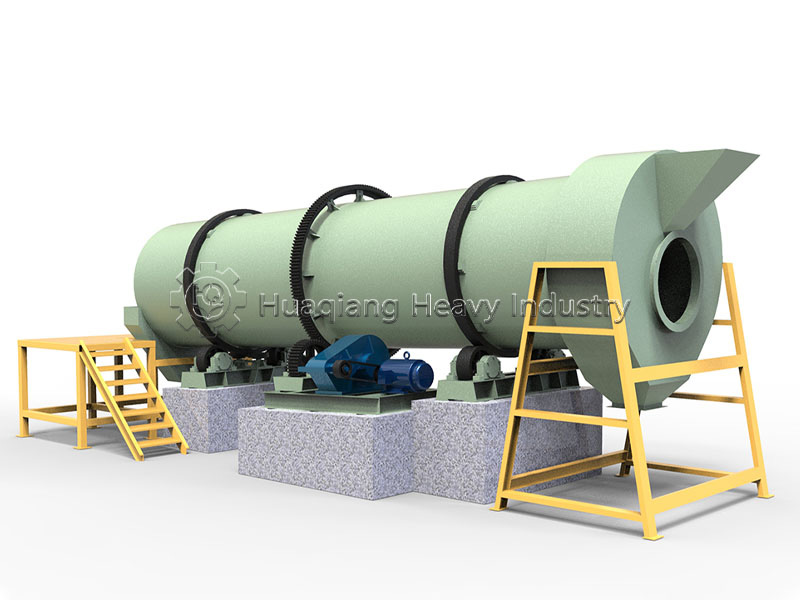 The drum granulation process relies on a drum granulator, which rolls the wet material into balls inside the drum, with the addition of binders such as water or steam to assist in shaping. The equipment includes a drum machine, a spraying system, and a dryer, followed by a drying oven to remove moisture. The process flow is: raw material mixing → wet humidification → drum rolling → drying and cooling → screening and packaging. This process is highly flexible and can handle a variety of formulations, but humidity control is necessary to prevent caking.
Auxiliary equipment such as vibrating screens are used for grading, cooling machines reduce granule temperature, and packaging machines automate bag sealing. Environmental protection equipment such as dust collectors and exhaust gas purification towers control dust and ammonia emissions. The entire granulation process emphasizes automated control, with a PLC system monitoring parameters to ensure consistent quality. In practical applications, a medium-sized production line can produce hundreds of tons per day, suitable for rice or corn fertilizer production.
In summary, the equipment and processes of the NPK granulation process directly affect fertilizer efficiency and promote sustainable agricultural development.
The drum granulation process relies on a drum granulator, which rolls the wet material into balls inside the drum, with the addition of binders such as water or steam to assist in shaping. The equipment includes a drum machine, a spraying system, and a dryer, followed by a drying oven to remove moisture. The process flow is: raw material mixing → wet humidification → drum rolling → drying and cooling → screening and packaging. This process is highly flexible and can handle a variety of formulations, but humidity control is necessary to prevent caking.
Auxiliary equipment such as vibrating screens are used for grading, cooling machines reduce granule temperature, and packaging machines automate bag sealing. Environmental protection equipment such as dust collectors and exhaust gas purification towers control dust and ammonia emissions. The entire granulation process emphasizes automated control, with a PLC system monitoring parameters to ensure consistent quality. In practical applications, a medium-sized production line can produce hundreds of tons per day, suitable for rice or corn fertilizer production.
In summary, the equipment and processes of the NPK granulation process directly affect fertilizer efficiency and promote sustainable agricultural development. 