
For small and medium-sized organic fertilizer plants, the choice of granulation equipment directly determines production efficiency, product quality, and return on investment, making it a pivotal element in the configuration of the production line. Currently, the mainstream organic fertilizer granulators on the market include rotary drum granulators, wet-process stirring-tooth granulators, and double-roller extrusion granulators; therefore, plants must make a rational selection based on the specific characteristics of their raw materials and their product requirements.
The rotary drum granulator is suitable for processing a wide variety of raw materials. It features simple operation and stable performance, achieving a granulation rate of 40% to 60% with no significant material adhesion issues. It is well-suited for the classification of both wet and dry granules, making it an excellent fit for the production needs of small and medium-sized plants. Typically, the drum body has a diameter between 1.2 and 2.4 meters and a length of 3 to 6 meters; it requires a moderate footprint, is easy to maintain, and does not demand a high level of operational expertise.
 The wet-process stirring-tooth granulator represents a breakthrough in conventional processing techniques. It eliminates the need to dry or pulverize fermented raw materials, allowing for direct granulation immediately after batching. This method allows the raw material moisture content to remain between 20% and 40%, resulting in significant energy savings. This equipment boasts a high ball-forming rate and produces smooth, rounded granules without the need for added binders. It is particularly effective for materials with high viscosity, making it an ideal choice for small and medium-sized manufacturers who prioritize energy conservation and product aesthetics.
When selecting organic fertilizer granulation equipment, it is also essential to consider factors such as raw material moisture content, desired product form (powder or granules), and environmental protection regulations, in order to avoid blindly pursuing high-end configurations that result in wasted investment. Making a rational selection can effectively reduce production costs, enhance product competitiveness, and help small and medium-sized organic fertilizer plants achieve stable profitability.
The wet-process stirring-tooth granulator represents a breakthrough in conventional processing techniques. It eliminates the need to dry or pulverize fermented raw materials, allowing for direct granulation immediately after batching. This method allows the raw material moisture content to remain between 20% and 40%, resulting in significant energy savings. This equipment boasts a high ball-forming rate and produces smooth, rounded granules without the need for added binders. It is particularly effective for materials with high viscosity, making it an ideal choice for small and medium-sized manufacturers who prioritize energy conservation and product aesthetics.
When selecting organic fertilizer granulation equipment, it is also essential to consider factors such as raw material moisture content, desired product form (powder or granules), and environmental protection regulations, in order to avoid blindly pursuing high-end configurations that result in wasted investment. Making a rational selection can effectively reduce production costs, enhance product competitiveness, and help small and medium-sized organic fertilizer plants achieve stable profitability.
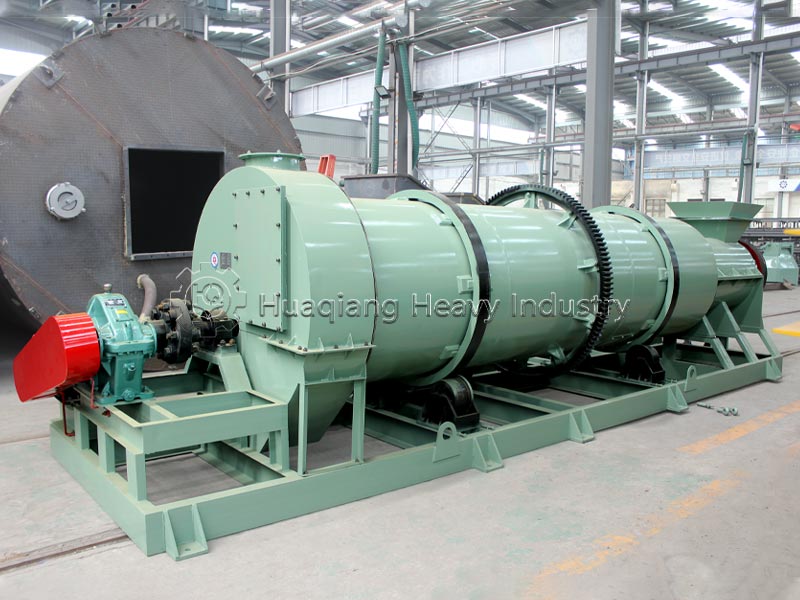 The wet-process stirring-tooth granulator represents a breakthrough in conventional processing techniques. It eliminates the need to dry or pulverize fermented raw materials, allowing for direct granulation immediately after batching. This method allows the raw material moisture content to remain between 20% and 40%, resulting in significant energy savings. This equipment boasts a high ball-forming rate and produces smooth, rounded granules without the need for added binders. It is particularly effective for materials with high viscosity, making it an ideal choice for small and medium-sized manufacturers who prioritize energy conservation and product aesthetics.
When selecting organic fertilizer granulation equipment, it is also essential to consider factors such as raw material moisture content, desired product form (powder or granules), and environmental protection regulations, in order to avoid blindly pursuing high-end configurations that result in wasted investment. Making a rational selection can effectively reduce production costs, enhance product competitiveness, and help small and medium-sized organic fertilizer plants achieve stable profitability.
The wet-process stirring-tooth granulator represents a breakthrough in conventional processing techniques. It eliminates the need to dry or pulverize fermented raw materials, allowing for direct granulation immediately after batching. This method allows the raw material moisture content to remain between 20% and 40%, resulting in significant energy savings. This equipment boasts a high ball-forming rate and produces smooth, rounded granules without the need for added binders. It is particularly effective for materials with high viscosity, making it an ideal choice for small and medium-sized manufacturers who prioritize energy conservation and product aesthetics.
When selecting organic fertilizer granulation equipment, it is also essential to consider factors such as raw material moisture content, desired product form (powder or granules), and environmental protection regulations, in order to avoid blindly pursuing high-end configurations that result in wasted investment. Making a rational selection can effectively reduce production costs, enhance product competitiveness, and help small and medium-sized organic fertilizer plants achieve stable profitability. 