
New Type Organic Fertilizer Granulator
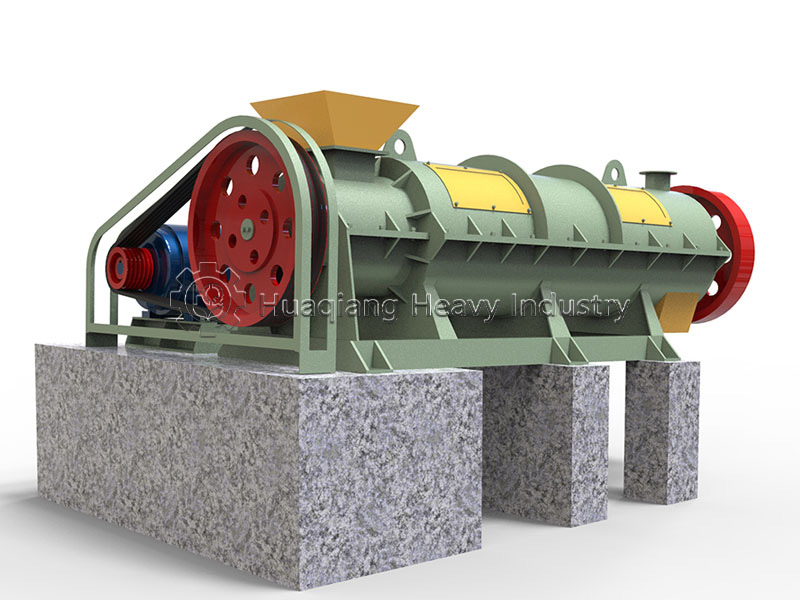
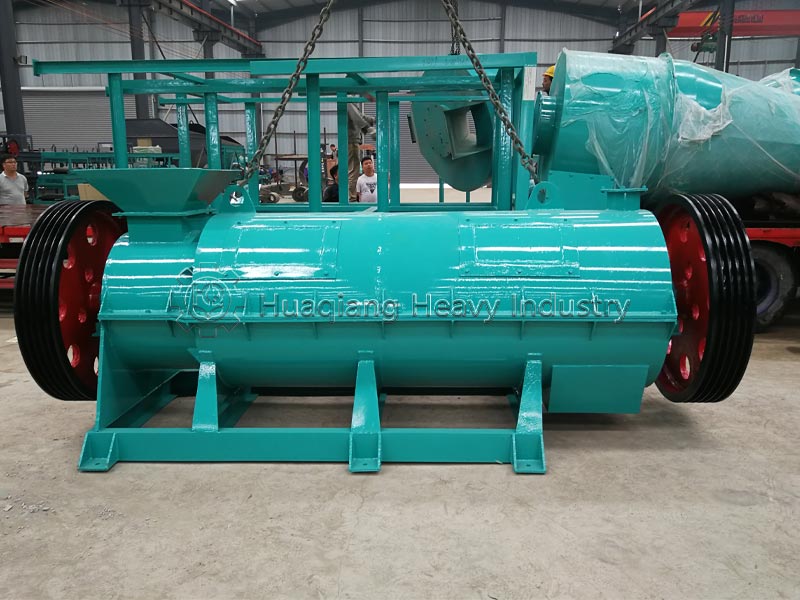
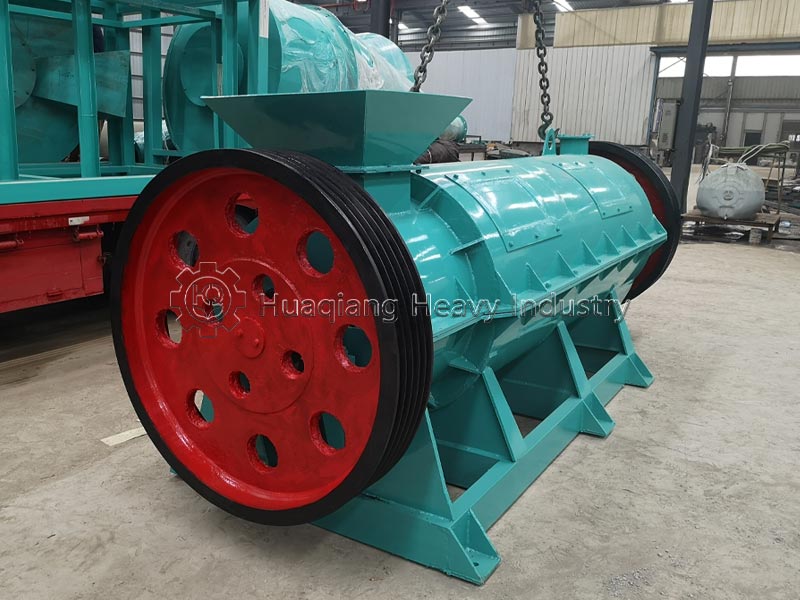
New Type Organic Fertilizer Granulator
The new type organic fertilizer granulator is a high-efficiency pelletizing machine specifically developed for the wet granulation of fermented organic materials. It features a design combining a vertical cylindrical body with a high-speed rotating stirring disc; this allows powdered organic material—under humidified conditions—to agglomerate into pellets through a process of centrifugal throwing and self-rolling. Compared to disc granulators, it offers faster pellet formation and a smaller footprint; compared to dry granulation equipment like double roller press, it can handle materials with higher moisture content without requiring rigorous pre-drying. The equipment is particularly well-suited for high-fiber fermented materials such as chicken, sheep, and cattle manure; it resists clogging and wall adhesion while maintaining a consistently high pelletization rate. Operation is straightforward, requiring primarily the control of water spray volume and stirring speed; once properly calibrated, it delivers continuous, stable output. This machine represents a highly practical choice for the granulation stage of small-to-medium-sized organic and bio-organic fertilizer production lines.
Working Principle of New Type Organic Fertilizer Granulator
The pelletization principle of this new type organic fertilizer granulator combines centrifugal throwing with wet agglomeration. Powdered material enters the vertical cylinder from the top and lands on the high-speed rotating stirring disc at the bottom. Stirring rods on the disc rotate at high linear speeds, forcefully throwing the powder tangentially outward to create a dense, rotating curtain of material within the cylinder. Simultaneously, an annular spray pipe mounted above the cylinder sprays atomized water or a binder solution onto the material curtain, uniformly wetting the surface of the powder particles. This wetting creates a liquid film on the particles; upon collision, capillary forces (liquid bridging) cause them to adhere, forming tiny “seed” pellets. These seed pellets are repeatedly tossed and tumbled by the stirring disc, continuously picking up fresh, moist powder as they roll, causing their diameter to grow layer by layer. Once the granules reach a certain size, their increased weight causes them to move toward the upper section of the cylinder wall under centrifugal force, eventually overflowing naturally through the discharge outlet. Throughout the process, the throwing action of the stirring rods works in tandem with the material’s own gravity-driven tumbling, resulting in rapid pellet formation and dense, uniform granules.
Suitable Raw Materials for New Type Organic Fertilizer Granulator
Regarding livestock and poultry manure, the primary materials processed include fermented and decomposed manures from chickens, pigs, sheep, cattle, ducks, and geese. After thorough fermentation, these materials exhibit softened fibers and stabilized organic matter, resulting in excellent pellet formation under moist conditions.
Regarding agricultural waste, materials such as pulverized straw, rice husks, peanut shells, sawdust, spent mushroom substrate, and biogas residue can be granulated either individually or mixed with manure. While these materials are difficult to pelletize on their own, blending them with cohesive manure significantly improves pellet formation rates and structural strength.
Regarding organic blends, organic raw materials such as humic acid, peat, oilseed cake, seaweed residue, and sugar mill filter mud can be granulated individually or in combination to produce specialized organic fertilizers or soil conditioner granules.
Regarding bio-organic fertilizers, functional microbial agents—such as nitrogen-fixing, phosphate-solubilizing, and potassium-solubilizing bacteria—are added to the fermented material before it enters the granulator. The ambient-temperature, wet-granulation process does not significantly compromise the activity of these microbial agents, making it the preferred method for bio-organic fertilizer production.
Basic Raw Material Requirements
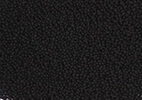
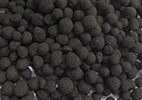
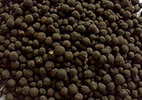
Materials entering the machine must be thoroughly fermented and decomposed. Incompletely decomposed materials may undergo secondary fermentation and heat generation upon the addition of water during granulation, causing granules to crack or disintegrate, which compromises pellet formation and product quality. Ideally, materials should be dark brown, odorless, and loose in texture before processing.
Regarding moisture content, the moisture level of the powdered material entering the machine is generally controlled between 25% and 35%. This range corresponds to the natural moisture content of most fermented organic materials, usually allowing for direct processing without additional drying or wetting. If the material is too dry, the water spray volume should be increased during granulation; if it is too wet, the resulting granules tend to stick together or deform, requiring air-drying or the addition of dry material for adjustment.
Requirements regarding particle fineness are relatively flexible: the maximum particle size should not exceed 6 mm, and at least 50% of the material should pass through a 4 mm sieve. Retaining an appropriate amount of short fibers in organic materials helps enhance the structural strength and crush resistance of the granules; unlike chemical powders, there is no need to aim for extreme fineness.
Regarding impurity control, hard foreign objects—such as stones, scrap metal, or plastic fragments—must be excluded from the feed material. If such objects enter the granulator, they can impact the mixing paddles, causing deformation or breakage, or even damaging the barrel liners. Screening and iron removal prior to feeding are essential measures to ensure the safe operation of the equipment.
Production Capacity Range for New Type Organic Fertilizer Granulator
The new type organic fertilizer granulators come in specifications catering to production needs ranging from small-scale to medium- and large-scale operations, allowing users to select the model that best fits their planned output.
| Model | Capacity (t/h) | Output Granules Size (mm) | Motor Power (Kw) | Outside Dimension (mm) |
| YSL-60 | 1-2 | 1-5 | 37 | 3700*1800*1050 |
| YSL-80 | 2-4 | 1-5 | 45 | 3700*2100*1300 |
| YSL-100 | 3-5 | 1-5 | 55 | 3750*2500*1500 |
| YSL-120 | 4-7 | 1-5 | 75 | 4900*2950*1900 |
| YSL-150 | 5-8 | 1-5 | 90 | 5000*3300*2150 |
