
How Half-Wet Material Crusher Works
The half-wet material crusher operates on a simple but brutally effective principle:
High-Speed Rotor: A rotor equipped with specially designed hammers spins at high speed inside the crushing chamber.
Impact and Shearing: As wet material enters, it is struck by the hammers, thrown against breaker plates, and torn apart by the combined forces of impact and shearing
Self-Cleaning Action: The unique hammer design and screen configuration prevent sticky materials from building up. Material continuously flows through without clogging.
Adjustable Output Size: Screens with different aperture sizes control the final particle size, typically ranging from 0.5 to 5 millimeters.
The result: lumpy, wet, sticky materials are reduced to fine, uniform particles ready for the next production stage.
 Key Design Features
The half-wet material crusher stands apart from conventional crushers through several innovative features:
Stainless Steel Construction: Critical components are made of stainless steel to resist corrosion from acidic organic materials and moisture.
Anti-Clogging Screen: The screen is designed with large open areas and a cleaning mechanism that prevents blinding.
Easy Maintenance: Large access doors allow quick inspection and replacement of wear parts without dismantling the entire machine.
Variable Speed Drive: Optional frequency control allows adjustment of rotor speed to match different material characteristics.
Why It's Essential in Organic Fertilizer Production
In an organic fertilizer production line, the half-wet material crusher typically serves two critical functions:
Pre-Crushing: Before composting or fermentation, raw materials like fresh manure or crop straw need to be reduced in size. Smaller particles decompose faster and more uniformly. The crusher breaks down large chunks, creating ideal conditions for microbial activity.
Post-Drying Crushing: After composting and drying, the material often contains lumps and aggregates. The half-wet material crusher reduces these to a fine, consistent powder suitable for granulation.
Without effective crushing, downstream equipment struggles. Rotary drum granulators produce uneven granules. Mixers cannot achieve homogeneous blends. Dryers waste energy on oversized particles. The crusher is the enabler that makes everything else work properly.
Common Applications
The half-wet material crusher finds use across multiple industries:
Organic Fertilizer Production: Crushing fresh manure, crop residues, and composted materials.
Biogas Plants: Reducing feedstock size to improve digestion efficiency.
Waste Treatment Facilities: Processing food waste, yard trimmings, and municipal sludge.
Mushroom Cultivation: Preparing substrate materials with optimal particle size.
Landscape and Horticulture: Breaking down bark, leaves, and other organic mulches.
Why Every Organic Fertilizer Line Needs One
A half-wet material crusher is not optional. It is essential. Without it, wet materials remain lumpy and difficult to handle. Mixing is poor. Fermentation is uneven. Granulation fails. The entire production line becomes a series of bottlenecks and breakdowns.
With a properly sized and operated half-wet material crusher, materials flow smoothly. Downstream equipment performs as designed. Product quality improves. Downtime decreases. The investment pays for itself many times over through increased efficiency and reduced maintenance.
The Bottom Line
The half-wet material crusher may not be the most glamorous piece of equipment in a fertilizer line, but it is one of the most important. It takes the messiest, most difficult materials and transforms them into manageable, consistent feedstock. It enables everything else to work.
For anyone serious about organic fertilizer production, the question is not whether to include a half-wet material crusher. The question is which size and configuration best matches your specific materials and production goals. Choose wisely, and this machine will serve reliably for years, quietly solving the stickiest problems in your process.
Key Design Features
The half-wet material crusher stands apart from conventional crushers through several innovative features:
Stainless Steel Construction: Critical components are made of stainless steel to resist corrosion from acidic organic materials and moisture.
Anti-Clogging Screen: The screen is designed with large open areas and a cleaning mechanism that prevents blinding.
Easy Maintenance: Large access doors allow quick inspection and replacement of wear parts without dismantling the entire machine.
Variable Speed Drive: Optional frequency control allows adjustment of rotor speed to match different material characteristics.
Why It's Essential in Organic Fertilizer Production
In an organic fertilizer production line, the half-wet material crusher typically serves two critical functions:
Pre-Crushing: Before composting or fermentation, raw materials like fresh manure or crop straw need to be reduced in size. Smaller particles decompose faster and more uniformly. The crusher breaks down large chunks, creating ideal conditions for microbial activity.
Post-Drying Crushing: After composting and drying, the material often contains lumps and aggregates. The half-wet material crusher reduces these to a fine, consistent powder suitable for granulation.
Without effective crushing, downstream equipment struggles. Rotary drum granulators produce uneven granules. Mixers cannot achieve homogeneous blends. Dryers waste energy on oversized particles. The crusher is the enabler that makes everything else work properly.
Common Applications
The half-wet material crusher finds use across multiple industries:
Organic Fertilizer Production: Crushing fresh manure, crop residues, and composted materials.
Biogas Plants: Reducing feedstock size to improve digestion efficiency.
Waste Treatment Facilities: Processing food waste, yard trimmings, and municipal sludge.
Mushroom Cultivation: Preparing substrate materials with optimal particle size.
Landscape and Horticulture: Breaking down bark, leaves, and other organic mulches.
Why Every Organic Fertilizer Line Needs One
A half-wet material crusher is not optional. It is essential. Without it, wet materials remain lumpy and difficult to handle. Mixing is poor. Fermentation is uneven. Granulation fails. The entire production line becomes a series of bottlenecks and breakdowns.
With a properly sized and operated half-wet material crusher, materials flow smoothly. Downstream equipment performs as designed. Product quality improves. Downtime decreases. The investment pays for itself many times over through increased efficiency and reduced maintenance.
The Bottom Line
The half-wet material crusher may not be the most glamorous piece of equipment in a fertilizer line, but it is one of the most important. It takes the messiest, most difficult materials and transforms them into manageable, consistent feedstock. It enables everything else to work.
For anyone serious about organic fertilizer production, the question is not whether to include a half-wet material crusher. The question is which size and configuration best matches your specific materials and production goals. Choose wisely, and this machine will serve reliably for years, quietly solving the stickiest problems in your process.
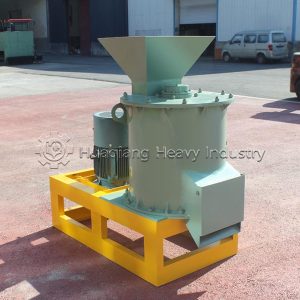 Key Design Features
The half-wet material crusher stands apart from conventional crushers through several innovative features:
Stainless Steel Construction: Critical components are made of stainless steel to resist corrosion from acidic organic materials and moisture.
Anti-Clogging Screen: The screen is designed with large open areas and a cleaning mechanism that prevents blinding.
Easy Maintenance: Large access doors allow quick inspection and replacement of wear parts without dismantling the entire machine.
Variable Speed Drive: Optional frequency control allows adjustment of rotor speed to match different material characteristics.
Why It's Essential in Organic Fertilizer Production
In an organic fertilizer production line, the half-wet material crusher typically serves two critical functions:
Pre-Crushing: Before composting or fermentation, raw materials like fresh manure or crop straw need to be reduced in size. Smaller particles decompose faster and more uniformly. The crusher breaks down large chunks, creating ideal conditions for microbial activity.
Post-Drying Crushing: After composting and drying, the material often contains lumps and aggregates. The half-wet material crusher reduces these to a fine, consistent powder suitable for granulation.
Without effective crushing, downstream equipment struggles. Rotary drum granulators produce uneven granules. Mixers cannot achieve homogeneous blends. Dryers waste energy on oversized particles. The crusher is the enabler that makes everything else work properly.
Common Applications
The half-wet material crusher finds use across multiple industries:
Organic Fertilizer Production: Crushing fresh manure, crop residues, and composted materials.
Biogas Plants: Reducing feedstock size to improve digestion efficiency.
Waste Treatment Facilities: Processing food waste, yard trimmings, and municipal sludge.
Mushroom Cultivation: Preparing substrate materials with optimal particle size.
Landscape and Horticulture: Breaking down bark, leaves, and other organic mulches.
Why Every Organic Fertilizer Line Needs One
A half-wet material crusher is not optional. It is essential. Without it, wet materials remain lumpy and difficult to handle. Mixing is poor. Fermentation is uneven. Granulation fails. The entire production line becomes a series of bottlenecks and breakdowns.
With a properly sized and operated half-wet material crusher, materials flow smoothly. Downstream equipment performs as designed. Product quality improves. Downtime decreases. The investment pays for itself many times over through increased efficiency and reduced maintenance.
The Bottom Line
The half-wet material crusher may not be the most glamorous piece of equipment in a fertilizer line, but it is one of the most important. It takes the messiest, most difficult materials and transforms them into manageable, consistent feedstock. It enables everything else to work.
For anyone serious about organic fertilizer production, the question is not whether to include a half-wet material crusher. The question is which size and configuration best matches your specific materials and production goals. Choose wisely, and this machine will serve reliably for years, quietly solving the stickiest problems in your process.
Key Design Features
The half-wet material crusher stands apart from conventional crushers through several innovative features:
Stainless Steel Construction: Critical components are made of stainless steel to resist corrosion from acidic organic materials and moisture.
Anti-Clogging Screen: The screen is designed with large open areas and a cleaning mechanism that prevents blinding.
Easy Maintenance: Large access doors allow quick inspection and replacement of wear parts without dismantling the entire machine.
Variable Speed Drive: Optional frequency control allows adjustment of rotor speed to match different material characteristics.
Why It's Essential in Organic Fertilizer Production
In an organic fertilizer production line, the half-wet material crusher typically serves two critical functions:
Pre-Crushing: Before composting or fermentation, raw materials like fresh manure or crop straw need to be reduced in size. Smaller particles decompose faster and more uniformly. The crusher breaks down large chunks, creating ideal conditions for microbial activity.
Post-Drying Crushing: After composting and drying, the material often contains lumps and aggregates. The half-wet material crusher reduces these to a fine, consistent powder suitable for granulation.
Without effective crushing, downstream equipment struggles. Rotary drum granulators produce uneven granules. Mixers cannot achieve homogeneous blends. Dryers waste energy on oversized particles. The crusher is the enabler that makes everything else work properly.
Common Applications
The half-wet material crusher finds use across multiple industries:
Organic Fertilizer Production: Crushing fresh manure, crop residues, and composted materials.
Biogas Plants: Reducing feedstock size to improve digestion efficiency.
Waste Treatment Facilities: Processing food waste, yard trimmings, and municipal sludge.
Mushroom Cultivation: Preparing substrate materials with optimal particle size.
Landscape and Horticulture: Breaking down bark, leaves, and other organic mulches.
Why Every Organic Fertilizer Line Needs One
A half-wet material crusher is not optional. It is essential. Without it, wet materials remain lumpy and difficult to handle. Mixing is poor. Fermentation is uneven. Granulation fails. The entire production line becomes a series of bottlenecks and breakdowns.
With a properly sized and operated half-wet material crusher, materials flow smoothly. Downstream equipment performs as designed. Product quality improves. Downtime decreases. The investment pays for itself many times over through increased efficiency and reduced maintenance.
The Bottom Line
The half-wet material crusher may not be the most glamorous piece of equipment in a fertilizer line, but it is one of the most important. It takes the messiest, most difficult materials and transforms them into manageable, consistent feedstock. It enables everything else to work.
For anyone serious about organic fertilizer production, the question is not whether to include a half-wet material crusher. The question is which size and configuration best matches your specific materials and production goals. Choose wisely, and this machine will serve reliably for years, quietly solving the stickiest problems in your process. 