
Screw Conveyor
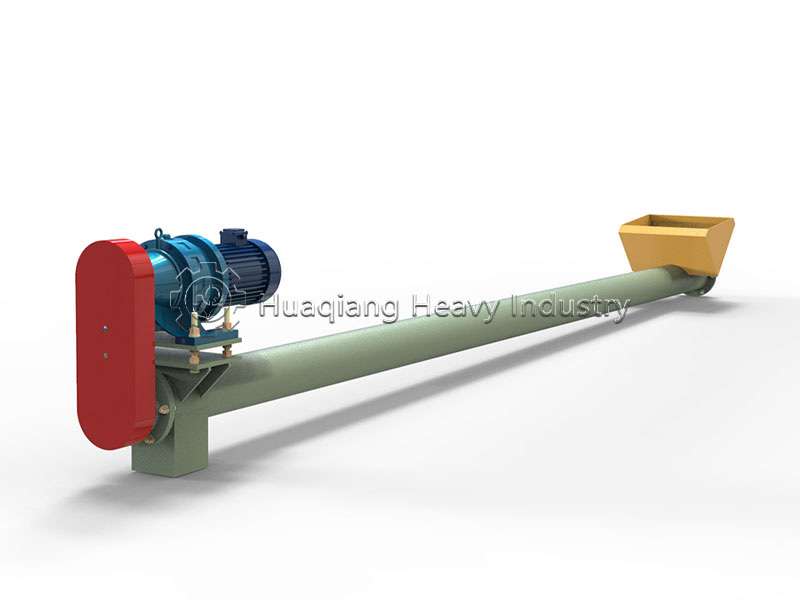
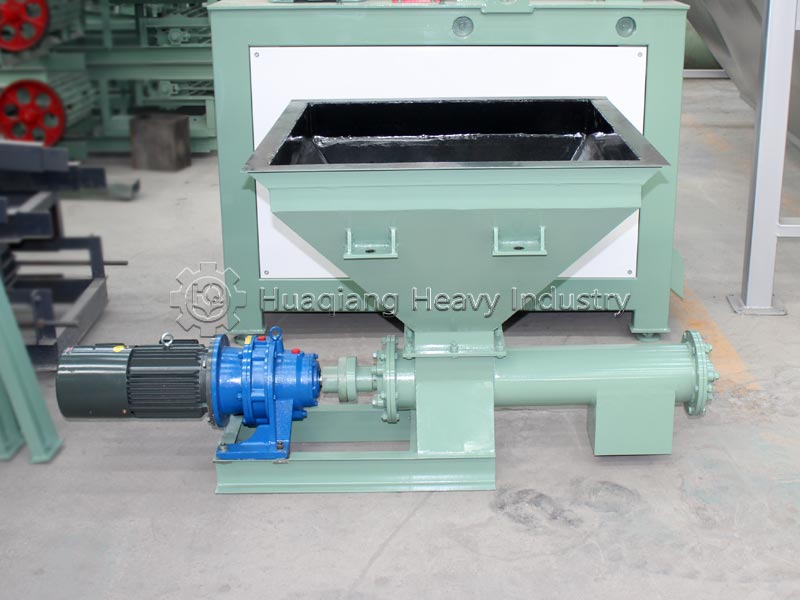
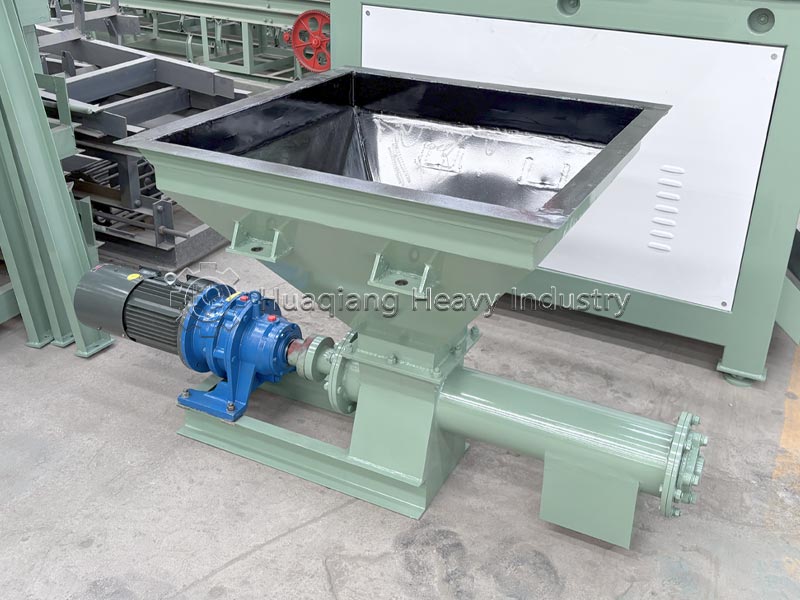
Screw Conveyor
In fertilizer production lines, the screw conveyor serves to transport materials between various processing units. It conveys materials—such as fermented feedstock, crushed material, mixtures, and finished granules—within a sealed trough, preventing the escape of odors and dust. In organic fertilizer workshops, it is commonly used to feed fermented material into the crusher or to transfer thoroughly mixed material to the granulator. With flexible conveying distances and adjustable installation angles, it is a reliable piece of equipment for achieving clean production in the fertilizer industry.
Working Principle
After entering through the inlet, the material is pushed axially by the rotating screw flights. This force overcomes friction between the material and the trough wall, driving the material forward along the helical path. Material particles flow smoothly under the combined influence of the pushing force and gravity; there is no violent scattering or tumbling, ensuring a steady, continuous conveying process. When installed at an incline, the lifting height depends on the flight diameter and rotational speed. Vertical conveying utilizes specially designed pitch and speed settings, relying on centrifugal force to press the material against the tube wall as it moves upward.
Equipment Components
Screw Assembly: Composed of a central shaft and welded screw flights; flights may be formed via continuous cold rolling or segmented welding.
Conveying Trough: U-shaped trough or tubular casing; U-shaped troughs feature removable covers for easy cleaning and maintenance.
End Bearing Housings: Rolling bearings are installed at both ends of the shaft to support axial and radial loads.
Intermediate Hanger Bearings: Installed within the trough for long-distance conveyors to minimize shaft deflection.
Drive Unit: Features a motor directly coupled to or belt-connected with a cycloidal pin-wheel reducer; the output shaft connects to the screw shaft via a coupling.
Sealing and Protection: Shaft ends utilize gland packing or oil seals to prevent dust leakage.
Operational Precautions
Before startup, ensure the trough is free of accumulated material and foreign objects, and verify that the screw shaft rotates freely. Starting the machine with material already in the trough is strictly prohibited, as “loaded starts” can cause motor overload and damage or twist the screw shaft.
Material feeding should be uniform and continuous to prevent clogging or unstable throughput caused by fluctuating feed rates. During operation, monitor the running sound; shut down the machine immediately for inspection if abnormal vibration or noise occurs. Ensure no hard objects—such as pieces of iron or stone—are mixed into the material, as these can jam or damage the spiral flights and hanger bearings.
Before shutting down, stop the feed and allow the material in the trough to clear completely before cutting off the power.
