
Large Angle Belt Conveyor
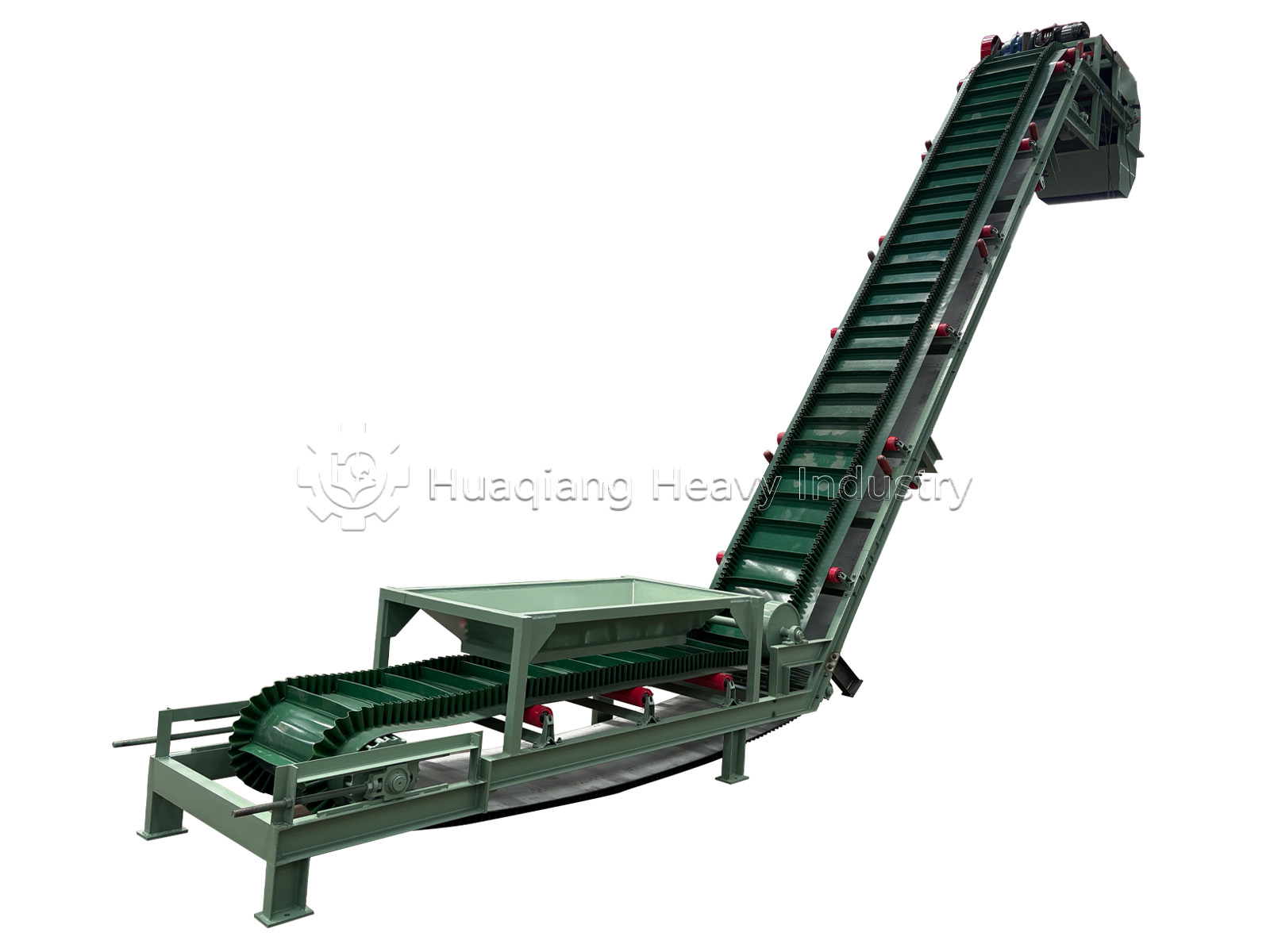
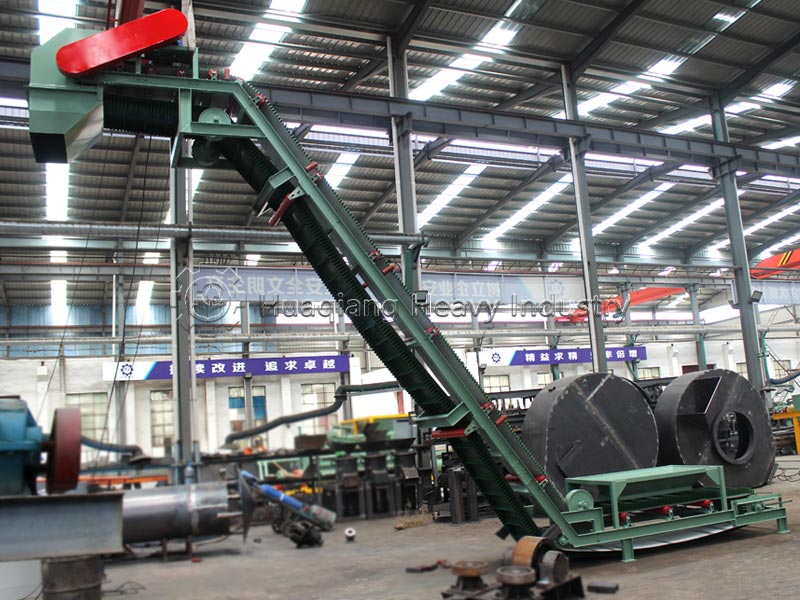
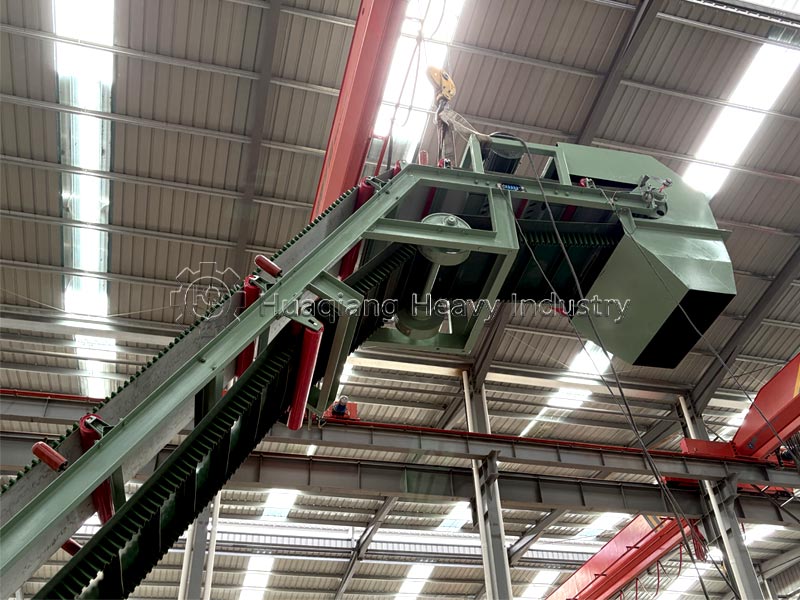
Large Angle Belt Conveyor
Large angle belt conveyors are widely used in the fertilizer industry due to their high lifting capacity, stable operation, and long service life. Their core component is a corrugated sidewall conveyor belt, which integrates horizontal conveying and vertical lifting into a single unit, eliminating the need for the traditional combination of a horizontal belt conveyor and a bucket elevator. The equipment operates smoothly with low noise; the belt is wear-resistant and tear-resistant, making it suitable for prolonged, continuous operation. The system can be flexibly designed to fit specific plant spaces and complex layouts, serving as highly efficient lifting equipment for the vertical configuration of fertilizer production lines.
Working Principle
After entering the conveyor belt, material is contained within the compartments formed by the corrugated sidewalls and transverse cleats on both sides. The drive unit propels the belt continuously upward, lifting the material steadily without relative sliding or tumbling. Upon reaching the discharge point at the top, the belt changes direction as it passes over the head pulley; the material is then discharged via a combination of centrifugal force and gravity. The empty belt returns to the lower loading point to receive the next batch of material. The entire process is continuous and uninterrupted, with material conveyed steadily on the enclosed or semi-enclosed belt surface.
Performance Features
High lifting capacity: A single unit can lift material dozens of meters, meeting vertical transport needs for multi-story facilities.
Compact footprint: Can be configured at any angle from 30° to 90°, replacing long, inclined ramps and saving valuable floor space.
Long belt life: Sidewalls and cleats are vulcanized to the base belt as a single unit, offering excellent resistance to peeling and fatigue, resulting in a service life of several years.
Low energy consumption: Material is supported during the upward journey with no back-flow, requiring less drive power than bucket elevators.
Minimal material damage: Material remains stationary on the belt during transport—without tumbling or collisions—ensuring a high rate of granule integrity.
Dust control and enclosure: The unit can be fitted with dust covers to minimize the spread of dust and odors.
Maintenance Methods
Inspect the belt surface for scratches and check the sidewalls and transverse cleats for cracking or detachment during every shift; repair any issues promptly. Clean material adhering to the surfaces of the head and tail pulleys to prevent conveyor belt mistracking caused by changes in pulley diameter.
Check the rotation of idlers weekly; promptly replace any that are seized or not rotating to avoid wearing through the conveyor belt.
Check conveyor belt tension monthly; adjust the tail tensioning screw if the belt becomes slack.
Check the wear on the drive pulley lagging quarterly; re-lag the pulley when the rubber surface becomes worn smooth.
Conduct a comprehensive inspection of pulley bearings and replace worn idlers and cleaner blades during the annual overhaul.
