
New Type Two In One Organic Fertilizer Granulator
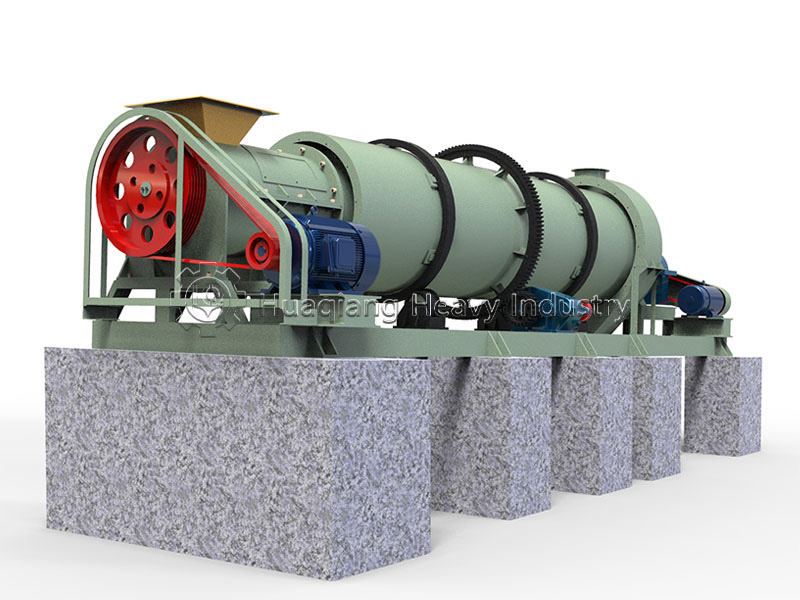
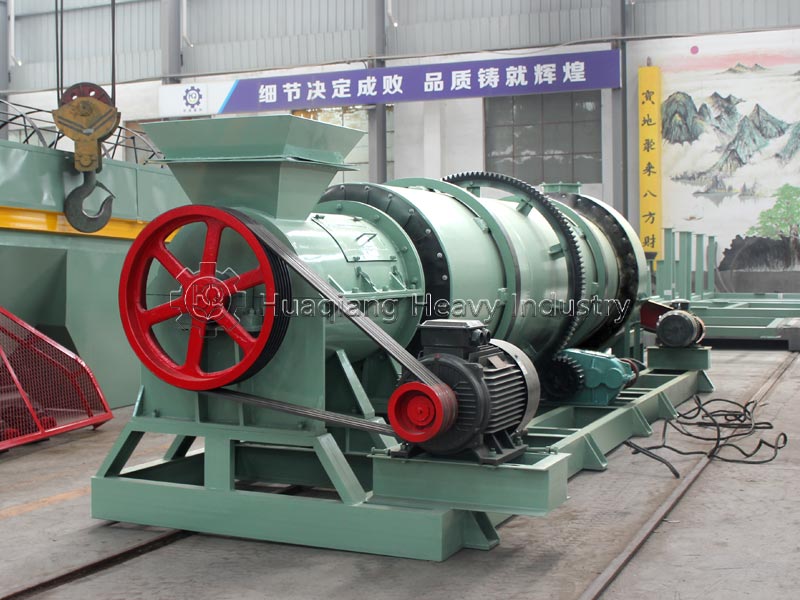
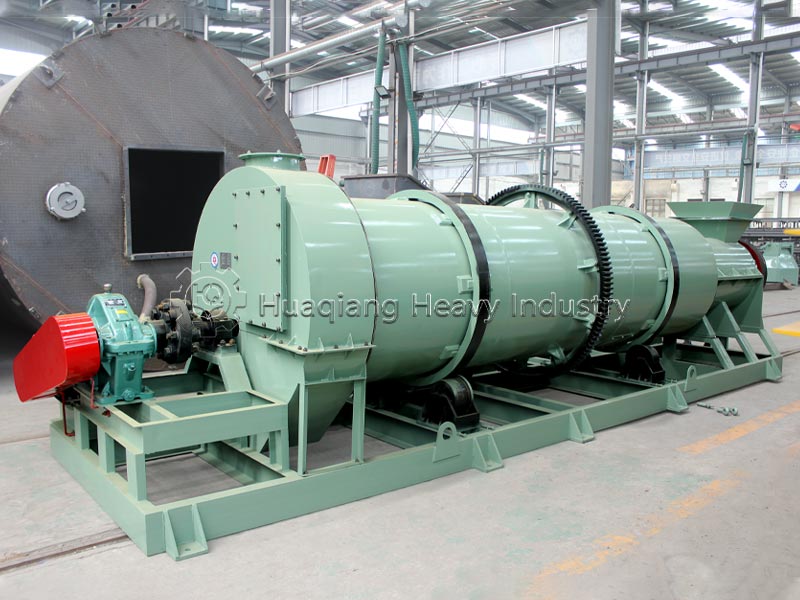
New Type Two In One Organic Fertilizer Granulator
The new type two in one organic fertilizer granulator is a high-efficiency wet granulation unit that integrates the material mixing and granulation processes into a single piece of equipment. In traditional organic fertilizer production, mixing and granulation are separate stages: materials are first conditioned with water in a twin-shaft mixer and then fed into a disc or rotary drum granulator to form pellets. The new type two in one organic fertilizer granulator eliminates this separation, simultaneously performing water addition, mixing/kneading, and rolling granulation within a single cylinder. Materials enter at one end and emerge as well-rounded granules at the other, bypassing the need for separate mixing equipment and intermediate transfer steps. The equipment is highly adaptable to fermented organic fertilizers, compound fertilizers, and organic-inorganic mixtures; it is particularly suitable for small-to-medium-sized fertilizer plants seeking streamlined processes and for retrofitting older production lines where space is limited.
Working Principle of New Type Two in One Organic Fertilizer Granulator
Materials are continuously fed into the front end of the granulation cylinder via a metering feeder, while the cylinder rotates at a set speed. The front section of the cylinder serves as the mixing and kneading zone; its inner wall is equipped with specially designed mixing blades and guide plates. Here, materials come into full contact with atomized water or a binder solution sprayed into the chamber. Agitated by the blades, the materials undergo repeated stirring and kneading, ensuring the powder and liquid mix uniformly into a moist, loose state. As the cylinder rotates, the guide plates push the materials toward the rear section, where the granulation and pelletizing zone begins. The inner wall of the rear section is smooth; the rotation of the cylinder lifts and rolls the materials, creating a continuous cascading curtain. During this rolling motion, moist powder particles collide and adhere to one another, initially forming tiny seed granules. These seeds grow by accumulating layers of new powder until they form well-rounded granules, which are then discharged from the outlet. Throughout the process, the materials remain in constant motion, ensuring a seamless transition between mixing and granulation.
Structural Components of New Type Two in One Organic Fertilizer Granulator
Cylinder Assembly: A rotating cylinder fabricated from rolled and welded steel plate, with an adjustable inclination angle of 2° to 5°. The interior of the drum is divided into two functional zones—a mixing/kneading zone and a granulation/pelletizing zone—each equipped with specific internal components; the length ratio of these zones is designed based on material characteristics.
Mixing and Agitation System: The inner wall of the front section features mixing blades and scrapers arranged in a helical pattern. The blade angles and layout are optimized using fluid dynamics to ensure high mixing efficiency and non-stick performance, facilitating rapid and uniform mixing of material and water.
Spraying System: Multiple sets of atomizing nozzles are arranged axially along the drum, allowing for zone-specific control of water spray volume. Nozzles in the mixing zone focus on rapidly wetting the powder, while those in the granulation zone focus on replenishing moisture to maintain the humidity required for pellet formation; both total spray volume and distribution across zones are flexibly adjustable.
Drive System: The main motor connects to the gearbox via a fluid coupling or variable frequency drive, driving the drum’s rotation through the meshing of a pinion gear and a large girth gear. Variable frequency speed control allows for flexible adjustment of the drum speed based on material conditions, accommodating various formulations and production capacity requirements.
Feed and Discharge Units: The front feed box is equipped with a feed chute and a moisture exhaust port, while the rear discharge box connects to a discharge chute. Sealing devices are installed between the feed/discharge boxes and the drum to minimize dust leakage.
Support and Thrust Roller Assemblies: The drum is supported by four sets of support rollers, which bear the entire weight of the drum. Thrust rollers control axial movement, ensuring long-term, stable equipment operation.
Frame and Electrical Control System: The unit features an integrated welded structural steel base with high rigidity. The electrical control cabinet integrates functions for drum speed regulation, feed rate control, and spray volume adjustment, and can interface with a centralized production line control system for automated operation.
Performance Features for New Type Two in One Organic Fertilizer Granulator
Integrated Mixing and Granulation: A single machine handles the entire process from powder to granules, eliminating the need for separate mixers and intermediate transfer equipment; this shortens the process flow and reduces both equipment investment costs and the required footprint.
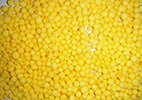
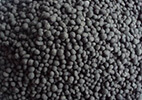
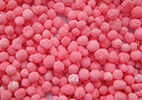
High Pelletization Rate and Uniform Granules: Materials undergo thorough kneading in the mixing zone to achieve uniform moisture and binding properties before rolling into pellets in the granulation zone. This process offers superior pelletization conditions compared to split processes (separate mixing and granulation), resulting in better sphericity and uniformity of the granules.
Broad material adaptability: Capable of processing fermented organic fertilizers, compound fertilizer powders, and organic-inorganic mixtures; also suitable for high-fiber organic materials, ensuring smooth operation without clogging.
Flexible operation and adjustment: Drum rotation speed, zoned water spray volume, and feed rate can all be independently adjusted; a single unit accommodates various formulas and particle size requirements, facilitating easy product switching.
High energy efficiency: Eliminates the need for a separate mixer and its associated motor energy consumption; reduces material transfer steps, resulting in lower overall electricity consumption per ton of product compared to split-process systems.
Enclosed, eco-friendly operation: The granulation process takes place within a sealed drum, minimizing dust emissions; when paired with a dust removal system, it meets environmental standards and maintains a clean working environment.
Application Fields for New Type Two in One Organic Fertilizer Granulator
Organic fertilizer processing: Integrated mixing and granulation of fermented livestock and poultry manures (chicken, pig, sheep, cattle, etc.) and the granulation of agricultural wastes (such as straw powder and rice husk powder) into fertilizer.
Organic-inorganic compound fertilizers: Single-step mixing and granulation of organic materials with chemical fertilizers (e.g., urea, potash) to produce compound granular fertilizers offering both quick-acting and slow-release properties.
Bio-organic fertilizers: Mixing and granulation of fermented materials with functional microbial agents at ambient temperature; preserves microbial activity and ensures high biological potency in the granules.
Soil conditioners: Conditioning and granulation of powdered raw materials such as humic acid, peat, and silicon-calcium fertilizers.
New Type Two in One Organic Fertilizer Granulator Parameters
| Model | Capacity (t/h) | Output Granules Size (mm) | Motor Power (Kw) | Outside Dimension (mm) |
| YSL2-80/120 | 4-8 | 1-5 | 37+18.5+5.5 | 7500*2300*1950 |
| YSL2-100/150 | 6-10 | 1-5 | 55+18.5+11 | 7700*2550*2260 |
| YSL2-120/180 | 8-15 | 1-5 | 75+22+15 | 9600*3000*2750 |
