
Hydraulic Roller Granulator
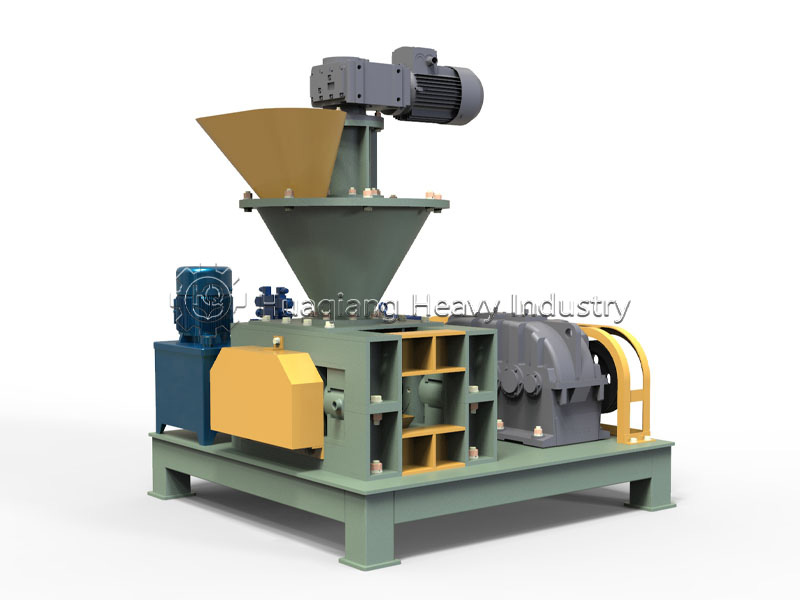
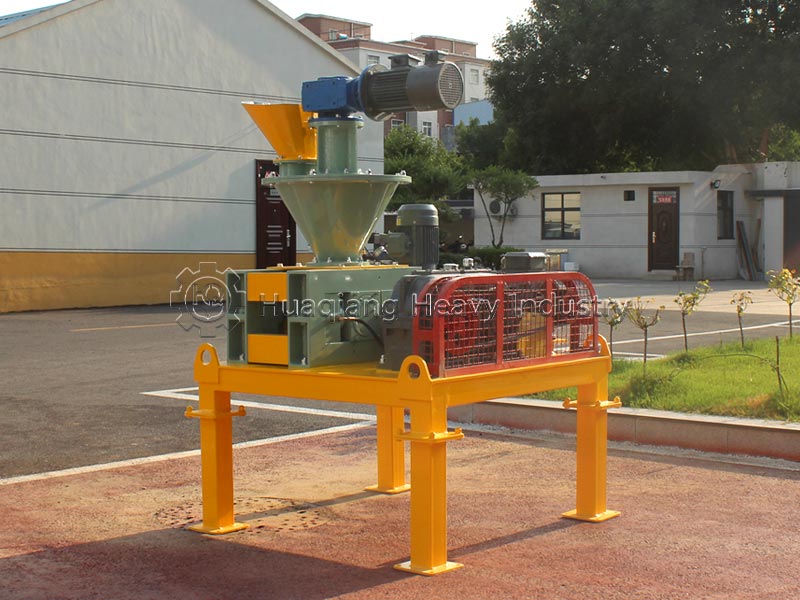
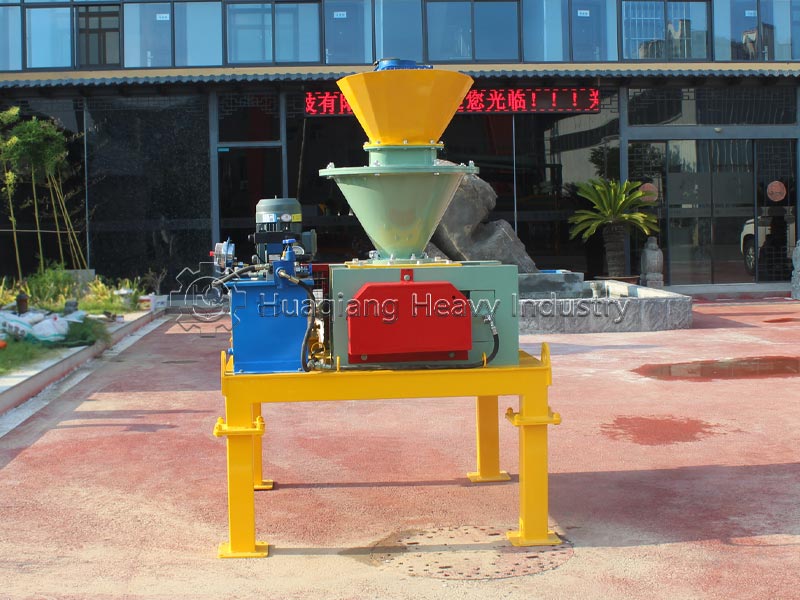
The hydraulic roller granulator utilizes a hydraulic system to provide stable, controllable high pressure, directly transforming various powdered materials into granules through the counter-rotation of two rollers. Among dry granulation technologies, it excels due to its steady pressure output, high adjustment precision, and sensitive overload protection. It is particularly well-suited for materials requiring high granule density or those with poor natural binding properties that are difficult to shape. Whether processing compound fertilizer powder blends, chemical powders, or metallurgical dust, the machine produces compact, uniform granules, provided the material’s fineness and moisture content fall within reasonable ranges. Operating at ambient temperature without the addition of water or heat, it eliminates the energy-intensive drying and cooling stages required in wet granulation processes. For manufacturers prioritizing granule strength, energy efficiency, environmental sustainability, and long-term operational stability, the hydraulic roller granulator is an excellent choice to consider.
Working Principle of Hydraulic Roller Press Granulator
The hydraulic roller granulator employs two counter-rotating rollers to forcibly compress dry powder materials into shape under high pressure exerted by a hydraulic system. Powder is pushed by a screw feeder into the wedge-shaped gap between the rollers and is gradually drawn in as the roller surfaces rotate. As the gap narrows, the material experiences increasing compressive force; air is expelled from between the particles, allowing them to move closer together and interlock. Pressure peaks as the material passes through the narrowest point between the rollers, forcing it into the densely arranged molding pockets on the roller surfaces to instantly form a compact material slab. As the rollers continue to rotate, the slab releases from the pockets and falls into the crushing and granulating unit below. This unit breaks the slab into individual granules, which are then screened to produce the final product. An accumulator within the hydraulic system maintains constant pressure, ensuring every granule is formed under identical conditions, resulting in highly consistent density and strength.
Suitable Raw Materials of Hydraulic Roller Press Granulator
The hydraulic roller granulator offers broad material adaptability; most dry powders with appropriate fineness can be processed into granules using this equipment. Fertilizers: Urea, ammonium chloride, ammonium sulfate, monoammonium phosphate (MAP), diammonium phosphate (DAP), potassium chloride, potassium sulfate, and various compound fertilizer powder blends; mixtures of fermented/decomposed organic fertilizer powder and inorganic fertilizers.
Chemicals: Zinc oxide, magnesium oxide, calcium chloride, copper sulfate, soda ash, caustic soda, activated carbon, molecular sieve raw powder, catalyst powder, desiccants, pigments, and various chemical additives.
Metallurgy and Mineral Powders: Dust collector ash, blast furnace gas dust, concentrate powder, iron concentrate powder, manganese ore powder, rolling mill scale, ferrosilicon powder, and other powdery materials requiring cold-press granulation.
Feed and Pharmaceuticals: Feed additives, yeast powder, traditional Chinese medicine powders, vitamin carriers, etc.
Environmental Protection and Waste Valorization: Solidification and granulation of industrial dust and waste residue powders.
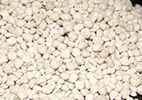

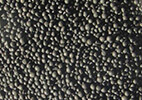
Basic Raw Material Requirements
The hydraulic roller granulator accommodates a specific range of raw material conditions; meeting the following basic requirements helps ensure optimal granulation results and extends equipment service life.
Fineness is a key factor affecting granule quality. Generally, it is required that at least 60% of the material passes through an 80-mesh sieve; higher fineness results in smoother granule surfaces and greater strength. Excessive coarse particles lead to large internal voids and weak bonding, making the finished granules prone to crumbling or breaking apart.
Regarding moisture content, the ideal range for dry roller granulation is typically 5%–12%. Excessively low moisture makes the material loose and difficult to compact, while excessively high moisture causes sticking to the rollers or slippage on the roller surface, impairing material intake and forming. Materials outside this moisture range can be adjusted by air-drying or blending with dry materials.
Material flowability affects feeding uniformity. Materials with poor flowability are prone to “bridging” in the hopper; using a forced screw feeder equipped with an anti-bridging device is recommended. Pure organic materials that are fibrous and have low bulk density should be blended with inorganic materials before processing, as granulating them alone is difficult.
Hard foreign objects—such as iron chunks, stones, or bolts—must be strictly excluded from the raw material. Although the hydraulic system provides overload protection, the entry of hard objects between the rollers can still damage the roller surfaces. Iron removers and vibrating screens must be installed prior to the feeding stage to ensure equipment safety at the source.
Production Capacity Range for Hydraulic Roller Press Granulator
Hydraulic roller granulators are available in a comprehensive range of specifications—spanning from small-scale pilot units to large-scale industrial production lines—allowing users to flexibly select the model that best suits their projected output.
| Size | DGZ-1 | DGZ-2 | DGZ-3 | |
| Capacity | 1-1.5t/h | 2-3t/h | 3-4.5t/h | |
| Granulator rate | ≧85%
| ≧85%
| ≧85%
| |
| Power | 15kw | 30kw | 37kw | |
| Material moisture | 2%-5%
| |||
| Granulation temperature | Normal temperature | |||
| Particle | Diameter | 4-10(mm) | ||
| Strength | 6-20N(Compression crushing)
| |||
| Shape | Oblate sphere | |||
